
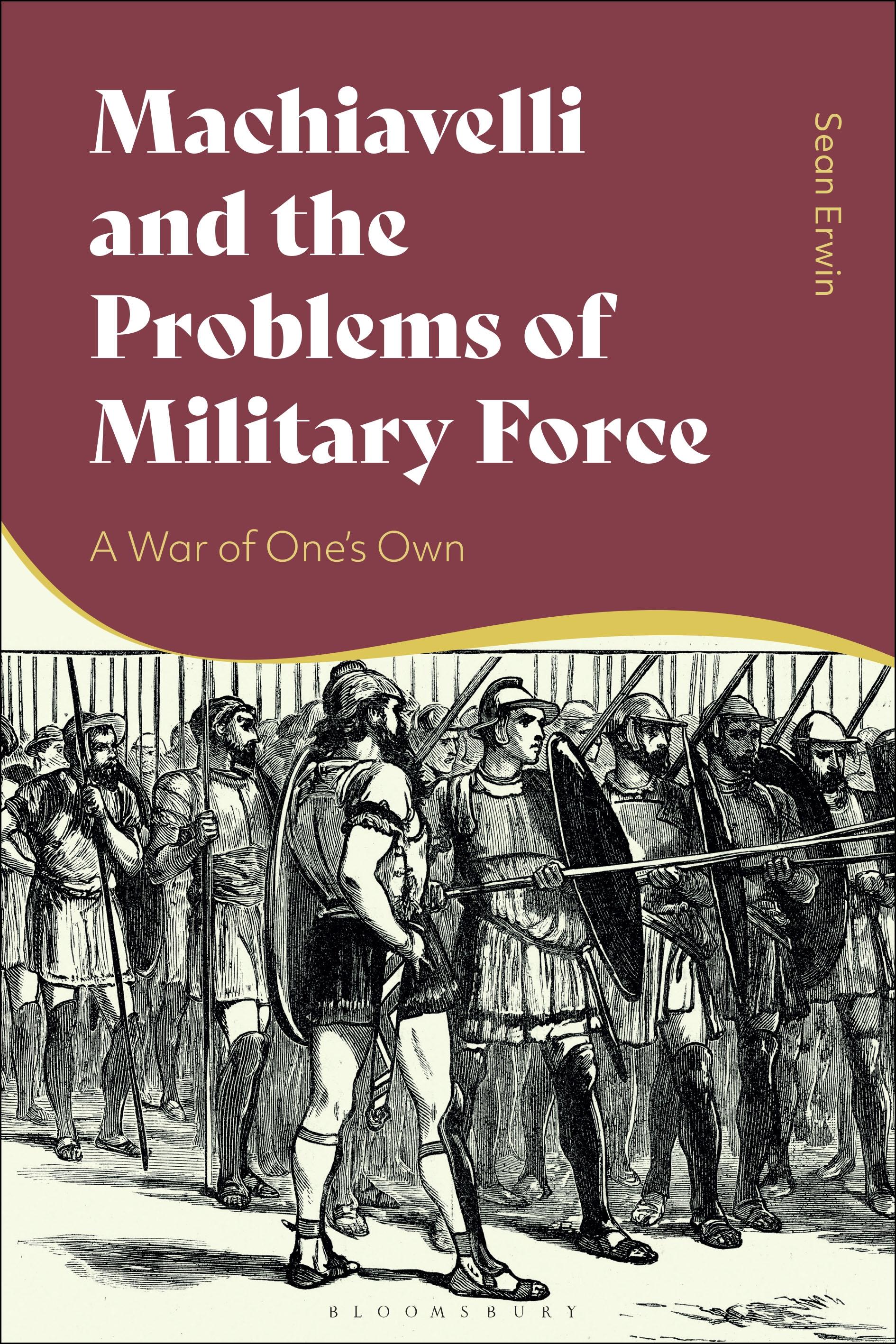
Central to Niccolò Machiavelli's writing is the argument that a successful state is one that prefers to lose with its own arms (arma propriis) than to win with the arms of others (arma alienis). This book sheds light on Machiavelli's critiques of military force and provides an important reinterpretation of his military theory.
Sean Erwin argues that the distinction between arma propriis and arma alienis poses a central problem to Machiavelli's case for why modern political institutions offer modes of political existence that ancient ones did not. Starting from the influence of Lucretius and Aelianus Tacticus on the Dell'arte della guerra, Erwin examines Machiavelli's criticism of mercenary, auxiliary, and mixed forces.
Giving due consideration to an overlooked conceptual distinction in Machiavelli studies, this book is a valuable and original contribution to the field.
Sean Erwin argues that the distinction between arma propriis and arma alienis poses a central problem to Machiavelli's case for why modern political institutions offer modes of political existence that ancient ones did not. Starting from the influence of Lucretius and Aelianus Tacticus on the Dell'arte della guerra, Erwin examines Machiavelli's criticism of mercenary, auxiliary, and mixed forces.
Giving due consideration to an overlooked conceptual distinction in Machiavelli studies, this book is a valuable and original contribution to the field.
Payez facilement par carte, Klarna, Apple Pay ou Google Pay. Pas satisfait ? Vous avez toujours une garantie de remboursement de 14 jours. En savoir plus dans nos conditions. Si vous avez des questions, envoyez-nous un e-mail à hello@memmo.org.
Memmo facilite tes études, où que tu sois dans le monde. On rassemble tes manuels de cours et des outils d'étude intelligents au même endroit : résumés, quiz, podcasts et flashcards. Et il y a Ted, ton compagnon d'étude qui répond à toutes tes questions. Plus de 50 000 étudiants étudient déjà ici – conçu pour t'aider à apprendre plus vite et à moins stresser.