
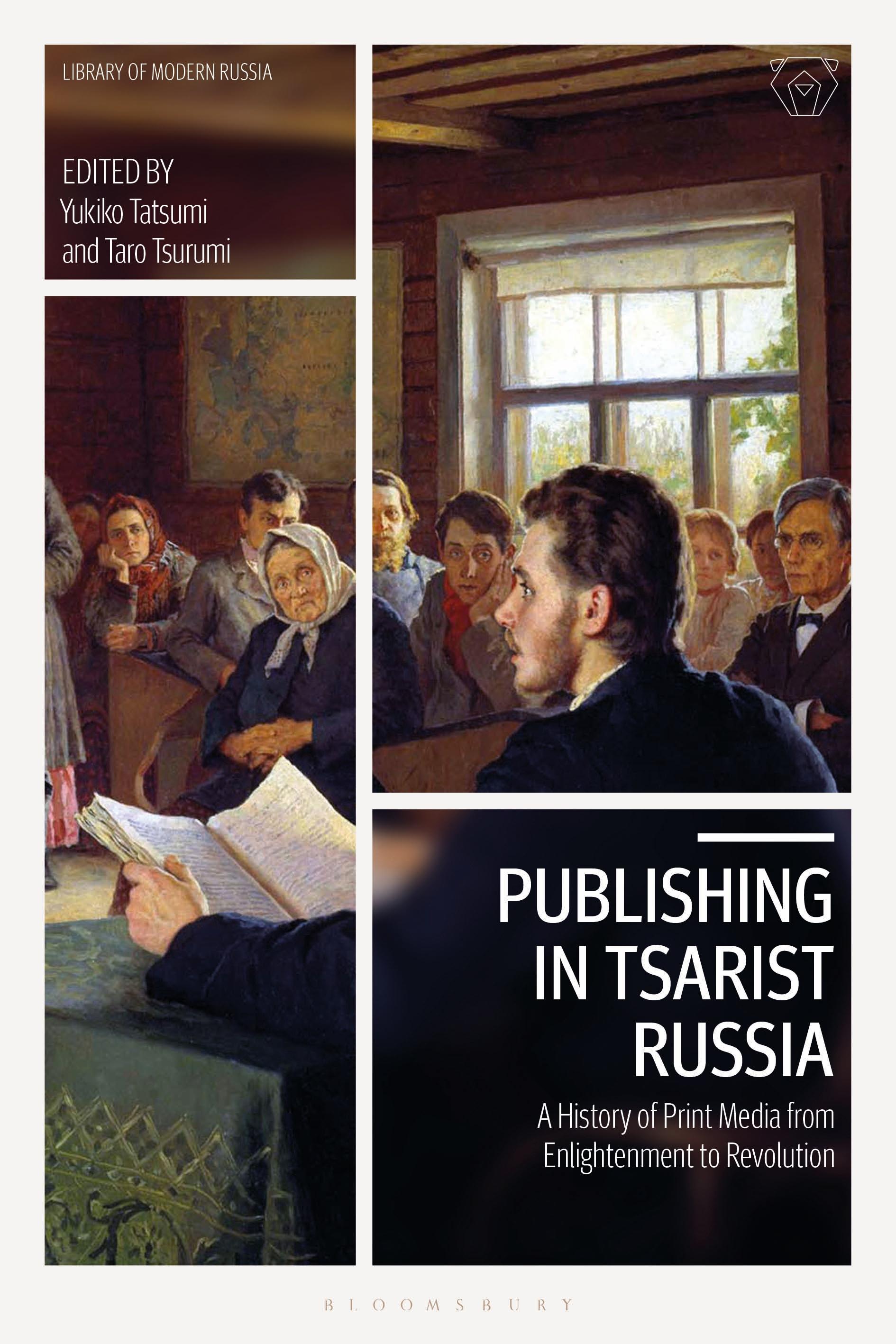
According to Benedict Anderson, the rapid expansion of print media during the late-1700s popularised national history and standardised national languages, thus helping create nation-states and national identities at the expense of the old empires. Publishing in Tsarist Russia challenges this theory and, by examining the history of Russian publishing through a transnational lens, reveals how the popular press played an important and complex Imperial role, while providing a “soft infrastructure” which the subjects could access to change Imperial order.
As this volume convincingly argues, this is because the Russian language at this time was a lingua franca; it crossed borders and boundaries, reaching speakers of varying nationalities. Russian publications, then, were able to effectively operate within the structure of Imperialism but as a public space, they went beyond the control of the Tsar and ethnic Russians.
This exciting international team of scholars provide a much-needed, fresh take on the history of Russian publishing and contribute significantly to our understanding of print media, language and empire from the 18th to 20th centuries. Publishing in Tsarist Russia is therefore a vital resource for scholars of Russian history, comparative nationalism, and publishing studies.
As this volume convincingly argues, this is because the Russian language at this time was a lingua franca; it crossed borders and boundaries, reaching speakers of varying nationalities. Russian publications, then, were able to effectively operate within the structure of Imperialism but as a public space, they went beyond the control of the Tsar and ethnic Russians.
This exciting international team of scholars provide a much-needed, fresh take on the history of Russian publishing and contribute significantly to our understanding of print media, language and empire from the 18th to 20th centuries. Publishing in Tsarist Russia is therefore a vital resource for scholars of Russian history, comparative nationalism, and publishing studies.
Payez facilement par carte, Klarna, Apple Pay ou Google Pay. Pas satisfait ? Vous avez toujours une garantie de remboursement de 14 jours. En savoir plus dans nos conditions. Si vous avez des questions, envoyez-nous un e-mail à hello@memmo.org.
Memmo facilite tes études, où que tu sois dans le monde. On rassemble tes manuels de cours et des outils d'étude intelligents au même endroit : résumés, quiz, podcasts et flashcards. Et il y a Ted, ton compagnon d'étude qui répond à toutes tes questions. Plus de 50 000 étudiants étudient déjà ici – conçu pour t'aider à apprendre plus vite et à moins stresser.