
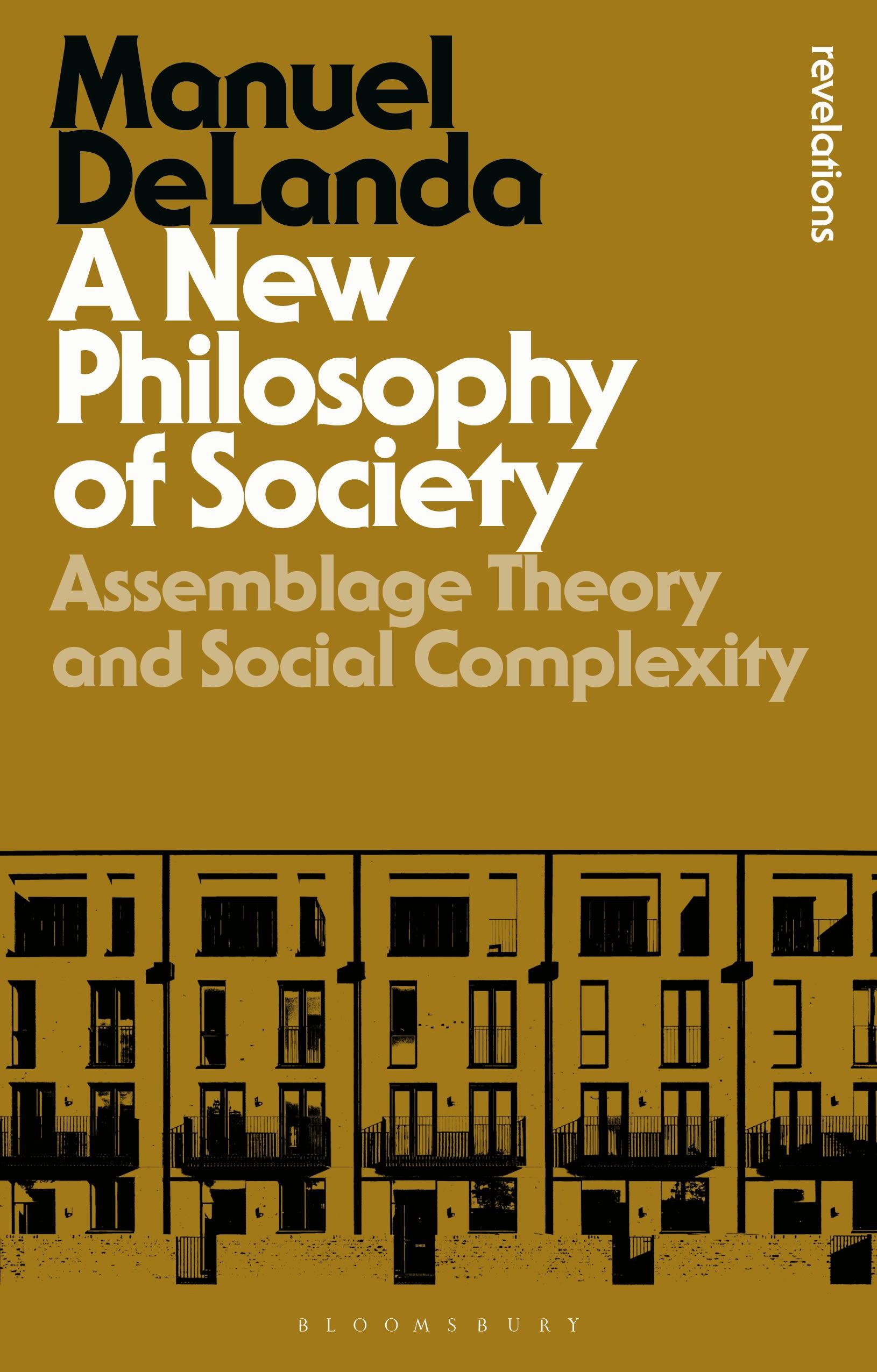
In A New Philosophy of Society Manuel DeLanda offers a fascinating look at how the contemporary world is characterized by an extraordinary social complexity. Since most social entities, from small communities to large nation-states would disappear altogether if our cognitive abilities ceased to exist, DeLanda proposes a novel approach to social ontology that asserts the autonomy of social entities from the conceptions we have of them.
He argues that Gilles Deleuze's theory of assemblages provides a framework in which sociologists and geographers studying social networks and regions can properly locate their work and fully elucidate the connections between them. Indeed, assemblage theory, as DeLanda argues, can be used to model any community, from interpersonal networks and institutional organizations, to central governments, cities and nation states.
He argues that Gilles Deleuze's theory of assemblages provides a framework in which sociologists and geographers studying social networks and regions can properly locate their work and fully elucidate the connections between them. Indeed, assemblage theory, as DeLanda argues, can be used to model any community, from interpersonal networks and institutional organizations, to central governments, cities and nation states.
Payez facilement par carte, Klarna, Apple Pay ou Google Pay. Pas satisfait ? Vous avez toujours une garantie de remboursement de 14 jours. En savoir plus dans nos conditions. Si vous avez des questions, envoyez-nous un e-mail à hello@memmo.org.
Memmo facilite tes études, où que tu sois dans le monde. On rassemble tes manuels de cours et des outils d'étude intelligents au même endroit : résumés, quiz, podcasts et flashcards. Et il y a Ted, ton compagnon d'étude qui répond à toutes tes questions. Plus de 50 000 étudiants étudient déjà ici – conçu pour t'aider à apprendre plus vite et à moins stresser.