
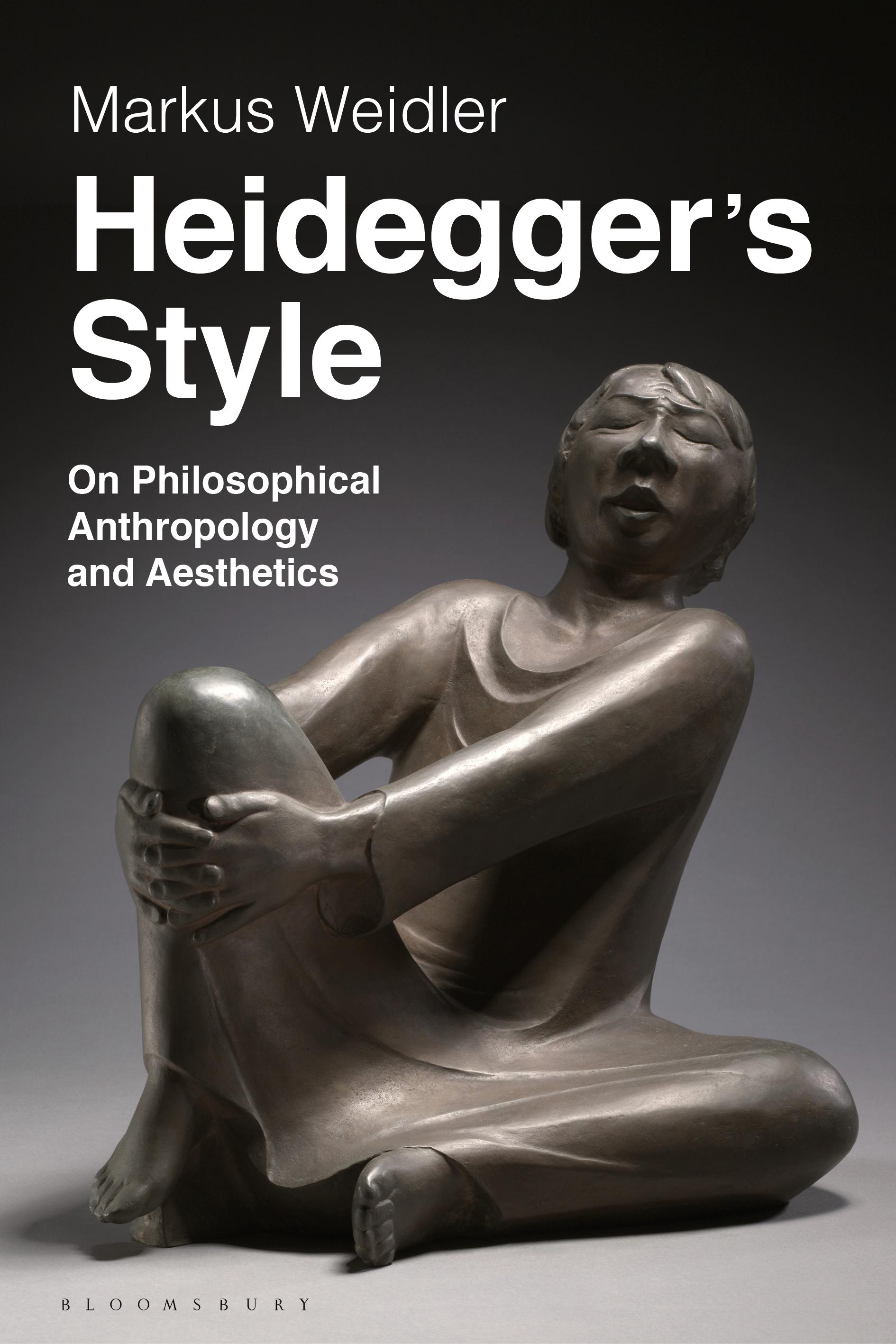
Addressing Heidegger's continuing centrality to continental thought, Markus Weidler argues that Heidegger's prickly charm is best explained in terms of his great ingenuity, crafting a novel genre of writing which promises to harness the revelatory power of artworks for the purpose of philosophical inquiry. In doing so, Heidegger challenges the reader with a provocative form of artisan thinking, which for Weidler is central to understanding the significance of Heidegger's work overall.
In Vorträge und Aufsätze (Public Lectures and Essays) Heidegger declares: 'once it has become anthropology, philosophy perishes from metaphysics.' Remarks critical of 'philosophical anthropology' are scattered throughout his writings, but so far commentators have not connected these tantalizing statements in any systematic way. This book deals with his hostility by addressing what we are to make of Heidegger's frequent but elusive dismissals of philosophical anthropology as a field of study.
This examination of Heidegger's complex relation to philosophical anthropology traces how pioneering thinkers like Schelling and Schiller paved the way not only for Heidegger but also for some of his potential competitors, most notably Max Scheler and Georg Simmel. Weidler argues that confronting the puzzle over Heidegger's peculiar relation to philosophical anthropology is also one of the keys to explaining his popularity as a philosopher, which has endured despite revelations of his various personal and political failings.
In Vorträge und Aufsätze (Public Lectures and Essays) Heidegger declares: 'once it has become anthropology, philosophy perishes from metaphysics.' Remarks critical of 'philosophical anthropology' are scattered throughout his writings, but so far commentators have not connected these tantalizing statements in any systematic way. This book deals with his hostility by addressing what we are to make of Heidegger's frequent but elusive dismissals of philosophical anthropology as a field of study.
This examination of Heidegger's complex relation to philosophical anthropology traces how pioneering thinkers like Schelling and Schiller paved the way not only for Heidegger but also for some of his potential competitors, most notably Max Scheler and Georg Simmel. Weidler argues that confronting the puzzle over Heidegger's peculiar relation to philosophical anthropology is also one of the keys to explaining his popularity as a philosopher, which has endured despite revelations of his various personal and political failings.
Payez facilement par carte, Klarna, Apple Pay ou Google Pay. Pas satisfait ? Vous avez toujours une garantie de remboursement de 14 jours. En savoir plus dans nos conditions. Si vous avez des questions, envoyez-nous un e-mail à hello@memmo.org.
Memmo facilite tes études, où que tu sois dans le monde. On rassemble tes manuels de cours et des outils d'étude intelligents au même endroit : résumés, quiz, podcasts et flashcards. Et il y a Ted, ton compagnon d'étude qui répond à toutes tes questions. Plus de 50 000 étudiants étudient déjà ici – conçu pour t'aider à apprendre plus vite et à moins stresser.