
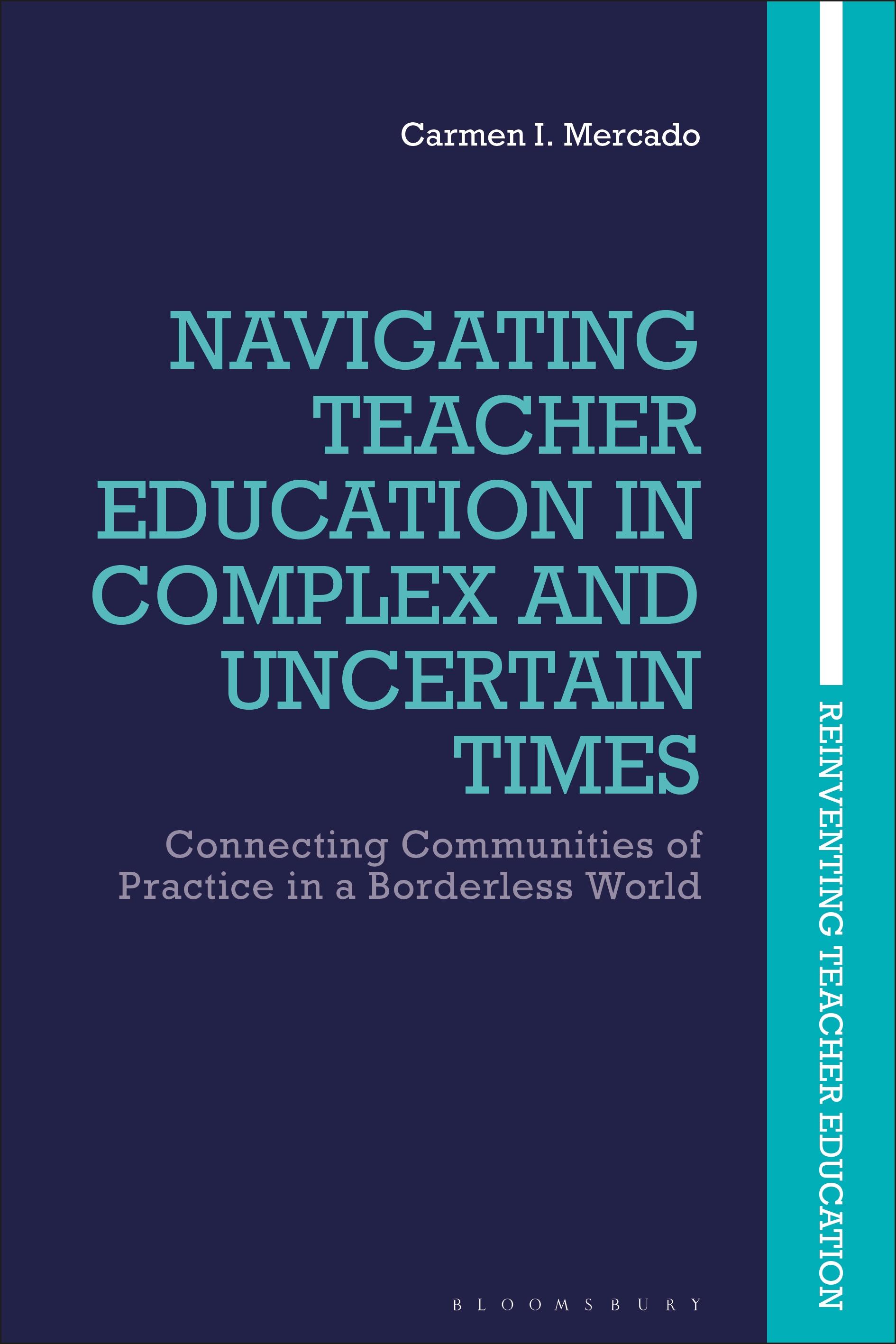
Carmen I. Mercado draws on four decades of seminal research and theory on how American children, who come from homes where languages other than English are spoken, learn to read and to write in school to reveal aspects of locally-responsive planning and adaptations that should be central to any teacher education program that hopes to serve its unique, local population base responsibly.
Mercado uses a range of theoretical lenses particularly those surrounding critical theory, the approach designed to deconstruct power relationships in society, to capture and explain the complexities of the teaching-learning process making visible institutional, social and political influences clear. She explores an extensive collection of tools and resources for teaching to explore how educators can inform their thinking and shape their own practices to broaden access to people and resources, and to influence classroom instruction as school populations becomes increasingly diverse on a global scale through immigration. Mercado also shows how self-study has been a key aspect of her program's evolution, suggesting that teacher education should be informed by teacher educators' own investigations into their own programs and processes; that each teacher educator ought to be an active reinventor of her own program, based on reflection on current data.
Mercado sensitively draws together the technical and emotional dimensions of learning to teach, acknowledging that critical theory can bring up deep, often uncomfortable feelings of anger, guilt, resentment, and other responses to unfair conditions. However, since schools are designed as places of opportunity, facing these responses is essential at a time with the feelings of antagonism that characterize the present-day world and its conflictual social groups. Mercado offers the opportunity to address these facets of educational process in compelling, informed ways.
Mercado uses a range of theoretical lenses particularly those surrounding critical theory, the approach designed to deconstruct power relationships in society, to capture and explain the complexities of the teaching-learning process making visible institutional, social and political influences clear. She explores an extensive collection of tools and resources for teaching to explore how educators can inform their thinking and shape their own practices to broaden access to people and resources, and to influence classroom instruction as school populations becomes increasingly diverse on a global scale through immigration. Mercado also shows how self-study has been a key aspect of her program's evolution, suggesting that teacher education should be informed by teacher educators' own investigations into their own programs and processes; that each teacher educator ought to be an active reinventor of her own program, based on reflection on current data.
Mercado sensitively draws together the technical and emotional dimensions of learning to teach, acknowledging that critical theory can bring up deep, often uncomfortable feelings of anger, guilt, resentment, and other responses to unfair conditions. However, since schools are designed as places of opportunity, facing these responses is essential at a time with the feelings of antagonism that characterize the present-day world and its conflictual social groups. Mercado offers the opportunity to address these facets of educational process in compelling, informed ways.
Payez facilement par carte, Klarna, Apple Pay ou Google Pay. Pas satisfait ? Vous avez toujours une garantie de remboursement de 14 jours. En savoir plus dans nos conditions. Si vous avez des questions, envoyez-nous un e-mail à hello@memmo.org.
Memmo facilite tes études, où que tu sois dans le monde. On rassemble tes manuels de cours et des outils d'étude intelligents au même endroit : résumés, quiz, podcasts et flashcards. Et il y a Ted, ton compagnon d'étude qui répond à toutes tes questions. Plus de 50 000 étudiants étudient déjà ici – conçu pour t'aider à apprendre plus vite et à moins stresser.