
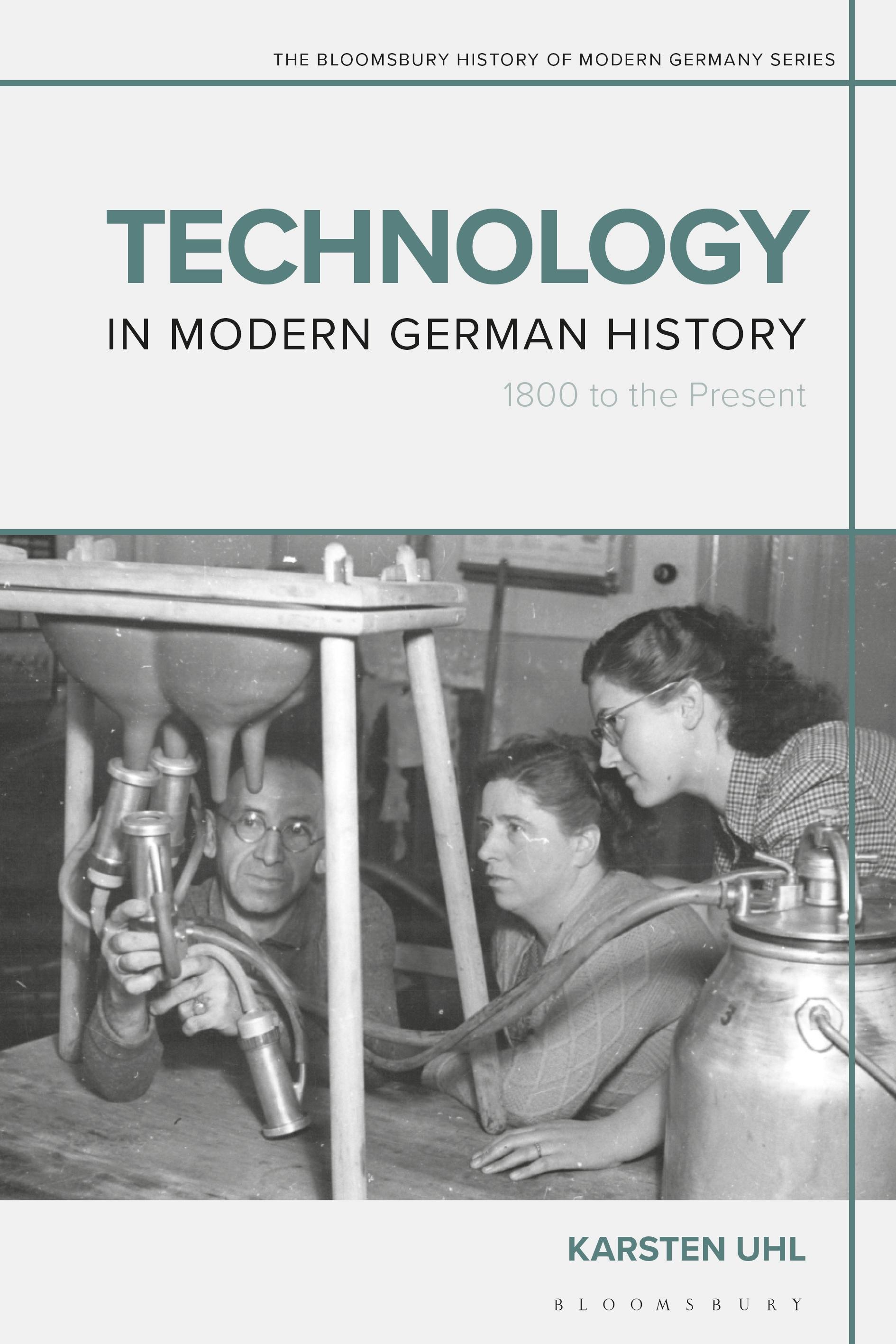
People often associate postwar Germany with technology and with its products of mass consumption, such as luxury cars. Even pop music, most notably Kraftwerk (literally 'power station') with songs such as Autobahn, Radioactivity or We are the Robots, disseminates the stereotype of a close link between German culture and technology. Technology in Modern German History explores various forms of technology in 200 years of German history and explains how technology has been fundamental to the shaping of modern Germany.
The book investigates the role technology played in transforming Germany's culture, society and politics during the 19th and 20th centuries. Key topics covered include the different stages of industrialization, the growth of networked cities, and the triumph of a teleological narrative of technology as progress. Moreover, it provides a critical revision of the history of high technology which reveals how high-tech euphoria determined certain paths in history regardless of whether the respective technology proved to be successful.
In its second part, the volume introduces new avenues in scholarship. Karsten Uhl examines neglected areas, such as rural technologies or the often-overlooked importance of everyday technologies: How did consumers or workers use new technologies? How did they appropriate and modify them? Lastly, the book considers the final decades of the 20th century and asks if they provided a significant new quality of technological change: To what degree and effects did computerization transform professional and private life in Germany? In culture and politics, reinforced by the German variety of environmentalism, the idea of progress was challenged, as the once prevailing vision of progress gave way to new apprehensions of uncertainty evident to this day.
Technology in Modern German History brings fascinating insight into a much neglected area of German history for students and scholars alike.
The book investigates the role technology played in transforming Germany's culture, society and politics during the 19th and 20th centuries. Key topics covered include the different stages of industrialization, the growth of networked cities, and the triumph of a teleological narrative of technology as progress. Moreover, it provides a critical revision of the history of high technology which reveals how high-tech euphoria determined certain paths in history regardless of whether the respective technology proved to be successful.
In its second part, the volume introduces new avenues in scholarship. Karsten Uhl examines neglected areas, such as rural technologies or the often-overlooked importance of everyday technologies: How did consumers or workers use new technologies? How did they appropriate and modify them? Lastly, the book considers the final decades of the 20th century and asks if they provided a significant new quality of technological change: To what degree and effects did computerization transform professional and private life in Germany? In culture and politics, reinforced by the German variety of environmentalism, the idea of progress was challenged, as the once prevailing vision of progress gave way to new apprehensions of uncertainty evident to this day.
Technology in Modern German History brings fascinating insight into a much neglected area of German history for students and scholars alike.
Payez facilement par carte, Klarna, Apple Pay ou Google Pay. Pas satisfait ? Vous avez toujours une garantie de remboursement de 14 jours. En savoir plus dans nos conditions. Si vous avez des questions, envoyez-nous un e-mail à hello@memmo.org.
Memmo facilite tes études, où que tu sois dans le monde. On rassemble tes manuels de cours et des outils d'étude intelligents au même endroit : résumés, quiz, podcasts et flashcards. Et il y a Ted, ton compagnon d'étude qui répond à toutes tes questions. Plus de 50 000 étudiants étudient déjà ici – conçu pour t'aider à apprendre plus vite et à moins stresser.