
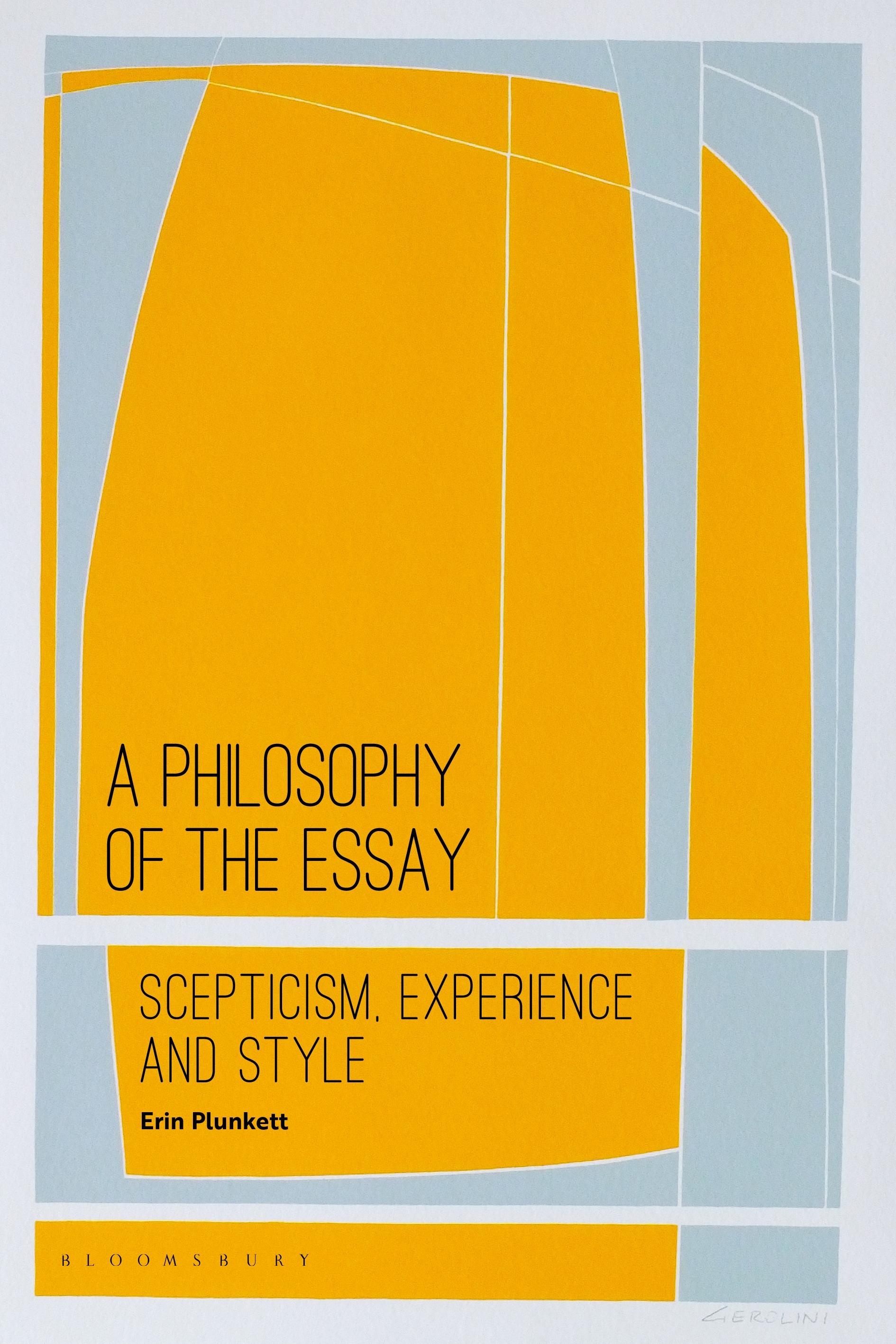
Erin Plunkett draws from both analytic and continental sources to argue for the philosophical relevance of style, making the case that the essay form is uniquely suited to address the sceptical problem. The authors examined here-Montaigne, Hume, the early German Romantics, Kierkegaard and Stanley Cavell-bring into relief the relationship between scepticism and ordinary life and situate the will to know within a broader frame of meaningful human activity. The formal features of the essay call attention to time, subjectivity, and language as the existential conditions of knowledge.
In contrast to foundationalist approaches, which expect philosophy to reach empirical or rational certainty, Plunkett demonstrates through these writings the philosophical advantages of a fragmentary, non-dogmatic style of writing. A Philosophy of the Essay shows how this medium can help us come to terms with the contingency and uncertainty of life.
In contrast to foundationalist approaches, which expect philosophy to reach empirical or rational certainty, Plunkett demonstrates through these writings the philosophical advantages of a fragmentary, non-dogmatic style of writing. A Philosophy of the Essay shows how this medium can help us come to terms with the contingency and uncertainty of life.
Payez facilement par carte, Klarna, Apple Pay ou Google Pay. Pas satisfait ? Vous avez toujours une garantie de remboursement de 14 jours. En savoir plus dans nos conditions. Si vous avez des questions, envoyez-nous un e-mail à hello@memmo.org.
Memmo facilite tes études, où que tu sois dans le monde. On rassemble tes manuels de cours et des outils d'étude intelligents au même endroit : résumés, quiz, podcasts et flashcards. Et il y a Ted, ton compagnon d'étude qui répond à toutes tes questions. Plus de 50 000 étudiants étudient déjà ici – conçu pour t'aider à apprendre plus vite et à moins stresser.