
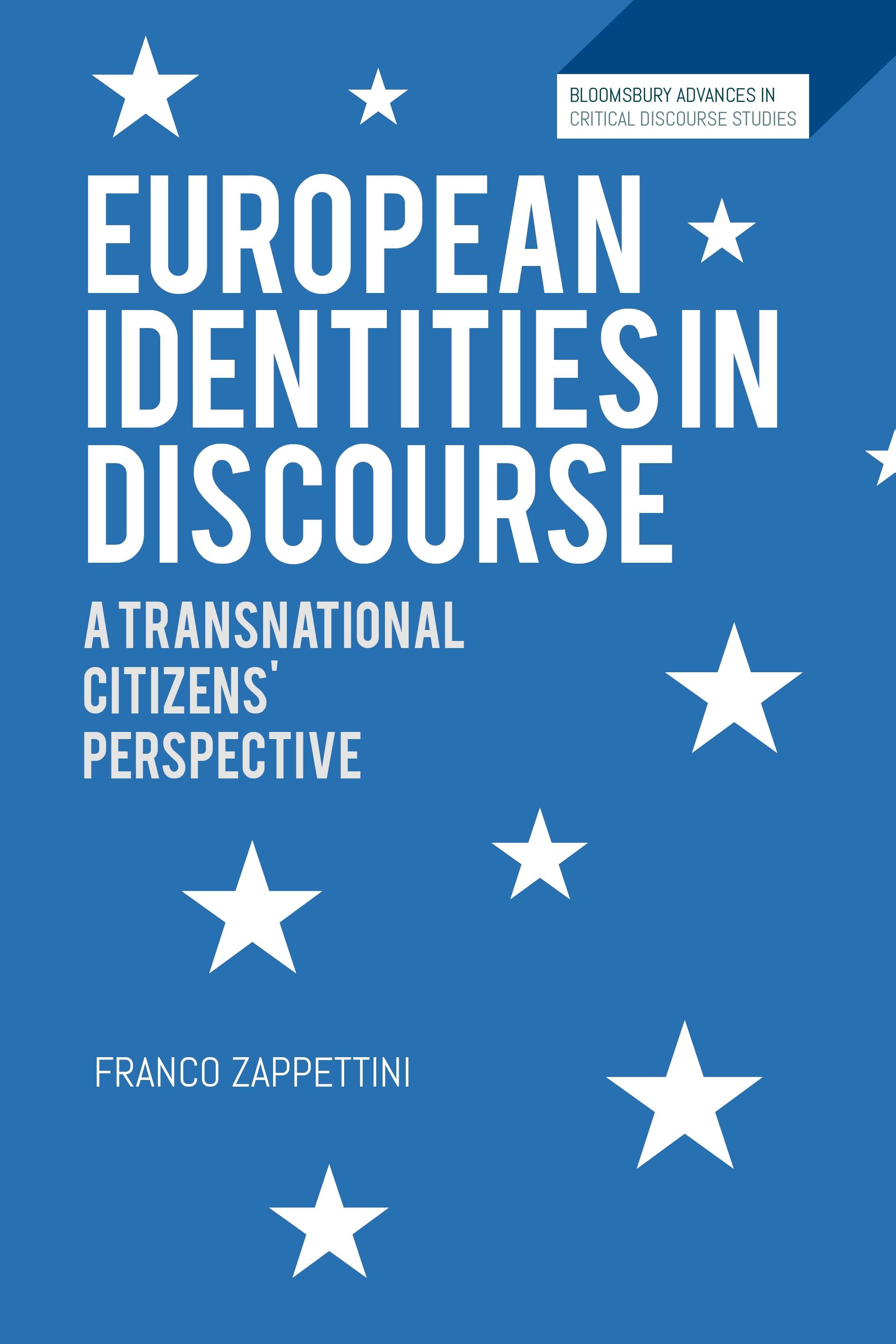
Based on empirical research, this book closely analyses how European identities are discursively produced. It focuses on discourse from members of a civic association active in promoting democracy and attempting participation in the transnational public sphere.
Unlike previous books that have addressed the question of European identity from top-down stances or through methodological nationalism, this book engages with the multifaceted concept of transnationalism as a key to the negotiation of 'glocal' identities. Applying a discourse historical approach (DHA) through a transnational reading, it shows how grassroots actors/speakers construct their different cultural and political affiliations as both world and European citizens. They negotiate institutional identities and historical discourses of nationhood through new forms of mobility, cultural diversity and the imagination of Europe as a proxy for a cosmopolitan civil society. These discourses are ever more important in a fractured and polarised Europe falling prey to contrary discourses of nationhood and ethnic solidarity.
Highlighting how transnational narratives of solidarity and the de-territorialisation of civic participation can impact on the (re)imagination of the European community beyond tropes like 'Fortress Europe' or intragovernmental politics, this important book shows how identification processes must be read through historical and global as well as localised contexts.
Unlike previous books that have addressed the question of European identity from top-down stances or through methodological nationalism, this book engages with the multifaceted concept of transnationalism as a key to the negotiation of 'glocal' identities. Applying a discourse historical approach (DHA) through a transnational reading, it shows how grassroots actors/speakers construct their different cultural and political affiliations as both world and European citizens. They negotiate institutional identities and historical discourses of nationhood through new forms of mobility, cultural diversity and the imagination of Europe as a proxy for a cosmopolitan civil society. These discourses are ever more important in a fractured and polarised Europe falling prey to contrary discourses of nationhood and ethnic solidarity.
Highlighting how transnational narratives of solidarity and the de-territorialisation of civic participation can impact on the (re)imagination of the European community beyond tropes like 'Fortress Europe' or intragovernmental politics, this important book shows how identification processes must be read through historical and global as well as localised contexts.
Payez facilement par carte, Klarna, Apple Pay ou Google Pay. Pas satisfait ? Vous avez toujours une garantie de remboursement de 14 jours. En savoir plus dans nos conditions. Si vous avez des questions, envoyez-nous un e-mail à hello@memmo.org.
Memmo facilite tes études, où que tu sois dans le monde. On rassemble tes manuels de cours et des outils d'étude intelligents au même endroit : résumés, quiz, podcasts et flashcards. Et il y a Ted, ton compagnon d'étude qui répond à toutes tes questions. Plus de 50 000 étudiants étudient déjà ici – conçu pour t'aider à apprendre plus vite et à moins stresser.