
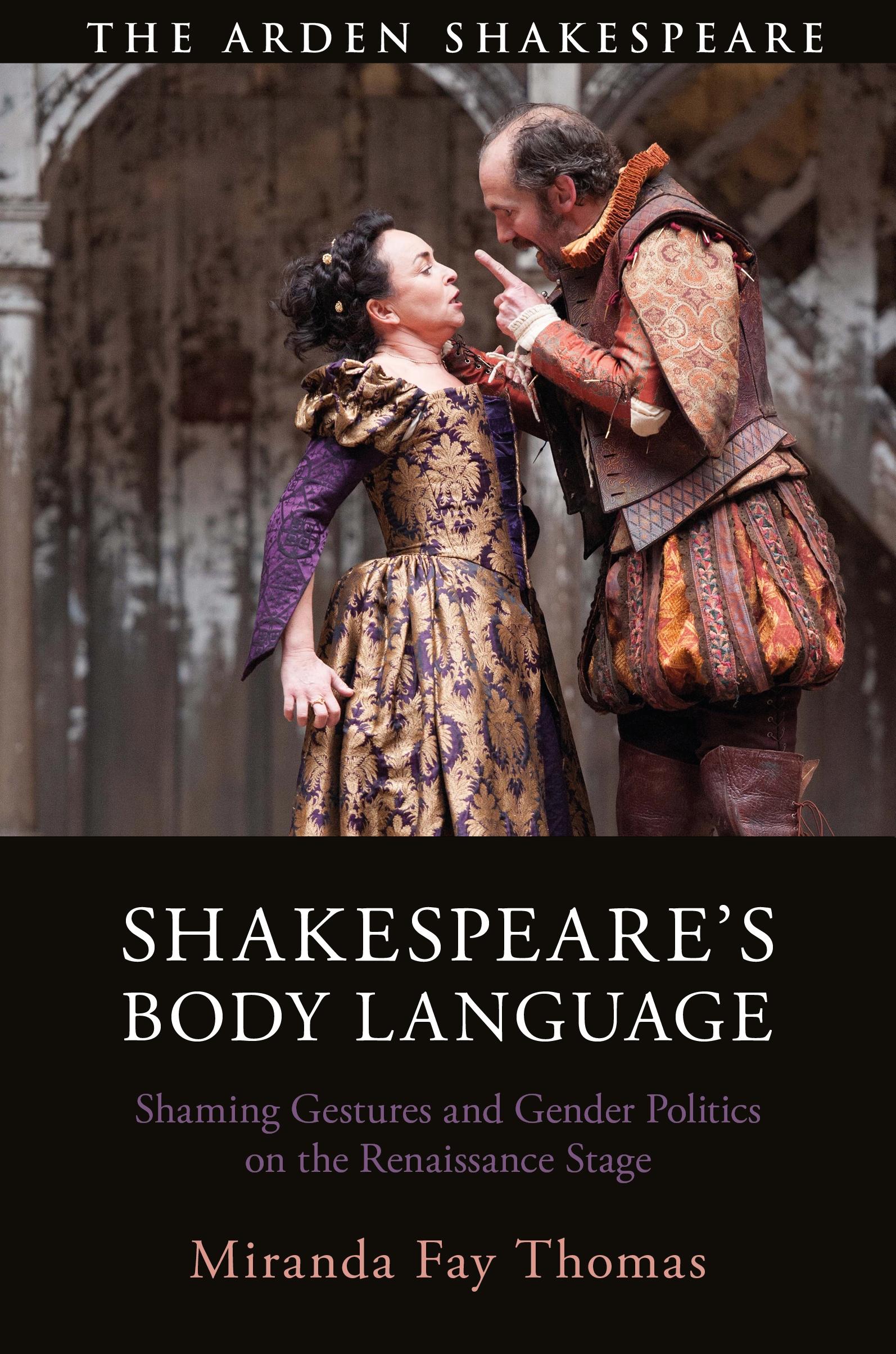
Why do the Capulets bite their thumbs at the Montagues? Why do the Venetians spit upon Shylock's Jewish gaberdine? What is it about Volumnia's act of kneeling that convinces Coriolanus not to assault the city of Rome?
Shakespeare's Body Language is a ground-breaking new study of Shakespearean drama, revealing the previously unseen history of social tensions found within the performance of gestures – and how such gestures are used to shame those within the body politic of early modern England. The first full study of shaming gestures in Shakespearean drama, this book establishes how shame is often rooted in the gendered expectations of the Renaissance era. Exploring how the performance of gestures such as figging, the cuckold's horns, and even the in-action of stillness created shaming spectacles on the early modern stage and its wider society, Shakespeare's Body Language argues that gestures are embodied social metaphors which epitomise the personal as political. It reveals the tensions of everyday life as key motivators behind the actions of Shakespeare's characters, and considers how honour and its opposite, shame, are constructed in terms of gender norms.
Featuring in-depth analyses of plays across Shakespeare's career, this book explores how the playwright's understanding of shame and humiliation is rooted in performance anxiety and gender politics, explaining how theatrical gestures can create dramatic tension in a way that words alone cannot. It offers both rich insights into the early modern context of Shakespeare's drama and confirms the startling relevance of his work to modern audiences.
Shakespeare's Body Language is a ground-breaking new study of Shakespearean drama, revealing the previously unseen history of social tensions found within the performance of gestures – and how such gestures are used to shame those within the body politic of early modern England. The first full study of shaming gestures in Shakespearean drama, this book establishes how shame is often rooted in the gendered expectations of the Renaissance era. Exploring how the performance of gestures such as figging, the cuckold's horns, and even the in-action of stillness created shaming spectacles on the early modern stage and its wider society, Shakespeare's Body Language argues that gestures are embodied social metaphors which epitomise the personal as political. It reveals the tensions of everyday life as key motivators behind the actions of Shakespeare's characters, and considers how honour and its opposite, shame, are constructed in terms of gender norms.
Featuring in-depth analyses of plays across Shakespeare's career, this book explores how the playwright's understanding of shame and humiliation is rooted in performance anxiety and gender politics, explaining how theatrical gestures can create dramatic tension in a way that words alone cannot. It offers both rich insights into the early modern context of Shakespeare's drama and confirms the startling relevance of his work to modern audiences.
Payez facilement par carte, Klarna, Apple Pay ou Google Pay. Pas satisfait ? Vous avez toujours une garantie de remboursement de 14 jours. En savoir plus dans nos conditions. Si vous avez des questions, envoyez-nous un e-mail à hello@memmo.org.
Memmo facilite tes études, où que tu sois dans le monde. On rassemble tes manuels de cours et des outils d'étude intelligents au même endroit : résumés, quiz, podcasts et flashcards. Et il y a Ted, ton compagnon d'étude qui répond à toutes tes questions. Plus de 50 000 étudiants étudient déjà ici – conçu pour t'aider à apprendre plus vite et à moins stresser.