
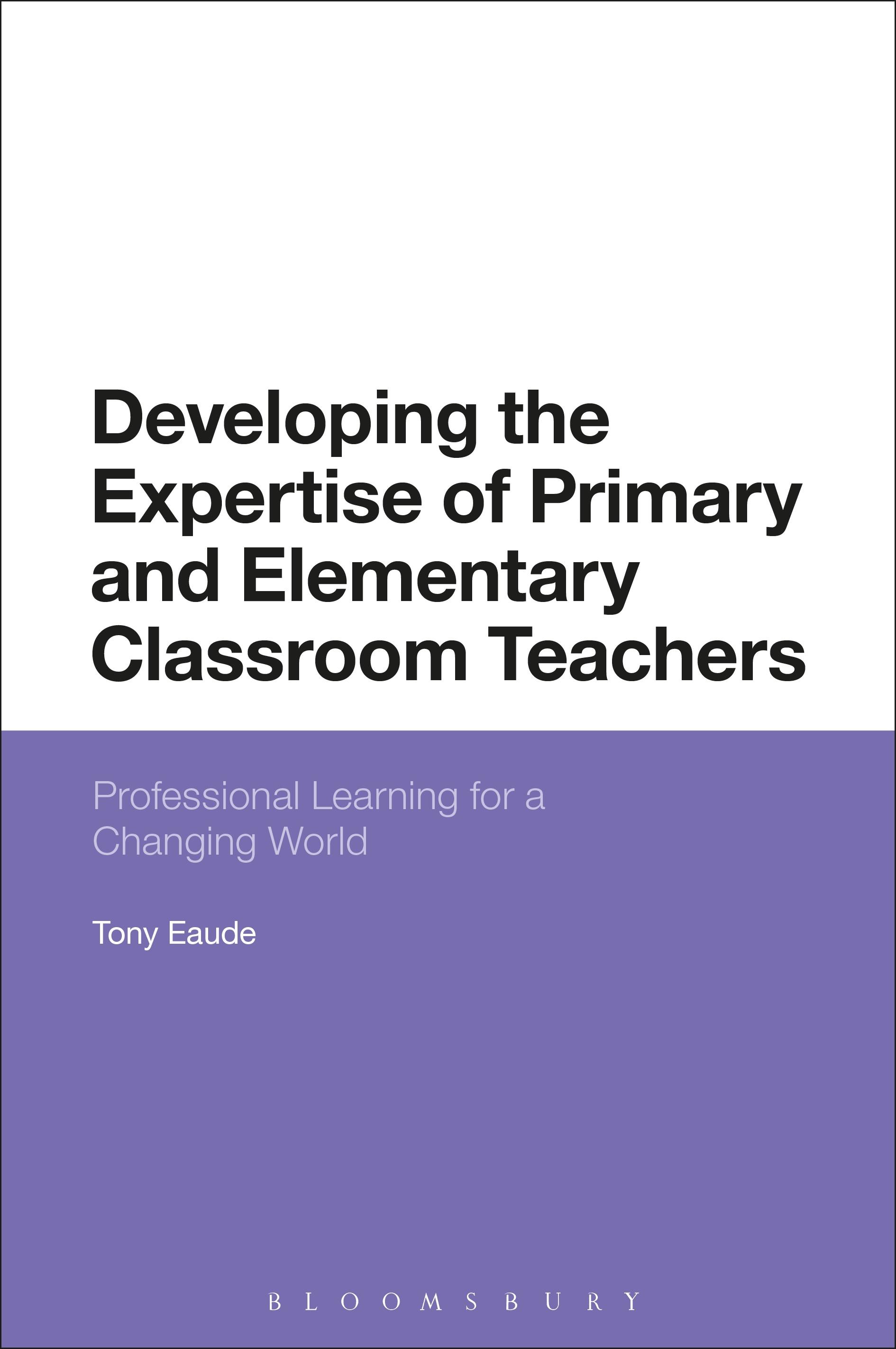
Developing the Expertise of Primary and Elementary Classroom Teachers challenges many current assumptions about primary education. Tony Eaude uses international research and the experiences of teachers at different career phases to indicate that primary classroom teachers with a high level of expertise adopt a wide repertoire of strategies and a flexible, reciprocal and intuitive approach to planning, assessment and teaching. He explores why a deep understanding of how young children learn, the ability to create an inclusive environment, relationships of care and trust and teachers who are attuned to children are essential. Eaude argues that to develop qualities such as confidence and resilience, to exercise informed intuition and to create a robust professional identity, many constraints on manifesting expertise, some of which are emotional, some more structural, must be overcome.
Drawing on the research on professional learning, Eaude shows that these abilities and qualities are learned over time, through regular, sustained, contextualised opportunities, relating theory and practice, with the years soon after qualification particularly significant. He highlights that the professional knowledge and judgement required in complex, changing situations is acquired and refined mainly through guided practice and experience backed by reflection and engagement with research. The need for supportive professional learning communities and for policy which encourages primary classroom teachers' enthusiasm, creativity and willingness to innovate is emphasised and an enriched apprenticeship model – using a variety of processes, including observation of other teachers, practice, mentoring, case studies and discussion – is advocated.
Drawing on the research on professional learning, Eaude shows that these abilities and qualities are learned over time, through regular, sustained, contextualised opportunities, relating theory and practice, with the years soon after qualification particularly significant. He highlights that the professional knowledge and judgement required in complex, changing situations is acquired and refined mainly through guided practice and experience backed by reflection and engagement with research. The need for supportive professional learning communities and for policy which encourages primary classroom teachers' enthusiasm, creativity and willingness to innovate is emphasised and an enriched apprenticeship model – using a variety of processes, including observation of other teachers, practice, mentoring, case studies and discussion – is advocated.
Payez facilement par carte, Klarna, Apple Pay ou Google Pay. Pas satisfait ? Vous avez toujours une garantie de remboursement de 14 jours. En savoir plus dans nos conditions. Si vous avez des questions, envoyez-nous un e-mail à hello@memmo.org.
Memmo facilite tes études, où que tu sois dans le monde. On rassemble tes manuels de cours et des outils d'étude intelligents au même endroit : résumés, quiz, podcasts et flashcards. Et il y a Ted, ton compagnon d'étude qui répond à toutes tes questions. Plus de 50 000 étudiants étudient déjà ici – conçu pour t'aider à apprendre plus vite et à moins stresser.