
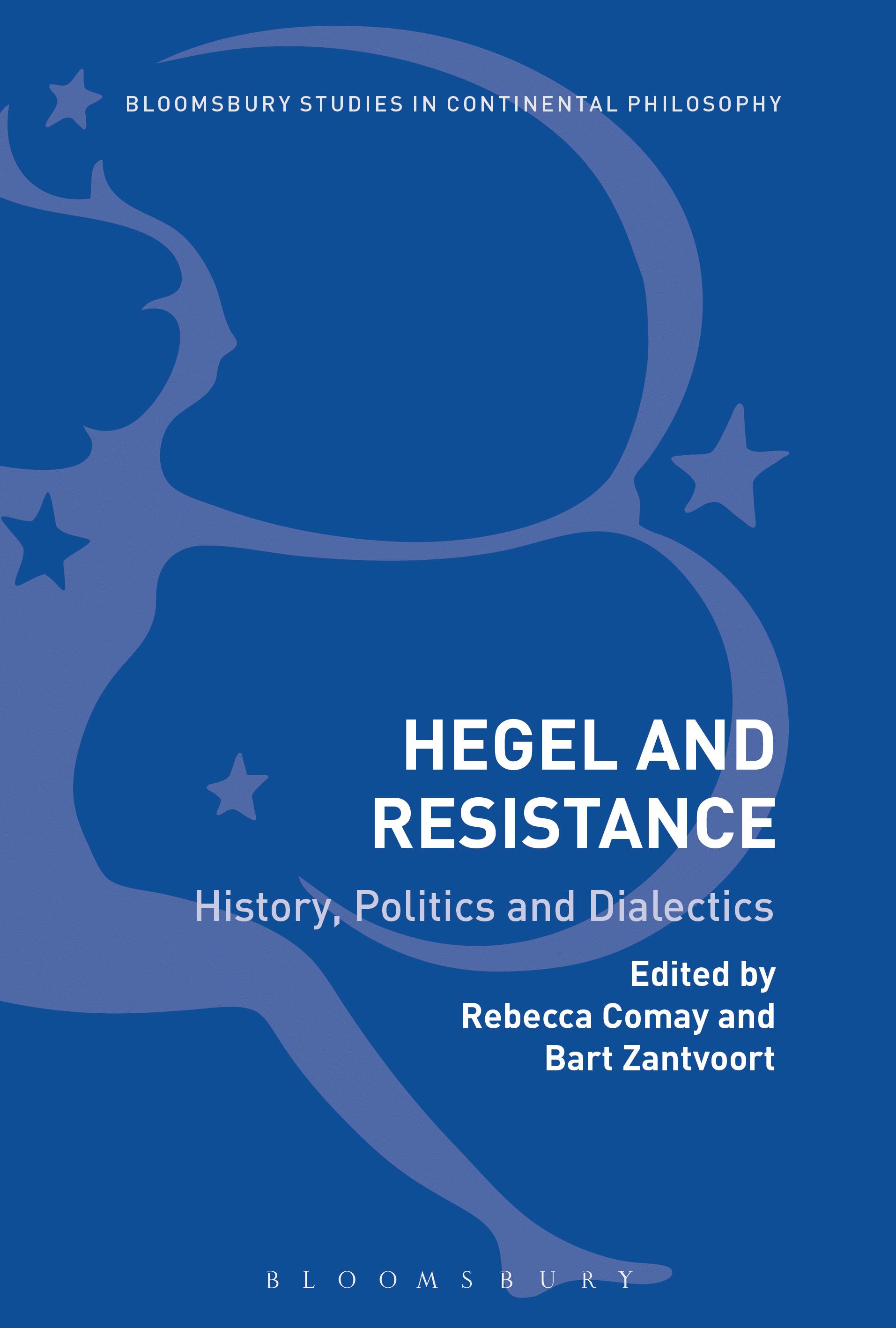
The concept of resistance has always been central to the reception of Hegel's philosophy. The prevalent image of Hegel's system, which continues to influence the scholarship to this day, is that of an absolutist, monist metaphysics which overcomes all resistance, sublating or assimilating all differences into a single organic 'Whole'. For that reason, the reception of Hegel has always been marked by the question of how to resist Hegel: how to think that which remains outside of or other to the totalizing system of dialectics.
In recent years the work of scholars such as Catherine Malabou, Slavoj Žižek, Rebecca Comay and Frank Ruda has brought considerable nuance to this debate. A new reading of Hegel has emerged which challenges the idea that there is no place for difference, otherness or resistance in Hegel, both by refusing to reduce Hegel's complex philosophy to a straightforward systematic narrative and by highlighting particular moments within Hegel's philosophy which seem to counteract the traditional understanding of dialectics.
This book brings together established and new voices in this field in order to show that the notion of resistance is central to this revaluation of Hegel.
In recent years the work of scholars such as Catherine Malabou, Slavoj Žižek, Rebecca Comay and Frank Ruda has brought considerable nuance to this debate. A new reading of Hegel has emerged which challenges the idea that there is no place for difference, otherness or resistance in Hegel, both by refusing to reduce Hegel's complex philosophy to a straightforward systematic narrative and by highlighting particular moments within Hegel's philosophy which seem to counteract the traditional understanding of dialectics.
This book brings together established and new voices in this field in order to show that the notion of resistance is central to this revaluation of Hegel.
Payez facilement par carte, Klarna, Apple Pay ou Google Pay. Pas satisfait ? Vous avez toujours une garantie de remboursement de 14 jours. En savoir plus dans nos conditions. Si vous avez des questions, envoyez-nous un e-mail à hello@memmo.org.
Memmo facilite tes études, où que tu sois dans le monde. On rassemble tes manuels de cours et des outils d'étude intelligents au même endroit : résumés, quiz, podcasts et flashcards. Et il y a Ted, ton compagnon d'étude qui répond à toutes tes questions. Plus de 50 000 étudiants étudient déjà ici – conçu pour t'aider à apprendre plus vite et à moins stresser.