
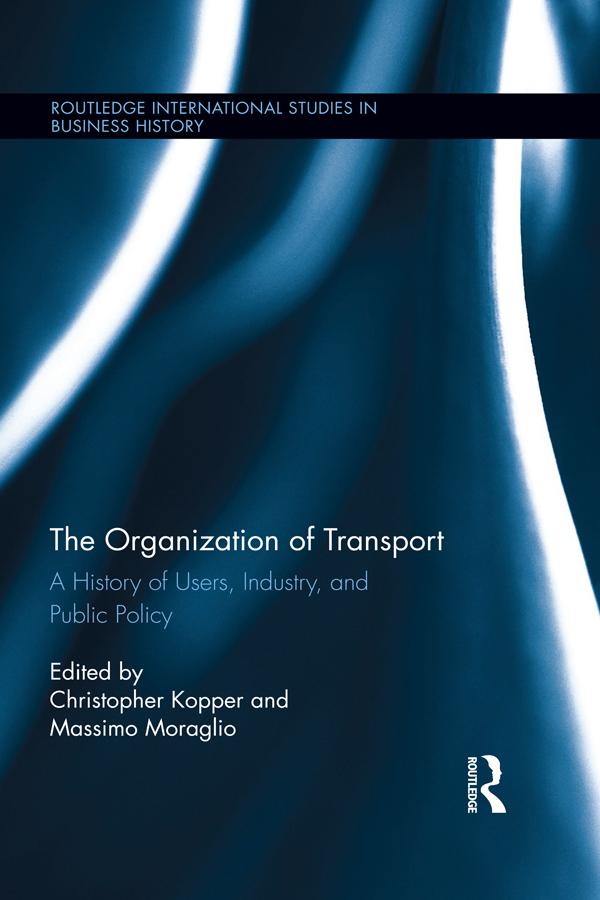
Over the past ten years, the study of mobility has demonstrated groundbreaking approaches and new research patterns. These investigations criticize the concept of mobility itself, suggesting the need to merge transport and communication research, and to approach the topic with novel instruments and new methodologies. Following the debates on the role of users in shaping transport technology, new mobility research includes debates from sociology, planning, economy, geography, history, and anthropology.
This edited volume examines how users, policy-makers, and industrial managers have organized and continue to organize mobility, with a particularly attention to Europe, North America, and Asia. Taking a long-term and comparative perspective, the volume brings together thirteen chapters from the fields of urban studies, history, cultural studies, and geography. Covering a variety of countries and regions, these chapters investigate how various actors have shaped transport systems, creating models of mobility that differ along a number of dimensions, including public vs. private ownership and operation as well as individual vs. collective forms of transportation. The contributions also examine the extent to which initial models have created path dependencies in terms of technology, physical infrastructure, urban development, and cultural and behavioral preferences that limit subsequent choices.
Payez facilement par carte, Klarna, Apple Pay ou Google Pay. Pas satisfait ? Vous avez toujours une garantie de remboursement de 14 jours. En savoir plus dans nos conditions. Si vous avez des questions, envoyez-nous un e-mail à hello@memmo.org.
Memmo facilite tes études, où que tu sois dans le monde. On rassemble tes manuels de cours et des outils d'étude intelligents au même endroit : résumés, quiz, podcasts et flashcards. Et il y a Ted, ton compagnon d'étude qui répond à toutes tes questions. Plus de 50 000 étudiants étudient déjà ici – conçu pour t'aider à apprendre plus vite et à moins stresser.