
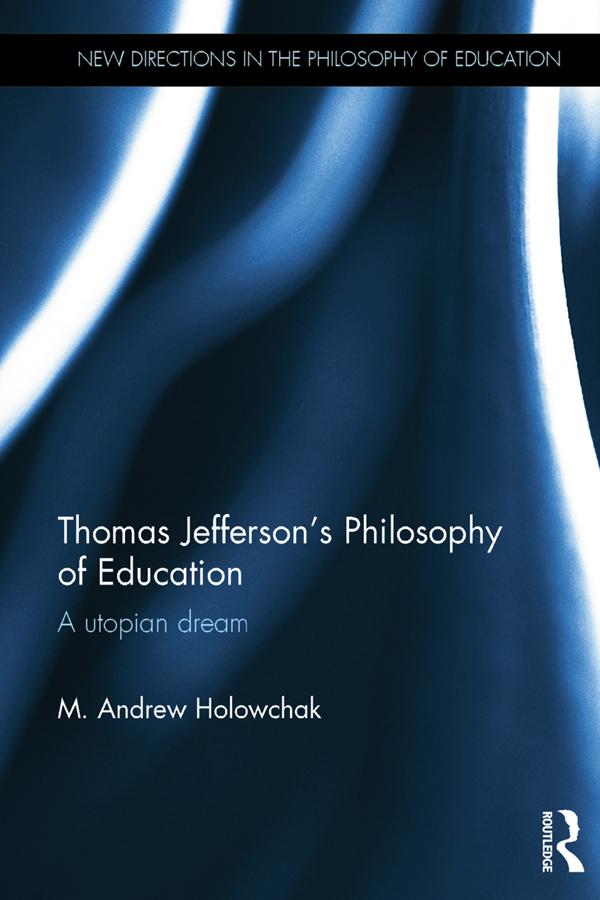
Thomas Jefferson had a profoundly advanced educational vision that went hand in hand with his political philosophy - each of which served the goal of human flourishing. His republicanism marked a break with the conservatism of traditional non-representative governments, characterized by birth and wealth and in neglect of the wants and needs of the people. Instead, Jefferson proposed social reforms which would allow people to express themselves freely, dictate their own course in life, and oversee their elected representatives. His educational vision aimed to instantiate a progressive social climate only dreamed of by utopists such as Thomas More, James Harrington and Louis-Sébastian Mercier.
This book offers a critical articulation of the philosophy behind Jefferson’s thoughts on education. Divided into three parts, chapters include an analysis of his views on elementary and higher education, an investigation of education for both the moral-sense and rational faculty, and an examination of education as lifelong learning. Jefferson’s educational rationale was economic, political and philosophical, and his systemic approach to education conveys a systemic, economic approach to living, with strong affinities to Stoicism.
Thomas Jefferson’s Philosophy of Education will be key reading for philosophers, historians and postgraduate students of education, the history of education and philosophy.
Payez facilement par carte, Klarna, Apple Pay ou Google Pay. Pas satisfait ? Vous avez toujours une garantie de remboursement de 14 jours. En savoir plus dans nos conditions. Si vous avez des questions, envoyez-nous un e-mail à hello@memmo.org.
Memmo facilite tes études, où que tu sois dans le monde. On rassemble tes manuels de cours et des outils d'étude intelligents au même endroit : résumés, quiz, podcasts et flashcards. Et il y a Ted, ton compagnon d'étude qui répond à toutes tes questions. Plus de 50 000 étudiants étudient déjà ici – conçu pour t'aider à apprendre plus vite et à moins stresser.