
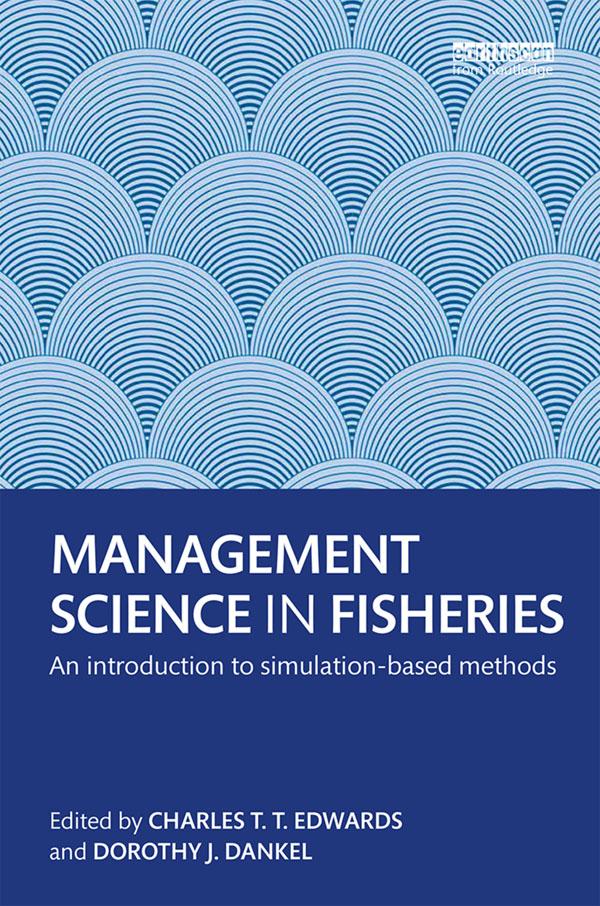
A key goal of fisheries management is to regulate extractive pressure on a resource so as to ensure social, economic and ecological sustainability. This text provides an accessible entry point for students and professionals to management science as developed in fisheries, in order to facilitate uptake of the latest ideas and methods.
Traditional management approaches have relied upon a stock assessment based on existing understanding of resource status and dynamics, and a prediction of the likely future response to a static management proposal. However all such predictions include an inherent degree of uncertainty, and the last few decades have seen the emergence of an adaptive approach that uses feedback control to account for unknown future behaviour. Feedback is achieved via a control rule, which defines a relationship between perceived status of the resource and a management action. Evaluations of such rules usually include computer simulation testing across a broad range of uncertainties, so that an appropriate and robust rule can be selected by stakeholders and managers. The book focuses on this approach, which is usually referred to as Management Strategy Evaluation.
The book is enriched by case study examples from different parts of the world, as well as insights into the theory and practice from those actively involved in the science of fisheries management.
Payez facilement par carte, Klarna, Apple Pay ou Google Pay. Pas satisfait ? Vous avez toujours une garantie de remboursement de 14 jours. En savoir plus dans nos conditions. Si vous avez des questions, envoyez-nous un e-mail à hello@memmo.org.
Memmo facilite tes études, où que tu sois dans le monde. On rassemble tes manuels de cours et des outils d'étude intelligents au même endroit : résumés, quiz, podcasts et flashcards. Et il y a Ted, ton compagnon d'étude qui répond à toutes tes questions. Plus de 50 000 étudiants étudient déjà ici – conçu pour t'aider à apprendre plus vite et à moins stresser.