
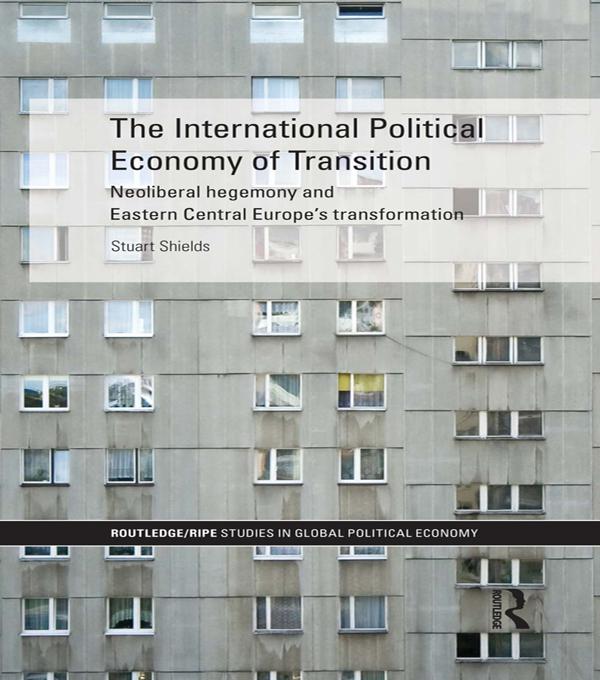
Shortlisted for the 2013 BISA IPEG Book Prize, this book explores how Eastern Europe’s post-communist transition can only be understood as part of a broader interrogation of neoliberal hegemony in the global political economy, and provides a detailed historical account of the emergence of neoliberalism in Eastern Central Europe.
Adopting an innovative Gramscian approach to post-communist transition, this book charts the rise to hegemony of neoliberal social forces. Using transition in Poland as a starting point, the author traces how particular social forces most intimately associated with transnational capital successful in the struggle over competing reform strategies. Transition is broken down into three stages; the "first wave" illustrates how the rise of particular social forces shaped by global change gave rise to a neoliberal strategy of capitalism from the 1970s. It goes on to show how the political economy of Europeanization, associated with EU enlargement instilled a "second wave" of neoliberalisation. Finally, exploring recent populist and left wing alternatives in the context of the current financial crisis, the book outlines how counter-hegemonic struggle might oppose a "third wave" neoliberalisation.
The International Political Economy of Transition will be of interest to students and scholars of international political economy, post-communist studies and European politics
Payez facilement par carte, Klarna, Apple Pay ou Google Pay. Pas satisfait ? Vous avez toujours une garantie de remboursement de 14 jours. En savoir plus dans nos conditions. Si vous avez des questions, envoyez-nous un e-mail à hello@memmo.org.
Memmo facilite tes études, où que tu sois dans le monde. On rassemble tes manuels de cours et des outils d'étude intelligents au même endroit : résumés, quiz, podcasts et flashcards. Et il y a Ted, ton compagnon d'étude qui répond à toutes tes questions. Plus de 50 000 étudiants étudient déjà ici – conçu pour t'aider à apprendre plus vite et à moins stresser.