
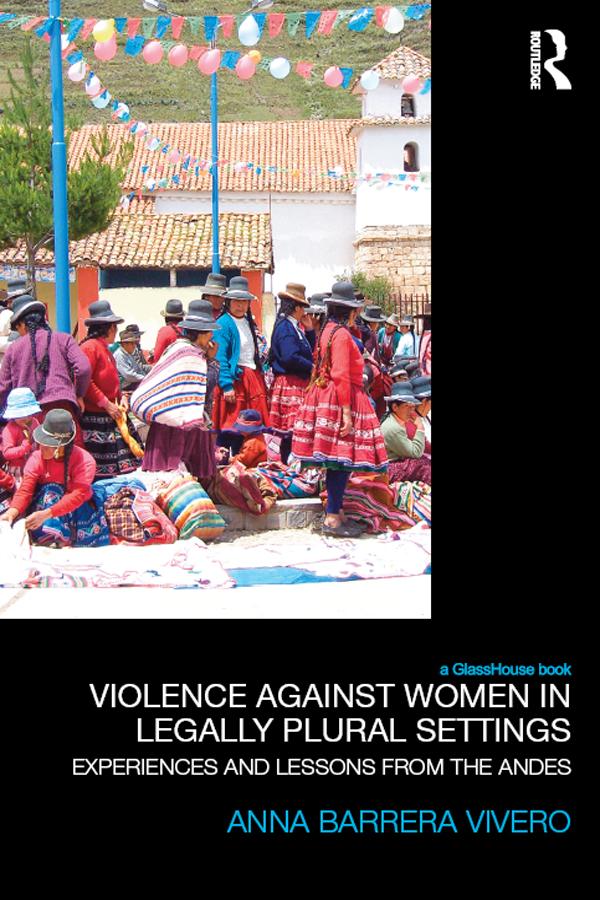
This book addresses a growing area of concern for scholars and development practitioners: discriminatory gender norms in legally plural settings. Focusing specifically on indigenous women, this book analyses how they, often in alliance with supporters and allies, have sought to improve their access to justice. Development practitioners working in the field of access to justice have tended to conceive indigenous legal systems as either inherently incompatible with women’s rights or, alternatively, they have emphasised customary law’s advantageous features, such as its greater accessibility, familiarity and effectiveness. Against this background – and based on a comparison of six thus far underexplored initiatives of legal and institutional change in Ecuador, Peru, and Bolivia – Anna Barrera Vivero provides a more nuanced, ethnographic, understanding of how women navigate through context-specific constellations of interlegality in their search for justice. In so doing, moreover, her account of ongoing political debates and local struggles for gender justice grounds the elaboration of a comprehensive conceptual framework for understanding the legally plural dynamics involved in the contestation of discriminatory gender norms.
Payez facilement par carte, Klarna, Apple Pay ou Google Pay. Pas satisfait ? Vous avez toujours une garantie de remboursement de 14 jours. En savoir plus dans nos conditions. Si vous avez des questions, envoyez-nous un e-mail à hello@memmo.org.
Memmo facilite tes études, où que tu sois dans le monde. On rassemble tes manuels de cours et des outils d'étude intelligents au même endroit : résumés, quiz, podcasts et flashcards. Et il y a Ted, ton compagnon d'étude qui répond à toutes tes questions. Plus de 50 000 étudiants étudient déjà ici – conçu pour t'aider à apprendre plus vite et à moins stresser.