
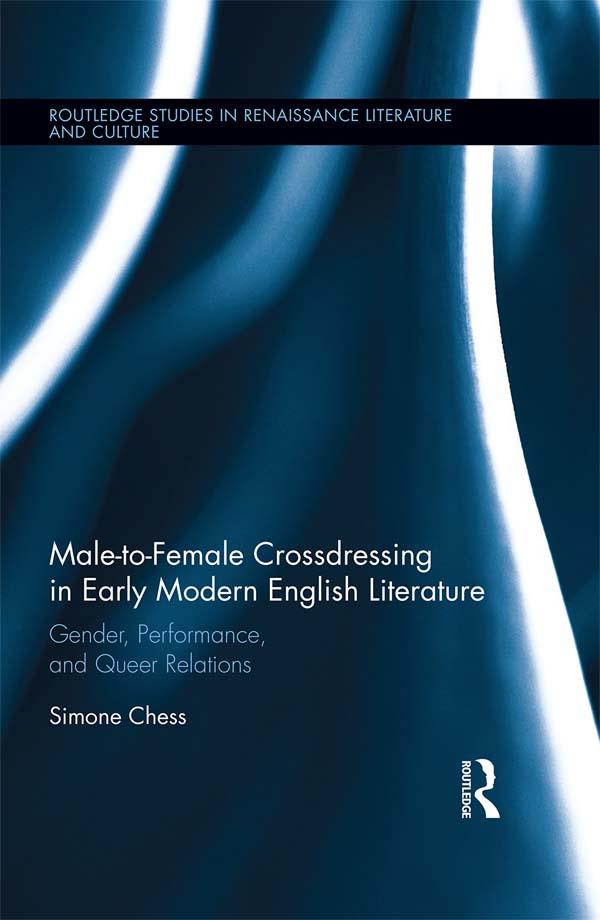
This volume examines and theorizes the oft-ignored phenomenon of male-to-female (MTF) crossdressing in early modern drama, prose, and poetry, inviting MTF crossdressing episodes to take a fuller place alongside instances of female-to-male crossdressing and boy actors’ crossdressing, which have long held the spotlight in early modern gender studies. The author argues that MTF crossdressing episodes are especially rich sources for socially-oriented readings of queer gender—that crossdressers’ genders are constructed and represented in relation to romantic partners, communities, and broader social structures like marriage, economy, and sexuality. Further, she argues that these relational representations show that the crossdresser and his/her allies often benefit financially, socially, and erotically from his/her queer gender presentation, a corrective to the dominant idea that queer gender has always been associated with shame, containment, and correction. By attending to these relational and beneficial representations of MTF crossdressers in early modern literature, the volume helps to make a larger space for queer, genderqueer, male-bodied and queer-feminine representations in our conversations about early modern gender and sexuality.
Payez facilement par carte, Klarna, Apple Pay ou Google Pay. Pas satisfait ? Vous avez toujours une garantie de remboursement de 14 jours. En savoir plus dans nos conditions. Si vous avez des questions, envoyez-nous un e-mail à hello@memmo.org.
Memmo facilite tes études, où que tu sois dans le monde. On rassemble tes manuels de cours et des outils d'étude intelligents au même endroit : résumés, quiz, podcasts et flashcards. Et il y a Ted, ton compagnon d'étude qui répond à toutes tes questions. Plus de 50 000 étudiants étudient déjà ici – conçu pour t'aider à apprendre plus vite et à moins stresser.