
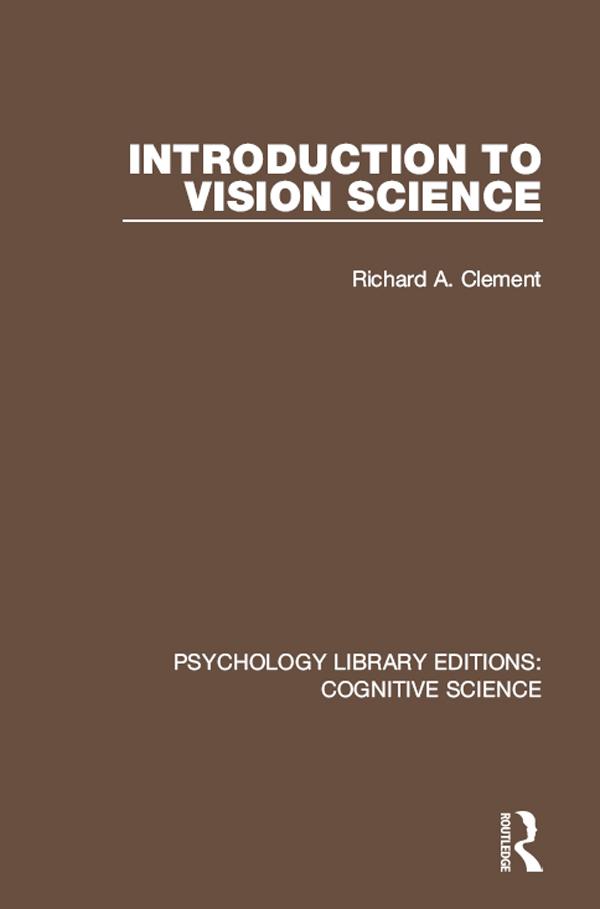
Different animals have different visual systems and so presumably have different ways of seeing. How does the way in which we see depend on the optical, neural and motor components of our visual systems? Originally published in 1993, the mathematical tools needed to answer this question are introduced in this book. Elementary linear algebra is used to describe the transformations of the stimulus that occur in the formation of the optical, neural and motor images in the human visual system. The distinctive feature of the approach is that transformations are specified with enough rigour for readers to be able to set up their own models and generate predictions from them.
Underlying the approach of this book is the goal of providing a self-contained source for the derivation of the basic equations of vision science. An introductory section on vector and matrix algebra covers the mathematical techniques which are applied to both sensory and motor aspects of the visual system, and the intervening steps in the mathematical arguments are given in full, in order to make the derivation of the equations easier to follow.
A subsidiary goal of this book is to demonstrate the utility of current desktop computer packages which make the application of mathematics very easy. All the numerical results were produced using only a spreadsheet or mathematics package, and example calculations are included in the text.
Payez facilement par carte, Klarna, Apple Pay ou Google Pay. Pas satisfait ? Vous avez toujours une garantie de remboursement de 14 jours. En savoir plus dans nos conditions. Si vous avez des questions, envoyez-nous un e-mail à hello@memmo.org.
Memmo facilite tes études, où que tu sois dans le monde. On rassemble tes manuels de cours et des outils d'étude intelligents au même endroit : résumés, quiz, podcasts et flashcards. Et il y a Ted, ton compagnon d'étude qui répond à toutes tes questions. Plus de 50 000 étudiants étudient déjà ici – conçu pour t'aider à apprendre plus vite et à moins stresser.