
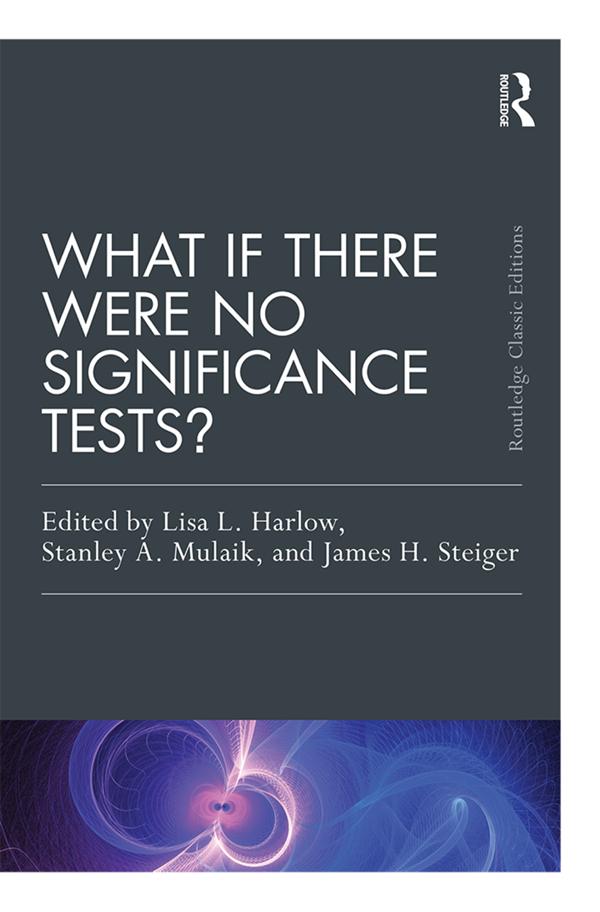
The classic edition of What If There Were No Significance Tests? highlights current statistical inference practices. Four areas are featured as essential for making inferences: sound judgment, meaningful research questions, relevant design, and assessing fit in multiple ways. Other options (data visualization, replication or meta-analysis), other features (mediation, moderation, multiple levels or classes), and other approaches (Bayesian analysis, simulation, data mining, qualitative inquiry) are also suggested.
The Classic Edition’s new Introduction demonstrates the ongoing relevance of the topic and the charge to move away from an exclusive focus on NHST, along with new methods to help make significance testing more accessible to a wider body of researchers to improve our ability to make more accurate statistical inferences. Part 1 presents an overview of significance testing issues. The next part discusses the debate in which significance testing should be rejected or retained. The third part outlines various methods that may supplement significance testing procedures. Part 4 discusses Bayesian approaches and methods and the use of confidence intervals versus significance tests. The book concludes with philosophy of science perspectives.
Rather than providing definitive prescriptions, the chapters are largely suggestive of general issues, concerns, and application guidelines. The editors allow readers to choose the best way to conduct hypothesis testing in their respective fields. For anyone doing research in the social sciences, this book is bound to become "must" reading. Ideal for use as a supplement for graduate courses in statistics or quantitative analysis taught in psychology, education, business, nursing, medicine, and the social sciences, the book also benefits independent researchers in the behavioral and social sciences and those who teach statistics.
Payez facilement par carte, Klarna, Apple Pay ou Google Pay. Pas satisfait ? Vous avez toujours une garantie de remboursement de 14 jours. En savoir plus dans nos conditions. Si vous avez des questions, envoyez-nous un e-mail à hello@memmo.org.
Memmo facilite tes études, où que tu sois dans le monde. On rassemble tes manuels de cours et des outils d'étude intelligents au même endroit : résumés, quiz, podcasts et flashcards. Et il y a Ted, ton compagnon d'étude qui répond à toutes tes questions. Plus de 50 000 étudiants étudient déjà ici – conçu pour t'aider à apprendre plus vite et à moins stresser.