
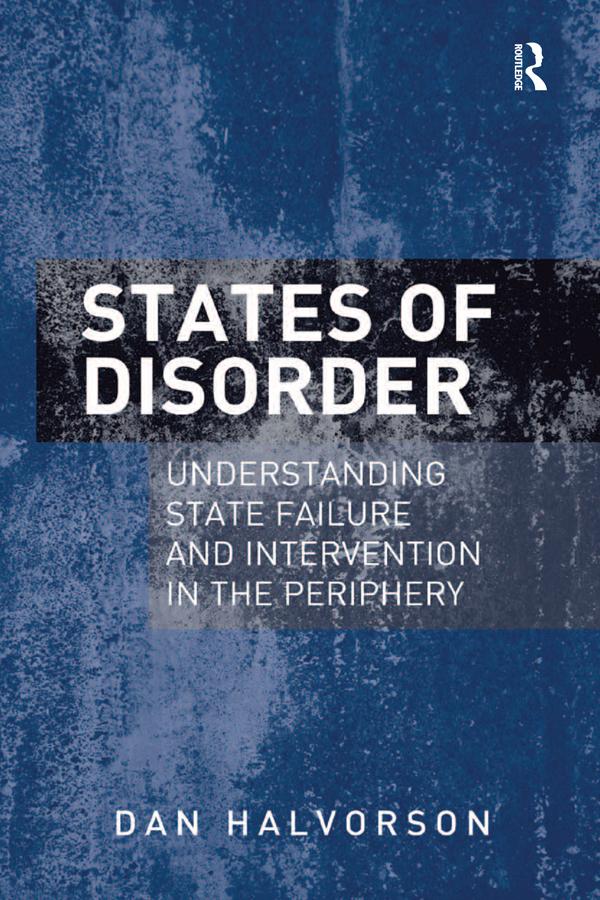
There have always been weak or ’fragile’ states in the modern era or poorly governed and disorderly political communities in earlier times. Yet the idea of state failure has only acquired such prominence in the post-Cold War period. Why would many countries in the less-developed world be considered ’failed’ states after 1990, but not in 1965 when there is little meaningful difference in their observable empirical conditions? What counts as state ’failure’ is ultimately a subjective political judgement made by the great powers of the day. This judgement is based on the sensitivity of great powers to particular types of disorder generated from the periphery in different historical periods. This book is a comparative history of the conditions under which great powers care enough about disorder from the periphery to mount costly armed interventions to reverse what they deem to be state ’failure’.
Payez facilement par carte, Klarna, Apple Pay ou Google Pay. Pas satisfait ? Vous avez toujours une garantie de remboursement de 14 jours. En savoir plus dans nos conditions. Si vous avez des questions, envoyez-nous un e-mail à hello@memmo.org.
Memmo facilite tes études, où que tu sois dans le monde. On rassemble tes manuels de cours et des outils d'étude intelligents au même endroit : résumés, quiz, podcasts et flashcards. Et il y a Ted, ton compagnon d'étude qui répond à toutes tes questions. Plus de 50 000 étudiants étudient déjà ici – conçu pour t'aider à apprendre plus vite et à moins stresser.
Tu pourrais aussi aimer
Acheter le livre0