
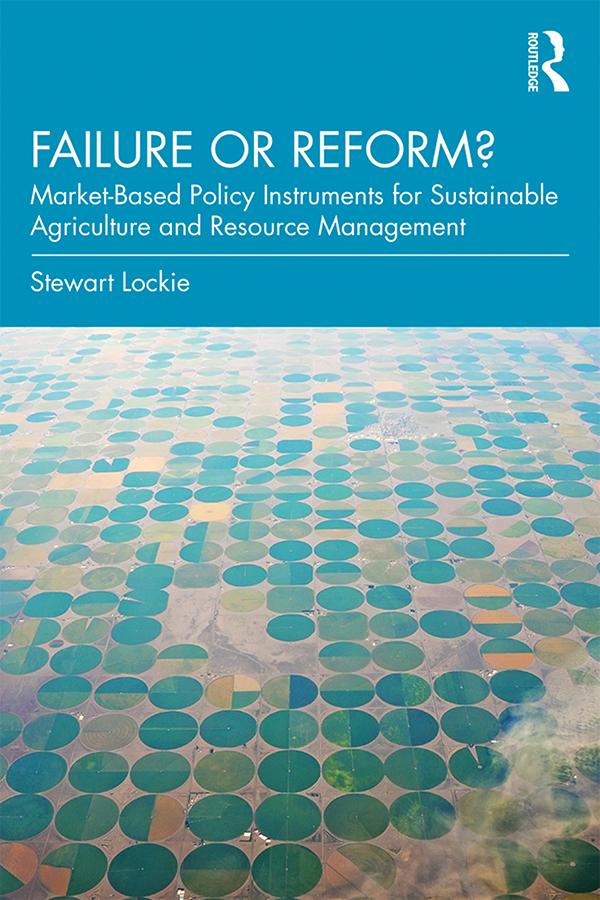
Market reform promises more environmental protection and more profitable agriculture at lower financial cost. Too good to be true? This book examines numerous empirical examples of policy in action to identify principles for the successful application of market-based policy instruments.
Where some market instruments are used to fix market failures by putting a value on environmental protection, others use market-like mechanisms to allocate financial incentives for environmental work. They are promoted as flexible, efficient and politically neutral solutions to the competing demands of social, economic and ecological sustainability. But they also attract criticism for rolling back environmental regulation and privatizing public goods. This book argues that while many market-based instruments have merit, decisions about responsibility cannot be left entirely to the market. Whichever instruments we use, decision-making needs to be embedded in a logic of democratization.
Using case studies from around the world, this book investigates how instruments like eco-standards, payments for ecosystem services, pollution trading and community-based natural resource management perform in practice, and what can be learned about applying them more effectively. While the approach is primarily sociological, it is deliberately written to bridge the gap between sociology, economics, environmental sciences and the concerns of environmental policy makers.
Payez facilement par carte, Klarna, Apple Pay ou Google Pay. Pas satisfait ? Vous avez toujours une garantie de remboursement de 14 jours. En savoir plus dans nos conditions. Si vous avez des questions, envoyez-nous un e-mail à hello@memmo.org.
Memmo facilite tes études, où que tu sois dans le monde. On rassemble tes manuels de cours et des outils d'étude intelligents au même endroit : résumés, quiz, podcasts et flashcards. Et il y a Ted, ton compagnon d'étude qui répond à toutes tes questions. Plus de 50 000 étudiants étudient déjà ici – conçu pour t'aider à apprendre plus vite et à moins stresser.