
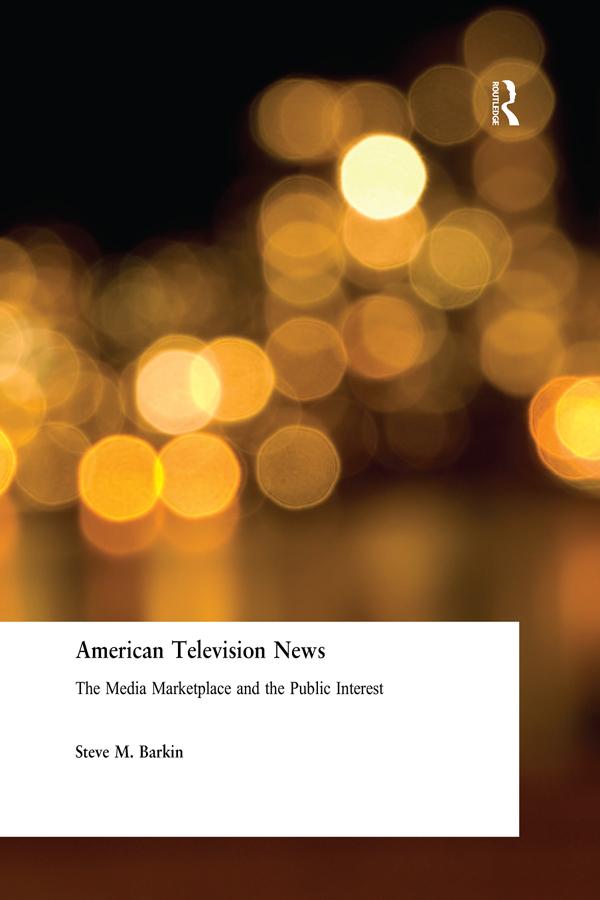
This concise history of the news broadcasting industry will appeal to both students and general readers. Stretching from the "radio days" of the 1920s and 1930s and the early era of television after World War II through to the present, the book shows how commercial interests, regulatory matters, and financial considerations have long shaped the broadcasting business. The network dominance of the 1950s ushered in the new prominence of the "anchorman," a distinctly American development, and gave birth to the "golden age" of TV broadcasting, which featured hard-hitting news and documentaries epitomized by the reports by CBS's Edward R. Murrow. Financial pressures and advertising concerns in the 1960s led the networks to veer away from their commitment to serve the public interest, and "tabloid" television - celebrity, gossip-driven "soft news" - and news "magazines" became increasingly widespread. In the 1980s cable news further transformed broadcasting, igniting intense competition for viewers in the media marketplace. Focusing on both national and local news, this stimulating volume examines the evolution of broadcast journalism. It also considers how new electronic technologies will affect news delivery in the 21st century, and whether television news can still both serve the public interest and maintain an audience.
Payez facilement par carte, Klarna, Apple Pay ou Google Pay. Pas satisfait ? Vous avez toujours une garantie de remboursement de 14 jours. En savoir plus dans nos conditions. Si vous avez des questions, envoyez-nous un e-mail à hello@memmo.org.
Memmo facilite tes études, où que tu sois dans le monde. On rassemble tes manuels de cours et des outils d'étude intelligents au même endroit : résumés, quiz, podcasts et flashcards. Et il y a Ted, ton compagnon d'étude qui répond à toutes tes questions. Plus de 50 000 étudiants étudient déjà ici – conçu pour t'aider à apprendre plus vite et à moins stresser.
Tu pourrais aussi aimer
Acheter le livre0