
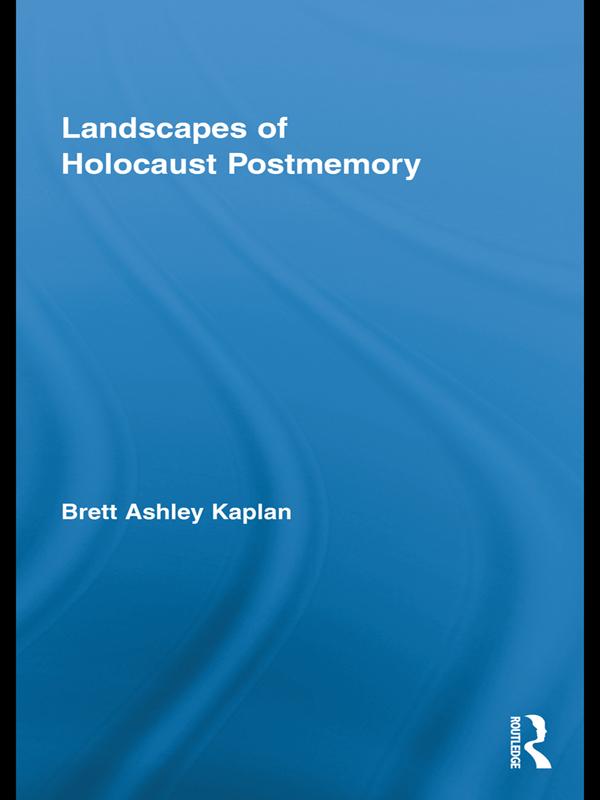
How do the spaces of the past stay with us through representations—whether literary or photographic? How has the Holocaust registered in our increasingly globally connected consciousness? What does it mean that this European event is often used as an interpretive or representational touchstone for genocides and traumas globally? In this interdisciplinary study, Kaplan asks and attempts to answer these questions by looking at historically and geographically diverse spaces, photographs, and texts concerned with the physical and/or mental landscape of the Holocaust and its transformations from the postwar period to the early twenty-first century. Examining the intersections of landscape, postmemory, and trauma, Kaplan's text offers a significant contribution to our understanding of the spatial, visual, and literary reach of the Holocaust.
Payez facilement par carte, Klarna, Apple Pay ou Google Pay. Pas satisfait ? Vous avez toujours une garantie de remboursement de 14 jours. En savoir plus dans nos conditions. Si vous avez des questions, envoyez-nous un e-mail à hello@memmo.org.
Memmo facilite tes études, où que tu sois dans le monde. On rassemble tes manuels de cours et des outils d'étude intelligents au même endroit : résumés, quiz, podcasts et flashcards. Et il y a Ted, ton compagnon d'étude qui répond à toutes tes questions. Plus de 50 000 étudiants étudient déjà ici – conçu pour t'aider à apprendre plus vite et à moins stresser.