
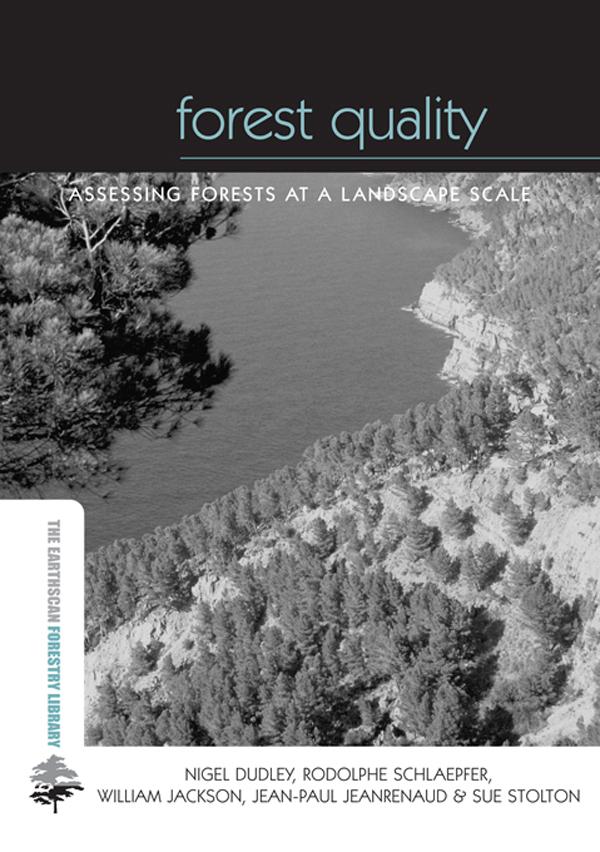
Deforestation is frequently a topic of discussion in the environmental arena, but it is not just the number of trees that matters; the quality of the forest is also important. Even where the forest area is stable or increasing, there are often rapid changes in its character. Natural forests are being replaced by plantations or by intensively managed forests. Around the world, forests are becoming younger and less diverse, in both species and structure; this has important impacts for biodiversity and also affects many human values.
In this groundbreaking text, forest quality is discussed as a useful new concept in forest conservation and management. Three main assessment criteria are used: authenticity; environmental benefits; and social and economic benefits. The book describes a methodology and protocol for collecting and analysing
data, and outlines in detail the approach required with each indicator. The authors advocate a landscape approach to assessment and demonstrate how
assessment works through a series of case studies that show how this approach can be used in many ways to help forest conservation management.
This hands-on manual is for professionals involved in forestry, conservation and resource management worldwide, and contains case study material from Europe, Asia, Africa and Latin America that demonstrates practical uses of the new 'landscape' approach to forest conservation.
Published with IUCN and WWF
Payez facilement par carte, Klarna, Apple Pay ou Google Pay. Pas satisfait ? Vous avez toujours une garantie de remboursement de 14 jours. En savoir plus dans nos conditions. Si vous avez des questions, envoyez-nous un e-mail à hello@memmo.org.
Memmo facilite tes études, où que tu sois dans le monde. On rassemble tes manuels de cours et des outils d'étude intelligents au même endroit : résumés, quiz, podcasts et flashcards. Et il y a Ted, ton compagnon d'étude qui répond à toutes tes questions. Plus de 50 000 étudiants étudient déjà ici – conçu pour t'aider à apprendre plus vite et à moins stresser.