
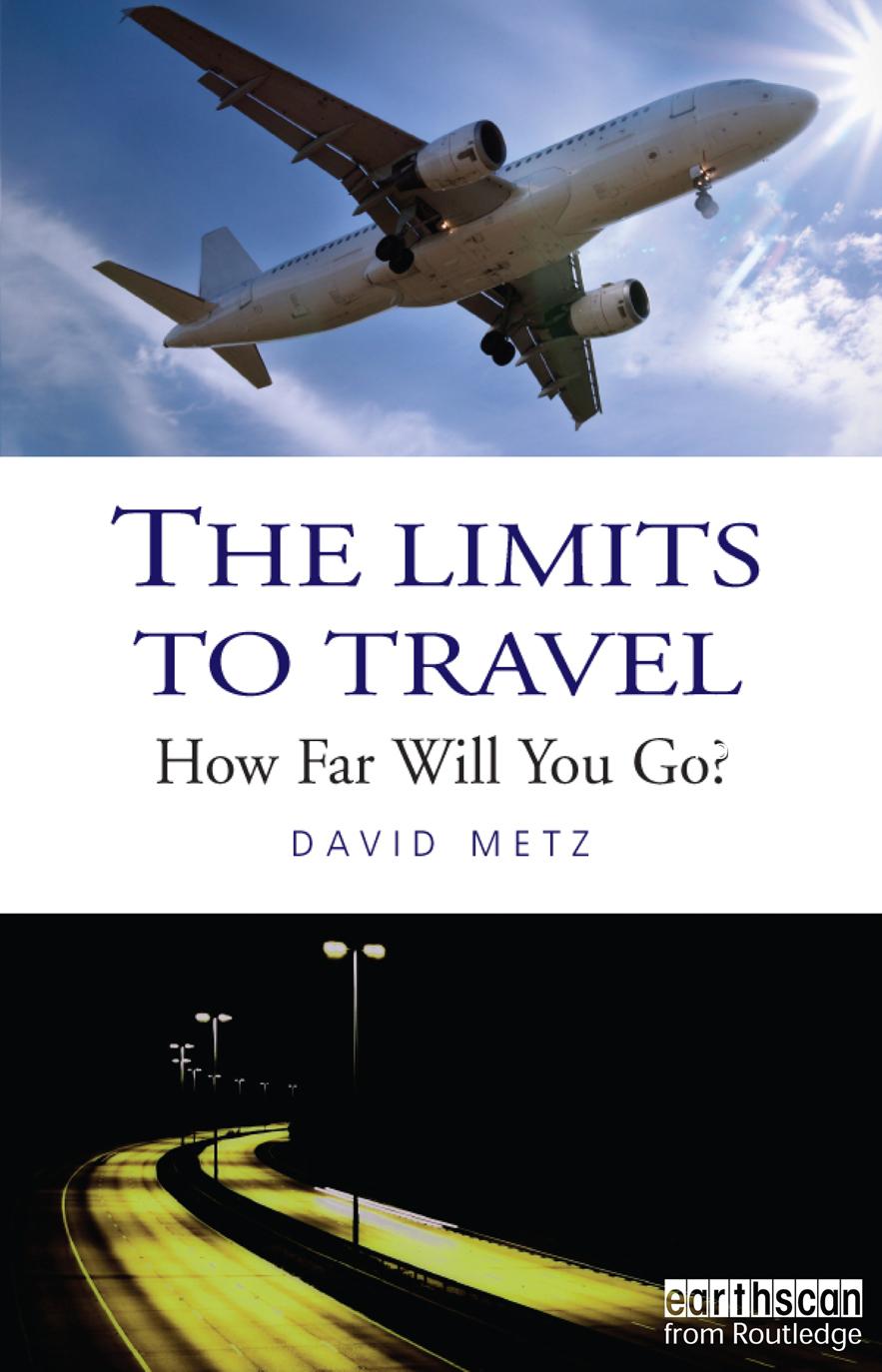
As affluence grows, it gets easier to travel faster and further. But research shows that, despite this, the average travel time in all societies remains steady at roughly an hour a day. The implication is that people are choosing to increase the distance they regularly travel, rather than opting for shorter journey times. While this clearly offers advantages in terms of reaching more desirable locations, the disadvantages are numerous - not least that of anthropogenic climate change, to which transport is the fastest growing contributor. However, the stability of travel time does not form part of the present conceptual framework of transport policy makers and professionals - consequently, misconceived decisions lead to unintended outcomes.
In this intriguing book, David Metz examines the inadequacies inherent in the current thinking, along with the resulting problems, such as pollution, congestion and noise. He highlights the impact of the rapid increase in car use in China and India, and explores the general travel experience, public vs. private transport, and transport technology. In considering to what extent travel could be avoided, he arrives at a new paradigm to underpin sustainable transport policies, based on the fundamental characteristics of human mobility and focusing on quality, not quantity, of travel.
Visit the Limits to Travel website at: http://www.limitstotravel.org.uk/
Payez facilement par carte, Klarna, Apple Pay ou Google Pay. Pas satisfait ? Vous avez toujours une garantie de remboursement de 14 jours. En savoir plus dans nos conditions. Si vous avez des questions, envoyez-nous un e-mail à hello@memmo.org.
Memmo facilite tes études, où que tu sois dans le monde. On rassemble tes manuels de cours et des outils d'étude intelligents au même endroit : résumés, quiz, podcasts et flashcards. Et il y a Ted, ton compagnon d'étude qui répond à toutes tes questions. Plus de 50 000 étudiants étudient déjà ici – conçu pour t'aider à apprendre plus vite et à moins stresser.