
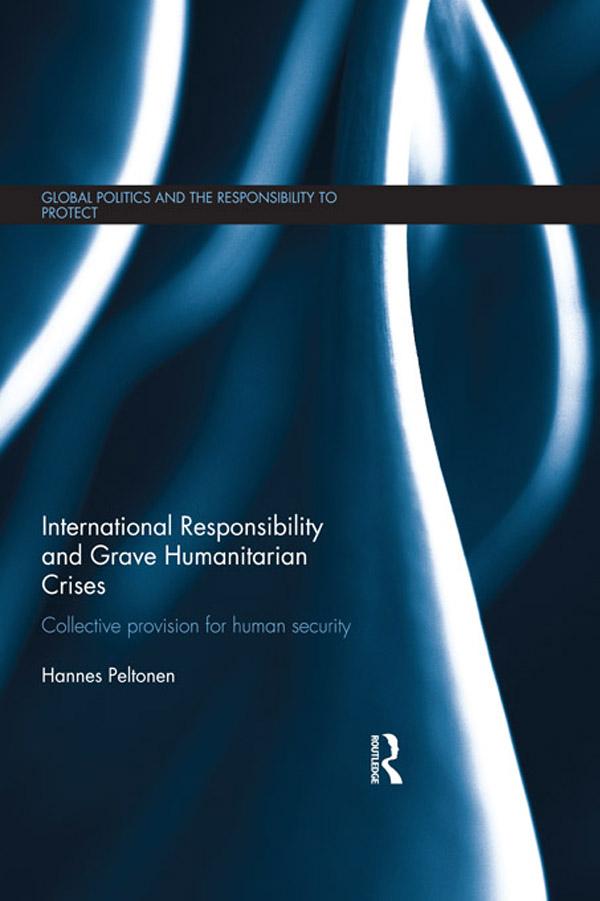
This book examines responsibility in grave humanitarian crises, focusing on the international community's collective responsibility to take action in such cases as genocide or ethnic cleansing.
The idea of collective responsibility highlights how we would like to see the global level primarily as something more akin to a community of peoples, rather than as a society of states in which other international and transnational actors operate. Since the acceptance of human rights, and in view of the atrocities of the Holocaust and other genocides, we have realized that some things concern us all: a realization that has led to the development of the responsibility to protect (R2P) framework.
This book focuses on understanding the international community and its collective responsibility. Unlike the research frameworks put forward in other publications on this topic, the research model developed here does not distribute the collective responsibility to particular actors; instead, it sets out how the burden should be divided among those actors responsible in order to protect human security on a global scale.
This book will be of interest to students of humanitarian intervention, the responsibility to protect, international law, peace and conflict studies, and international relations in general.
Payez facilement par carte, Klarna, Apple Pay ou Google Pay. Pas satisfait ? Vous avez toujours une garantie de remboursement de 14 jours. En savoir plus dans nos conditions. Si vous avez des questions, envoyez-nous un e-mail à hello@memmo.org.
Memmo facilite tes études, où que tu sois dans le monde. On rassemble tes manuels de cours et des outils d'étude intelligents au même endroit : résumés, quiz, podcasts et flashcards. Et il y a Ted, ton compagnon d'étude qui répond à toutes tes questions. Plus de 50 000 étudiants étudient déjà ici – conçu pour t'aider à apprendre plus vite et à moins stresser.