
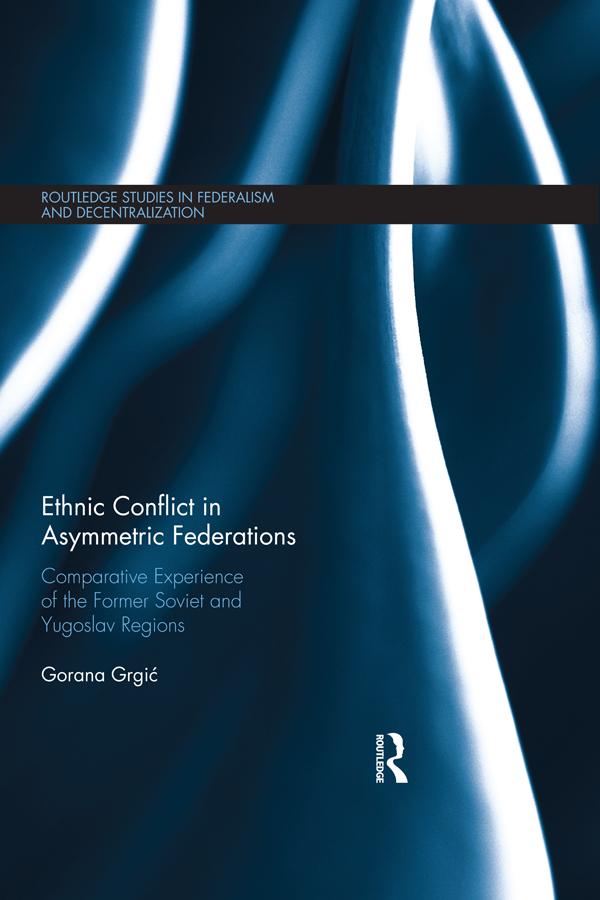
In the last years of their existence, the Union of Soviet Socialist Republics (USSR) and the Socialist Federal Republic of Yugoslavia (SFRY) found themselves facing a similar and very grim state of affairs. After their disintegration, the former Yugoslav republics spiralled into a set of ethnic conflicts that did not leave a single one of them unscathed, and in the ex-Soviet space, conflicts were far more limited.
This book offers an in-depth analysis of the difference in state collapses and ensuing conflicts in the Soviet Union and Yugoslavia by focusing on their asymmetric ethnofederal structure and the different dynamics of ethnic mobilization that the federal units experienced. Moreover, it explores the links between identity politics and international relations, as the latter has been a latecomer in research on ethnonationalism and ethnic conflict. Finally, it contributes to the literature on the democratization-conflict nexus by proposing that the sequencing of ethnic mobilization and political liberalization has significant effects on the likelihood of conflict.
This text will be of key interest to scholars and students of Post-Soviet politics, Balkan politics, ethnic conflict, peace and conflict studies, federalism, and more broadly to comparative politics and international relations.
Payez facilement par carte, Klarna, Apple Pay ou Google Pay. Pas satisfait ? Vous avez toujours une garantie de remboursement de 14 jours. En savoir plus dans nos conditions. Si vous avez des questions, envoyez-nous un e-mail à hello@memmo.org.
Memmo facilite tes études, où que tu sois dans le monde. On rassemble tes manuels de cours et des outils d'étude intelligents au même endroit : résumés, quiz, podcasts et flashcards. Et il y a Ted, ton compagnon d'étude qui répond à toutes tes questions. Plus de 50 000 étudiants étudient déjà ici – conçu pour t'aider à apprendre plus vite et à moins stresser.