
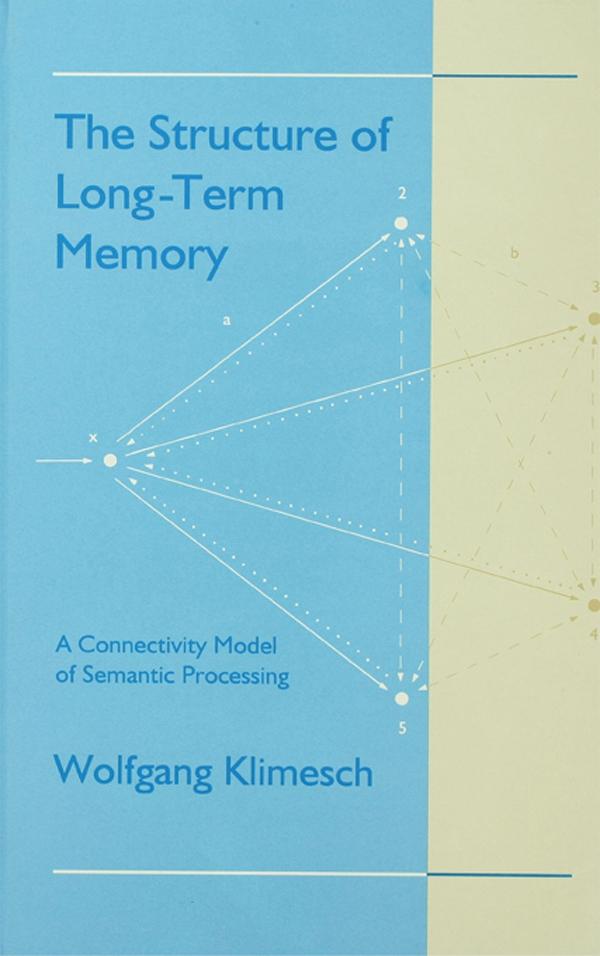
How is information stored and retrieved from long-term memory? It is argued that any systematic attempt to answer this question should be based on a particular set of specific representational assumptions that have led to the development of a new memory theory -- the connectivity model. One of the crucial predictions of this model is that, in sharp contrast to traditional theories, the speed of processing information increases as the amount and complexity of integrated knowledge increases. In this volume, the predictions of the model are examined by analyzing the results of a variety of different experiments and by studying the outcome of the simulation program CONN1, which illustrates the representation of complex semantic structures. In the final chapter, the representational assumptions of the connectivity model are evaluated on the basis of neuroanatomical and physiological evidence -- suggesting that neuroscience provides valuable knowledge which should guide the development of memory theories.
Payez facilement par carte, Klarna, Apple Pay ou Google Pay. Pas satisfait ? Vous avez toujours une garantie de remboursement de 14 jours. En savoir plus dans nos conditions. Si vous avez des questions, envoyez-nous un e-mail à hello@memmo.org.
Memmo facilite tes études, où que tu sois dans le monde. On rassemble tes manuels de cours et des outils d'étude intelligents au même endroit : résumés, quiz, podcasts et flashcards. Et il y a Ted, ton compagnon d'étude qui répond à toutes tes questions. Plus de 50 000 étudiants étudient déjà ici – conçu pour t'aider à apprendre plus vite et à moins stresser.
Tu pourrais aussi aimer
Acheter le livre0