
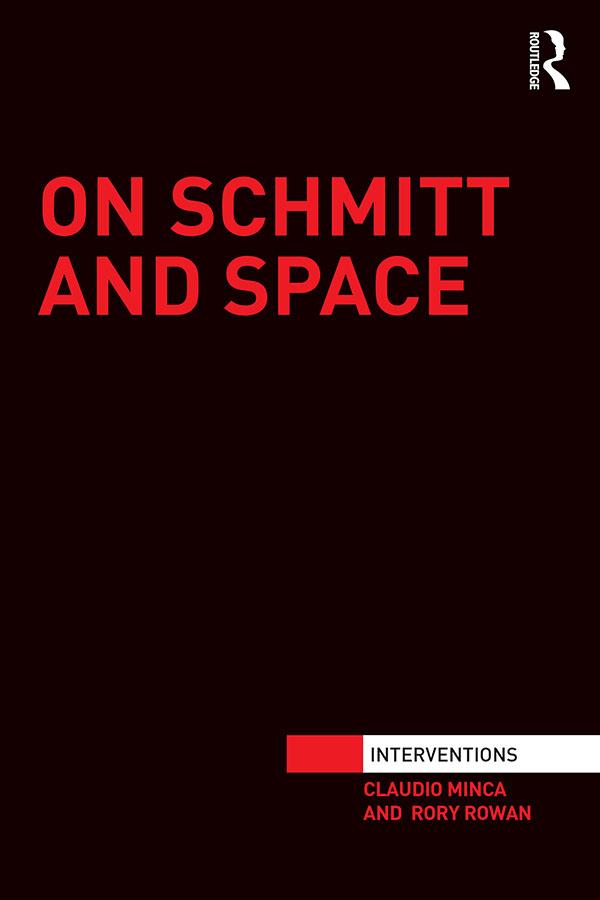
This book represents the first comprehensive study of the influential German legal and political thinker Carl Schmitt’s spatial thought, offering the first systematic examination from a Geographic perspective of one of the most important political thinkers of the twentieth century.
It charts the development of Schmitt’s spatial thinking from his early work on secularization and the emergence of the modern European state to his post war analysis of the spatial basis of global order and international law, whilst situating his thought in relation to his changing biographical and intellectual context, controversial involvement in Weimar politics and disastrous support for the Nazi regime. It argues that spatial concepts play a crucial structural role throughout Schmitt’s work, from his well-known analyses of sovereign power and states of exception to his often overlooked spatial history of modernity. Locating a fundamental relationship between space and ‘the political’ lies at the core of his thought.
The book explores the critical insight that Schmitt’s spatial thought bears on some of the key political questions of the twentieth century whilst tracking his profound and enduring influence on key debates on sovereignty, international relations, war and the nature of world order at the start of the twenty first century.
Payez facilement par carte, Klarna, Apple Pay ou Google Pay. Pas satisfait ? Vous avez toujours une garantie de remboursement de 14 jours. En savoir plus dans nos conditions. Si vous avez des questions, envoyez-nous un e-mail à hello@memmo.org.
Memmo facilite tes études, où que tu sois dans le monde. On rassemble tes manuels de cours et des outils d'étude intelligents au même endroit : résumés, quiz, podcasts et flashcards. Et il y a Ted, ton compagnon d'étude qui répond à toutes tes questions. Plus de 50 000 étudiants étudient déjà ici – conçu pour t'aider à apprendre plus vite et à moins stresser.