
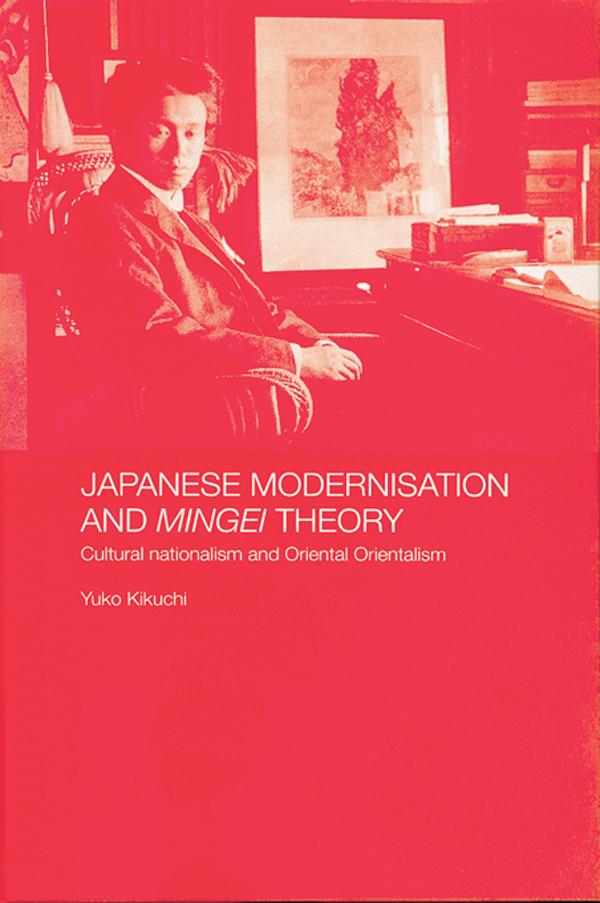
Conceptualised in 1920s Japan by Yanagi Sôetsu, the Mingei movement has spread world wide since the 1950s, creating phenomena as diverse as Mingei museums, Mingei connoisseurs and collectors, Mingei shops and Mingei restaurants. The theory, at its core and its adaptation by Bernard Leach, has long been an influential 'Oriental' aesthetic for studio craft artists in the West. But why did Mingei become so particularly influential to a western audience? And could the 'Orientalness' perceived in Mingei theory be nothing more than a myth? This richly illustrated work offers controversial new evidence through its cross-cultural examination of a wide range of materials in Japanese, English, Korean and Chinese, bringing about startling new conclusions concerning Japanese modernization and cultural authenticity. This new interpretation of the Mingei movement will appeal to scholars of Japanese art history as well as those with interests in cultural identity in non-Western cultures.
Payez facilement par carte, Klarna, Apple Pay ou Google Pay. Pas satisfait ? Vous avez toujours une garantie de remboursement de 14 jours. En savoir plus dans nos conditions. Si vous avez des questions, envoyez-nous un e-mail à hello@memmo.org.
Memmo facilite tes études, où que tu sois dans le monde. On rassemble tes manuels de cours et des outils d'étude intelligents au même endroit : résumés, quiz, podcasts et flashcards. Et il y a Ted, ton compagnon d'étude qui répond à toutes tes questions. Plus de 50 000 étudiants étudient déjà ici – conçu pour t'aider à apprendre plus vite et à moins stresser.
Tu pourrais aussi aimer
Acheter le livre0