
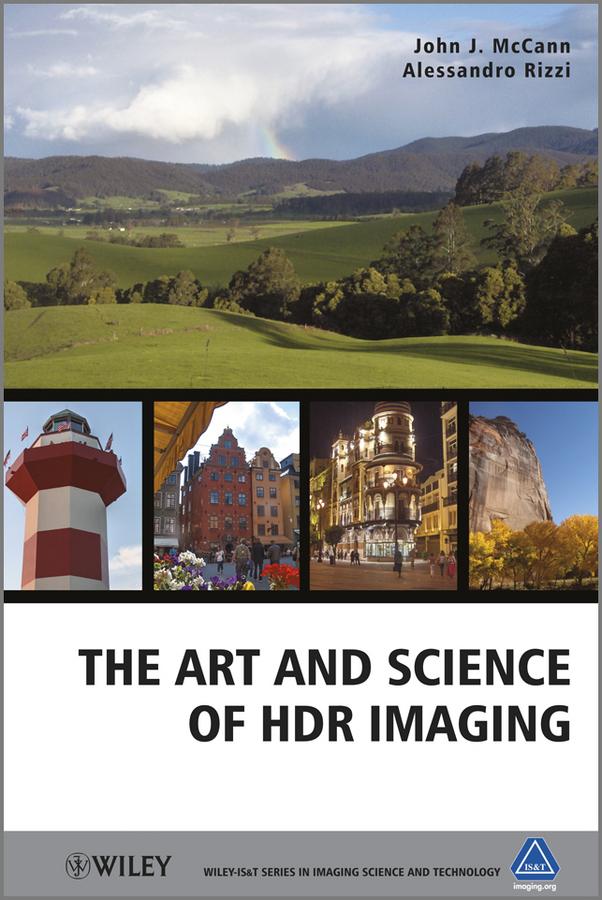
Human visual appearance and reproduction rendition of the HDR world requires spatial-image processing to overcome the veiling glare limits of optical imaging, in eyes and in cameras. Illustrated in full colour throughout, including examples of fine-art paintings, HDR photography, and multiple exposure scenes; this book uses techniques to study the HDR properties of entire scenes, and measures the range of light of scenes and the range that cameras capture. It describes how electronic image processing has been used to render HDR scenes since 1967, and examines the great variety of HDR algorithms used today. Showing how spatial processes can mimic vision, and render scenes as artists do, the book also:
- Gives the history of HDR from artists' spatial techniques to scientific image processing
- Measures and describes the limits of HDR scenes, HDR camera images, and the range of HDR appearances
- Offers a unique review of the entire family of Retinex image processing algorithms
- Describes the considerable overlap of HDR and Color Constancy: two sides of the same coin
- Explains the advantages of algorithms that replicate human vision in the processing of HDR scenes
- Provides extensive data to test algorithms and models of vision on an accompanying website
www.wiley.com/go/mccannhdr
Payez facilement par carte, Klarna, Apple Pay ou Google Pay. Pas satisfait ? Vous avez toujours une garantie de remboursement de 14 jours. En savoir plus dans nos conditions. Si vous avez des questions, envoyez-nous un e-mail à hello@memmo.org.
Memmo facilite tes études, où que tu sois dans le monde. On rassemble tes manuels de cours et des outils d'étude intelligents au même endroit : résumés, quiz, podcasts et flashcards. Et il y a Ted, ton compagnon d'étude qui répond à toutes tes questions. Plus de 50 000 étudiants étudient déjà ici – conçu pour t'aider à apprendre plus vite et à moins stresser.