
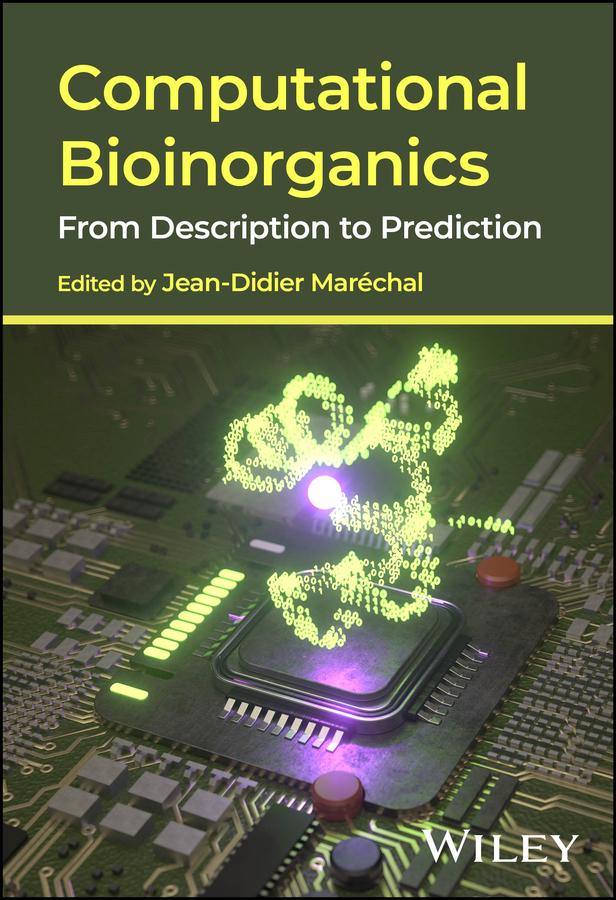
An in-depth overview of what computation can do in bioinorganic chemistry, written for experimentalists and theoreticians
The last decades have shown the emergence of numerous exiting fields in bioinorganic chemistry, such as the design of de novo metalloenzymes, the discovery of new bioactive metallodrugs, or the characterization of molecular mechanisms by which living organisms acquire their metal. In parallel, the computational chemistry community has been working hard on optimizing its framework to deal with biometallic systems; a phenomenon magnified by the increase of computational power and the advent of AI approaches.
Computational Bioinorganics: From Description to Prediction provides an updated view on the current state-of-the-art of the field. The book first intends to clarify how computational and experimental researchers in bioinorganic chemistry can now collaborate under this new computational paradigm. It then follows with a series of chapters that cover a wide range of computational approaches, strategies, and applications. Contributions from a team of experts in computational chemistry expose methods that range from structural bioinformatics, quantum chemistry, large-scale molecular dynamics or multi-scale strategies. They illustrate how these tools can be applied to a wide variety of topics such as the modeling of metal-mediated folding processes, the computer-aided design of metalloenzymes, spectroscopic analysis, the prediction of metal binding sites in proteins or the characterization of the interaction of metallodrugs with biomolecules.
Edited by a recognized leader in the field, Computational Bioinorganics: From Description to Prediction is an essential resource for academic and industrial researchers working in the fields of bioinorganic chemistry, coordination chemistry, biochemistry, computational chemistry, biophysics, bioinformatics, and protein engineering.
Payez facilement par carte, Klarna, Apple Pay ou Google Pay. Pas satisfait ? Vous avez toujours une garantie de remboursement de 14 jours. En savoir plus dans nos conditions. Si vous avez des questions, envoyez-nous un e-mail à hello@memmo.org.
Memmo facilite tes études, où que tu sois dans le monde. On rassemble tes manuels de cours et des outils d'étude intelligents au même endroit : résumés, quiz, podcasts et flashcards. Et il y a Ted, ton compagnon d'étude qui répond à toutes tes questions. Plus de 50 000 étudiants étudient déjà ici – conçu pour t'aider à apprendre plus vite et à moins stresser.