
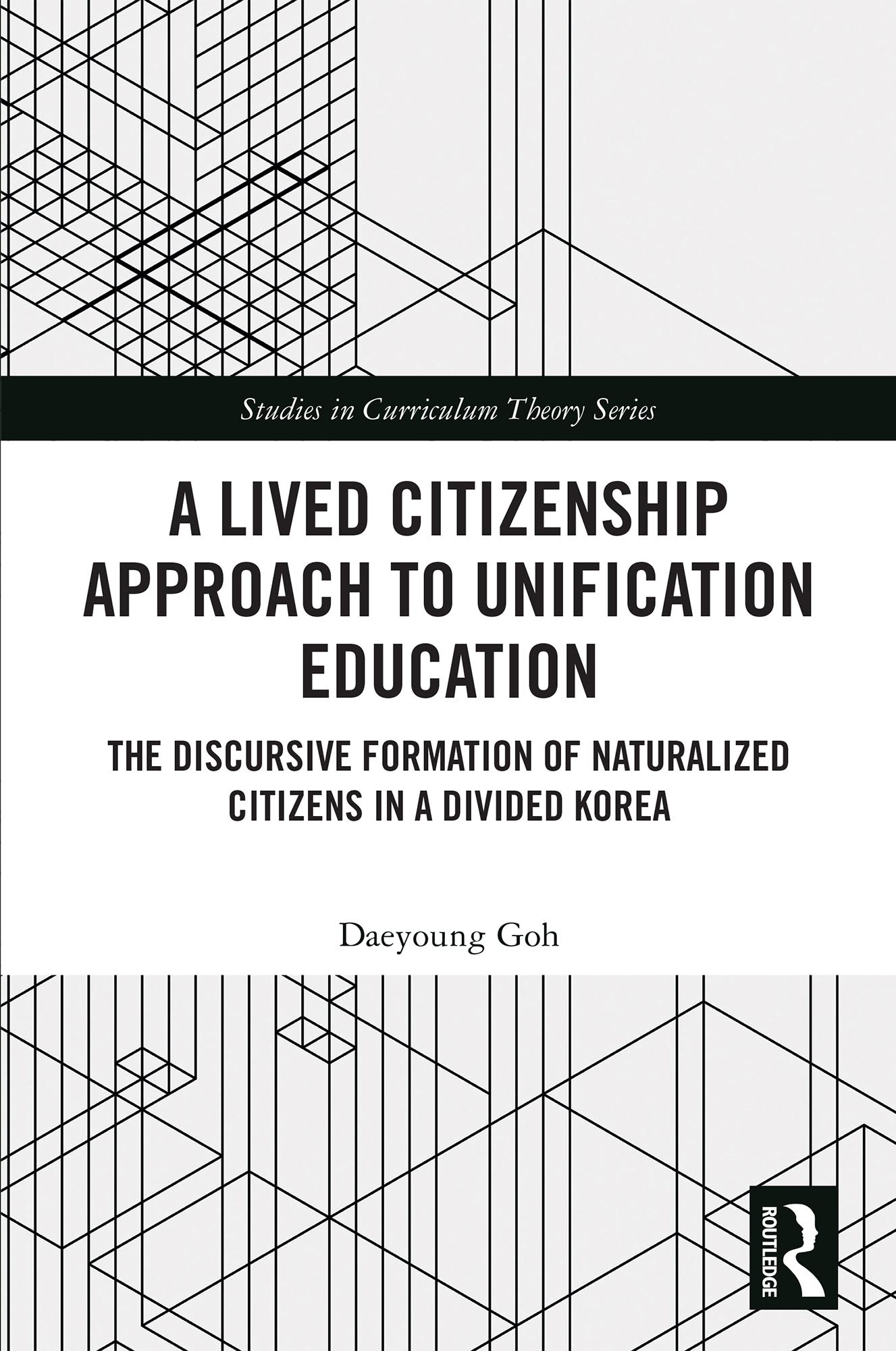
In South Korea, unification education (UE) aims to help students develop values and attitudes for Korean unification, anchored in democratic principles, national community consciousness, and national security awareness. Yet within this framework, the experiences of international immigrants remain largely absent from UE discourses.
Drawing on in-depth interviews, this book highlights the experiences and thoughts of naturalized citizens to reimagine the concept of citizenship in UE. It examines how citizenship is conceptualized in national UE policies, reference materials, and textbooks; explores how naturalized Koreans understand their own citizenship and the prospects of unification; and proposes what an alternative, more inclusive UE curriculum might look like. This book reveals naturalized citizens’ unrecognized, democratic, and in-between citizenship, through which they navigate the contested, expanding, and spatial- affective dimensions of Korean citizenship. Moving beyond critique, the book closes with a proposal for a transformative nonviolent approach to UE curriculum, grounded in principles of openness, loose solidarity, and inter-living.
Essential reading for researchers in citizenship education, Korean studies, migration studies, curriculum theory, and comparative education.
Payez facilement par carte, Klarna, Apple Pay ou Google Pay. Pas satisfait ? Vous avez toujours une garantie de remboursement de 14 jours. En savoir plus dans nos conditions. Si vous avez des questions, envoyez-nous un e-mail à hello@memmo.org.
Memmo facilite tes études, où que tu sois dans le monde. On rassemble tes manuels de cours et des outils d'étude intelligents au même endroit : résumés, quiz, podcasts et flashcards. Et il y a Ted, ton compagnon d'étude qui répond à toutes tes questions. Plus de 50 000 étudiants étudient déjà ici – conçu pour t'aider à apprendre plus vite et à moins stresser.