
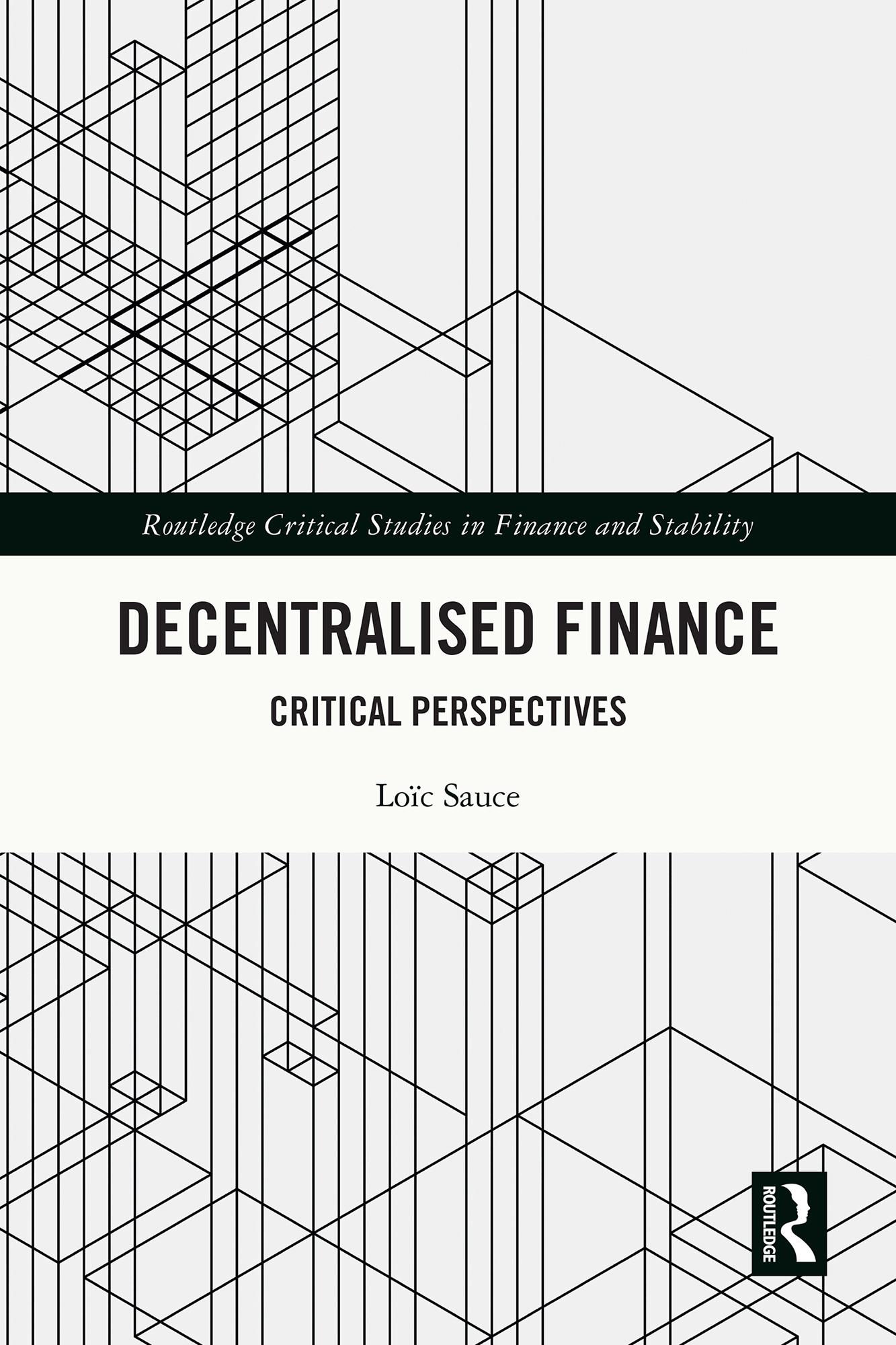
Since the inception of Bitcoin in 2009, cryptoassets and decentralised finance (DeFi) have become a multi-trillion-dollar industry, with a growing number of users, entrepreneurs, investment funds and institutional investors all over the world. This has led to understandably high levels of attention from scholars, the media, and policymakers, but much of the writing on decentralised finance is polarised or polemical.
In contrast, this book provides a balanced, scholarly and sober assessment of broad questions about the very existence and purposes of decentralised finance. Drawing largely on the Austrian school of economics, particularly the ideas of Hayek and Lachmann, the book explores the stated aims of proponents of decentralised finance, particularly the goals of having decentralised governance and financial inclusion in an anonymous environment with low entry and exit barriers. Prioritising the theoretical and political aspects of decentralised finance over the financial or technological, the book considers whether these aims are realistic and whether decentralised finance can complement or substitute traditional financial mechanisms ('TradFi').
This book will be of valuable reading for economists, political scientists and policymakers, who are engaging with these key issues around cryptocurrencies and decentralised finance.
Payez facilement par carte, Klarna, Apple Pay ou Google Pay. Pas satisfait ? Vous avez toujours une garantie de remboursement de 14 jours. En savoir plus dans nos conditions. Si vous avez des questions, envoyez-nous un e-mail à hello@memmo.org.
Memmo facilite tes études, où que tu sois dans le monde. On rassemble tes manuels de cours et des outils d'étude intelligents au même endroit : résumés, quiz, podcasts et flashcards. Et il y a Ted, ton compagnon d'étude qui répond à toutes tes questions. Plus de 50 000 étudiants étudient déjà ici – conçu pour t'aider à apprendre plus vite et à moins stresser.