
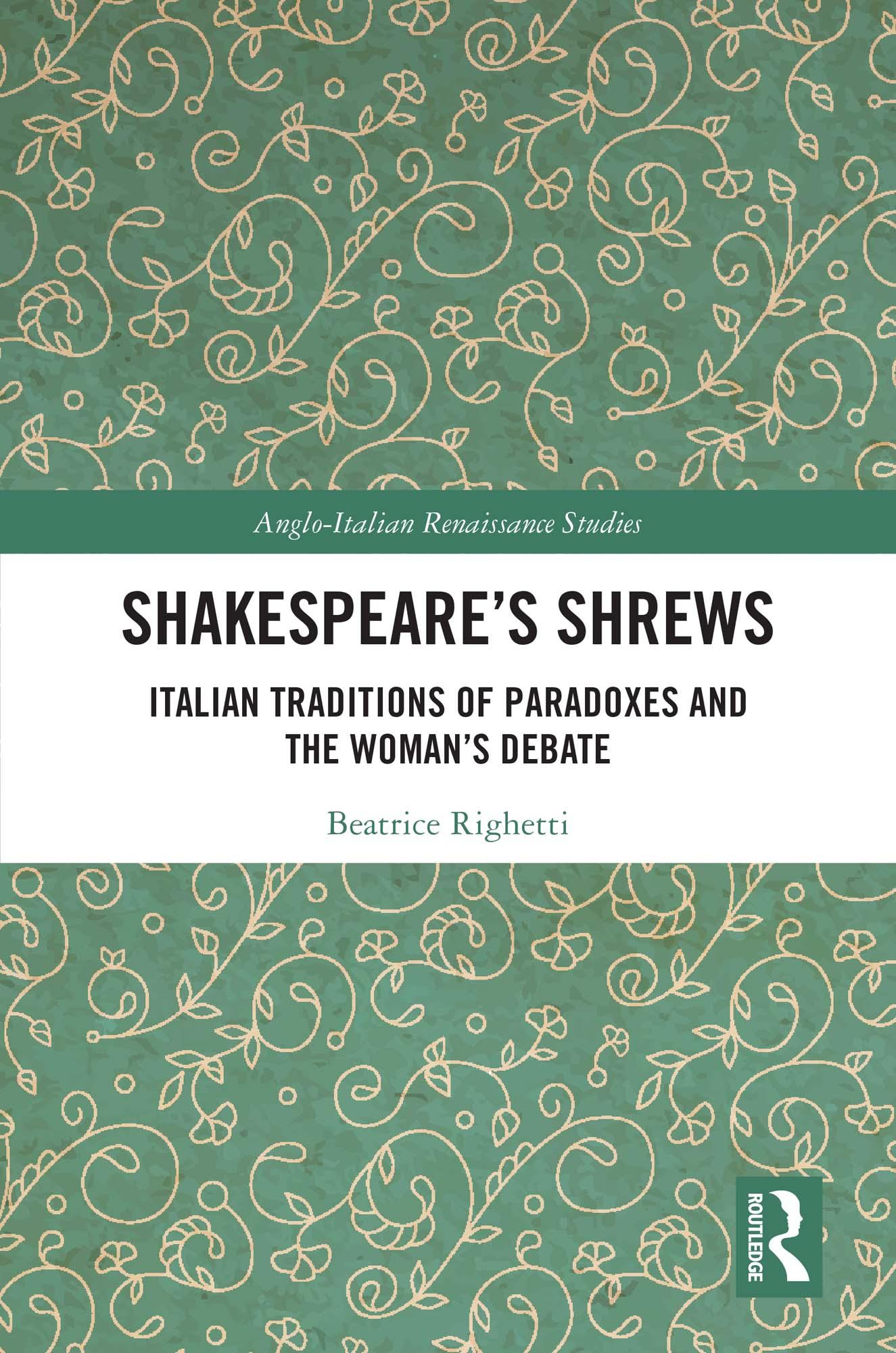
Shakespeare’s Shrews: Italian Traditions of Paradoxes and the Woman’s Debate investigates the echoes of two early modern discourses—paradoxical writing and the woman’s question or querelle des femmes—in the representation of the “Shakespearean shrew” in The Taming of the Shrew, Much Ado About Nothing, and Othello.
This comparative cross‑cultural study explores the English reception of these traditions through the circulation, translation, and adaptation of Italian works such as Ludovico Ariosto’s Orlando Furioso, Baldassare Castiglione’s Il libro del cortegiano, and Ercole and Torquato Tasso’s Dell’ammogliarsi. The enticing interplay of these two discourses is further complicated by their presence in the writing of early modern male and female authors. The examination of Shakespeare’s adaptation of these traditions in his “shrew” character highlights two key findings: the thematic fragmentation of the woman’s question and the evolving role of paradoxes, from figures of speech to “figures of thought”, both influenced by the gender of the speaker.
Payez facilement par carte, Klarna, Apple Pay ou Google Pay. Pas satisfait ? Vous avez toujours une garantie de remboursement de 14 jours. En savoir plus dans nos conditions. Si vous avez des questions, envoyez-nous un e-mail à hello@memmo.org.
Memmo facilite tes études, où que tu sois dans le monde. On rassemble tes manuels de cours et des outils d'étude intelligents au même endroit : résumés, quiz, podcasts et flashcards. Et il y a Ted, ton compagnon d'étude qui répond à toutes tes questions. Plus de 50 000 étudiants étudient déjà ici – conçu pour t'aider à apprendre plus vite et à moins stresser.