
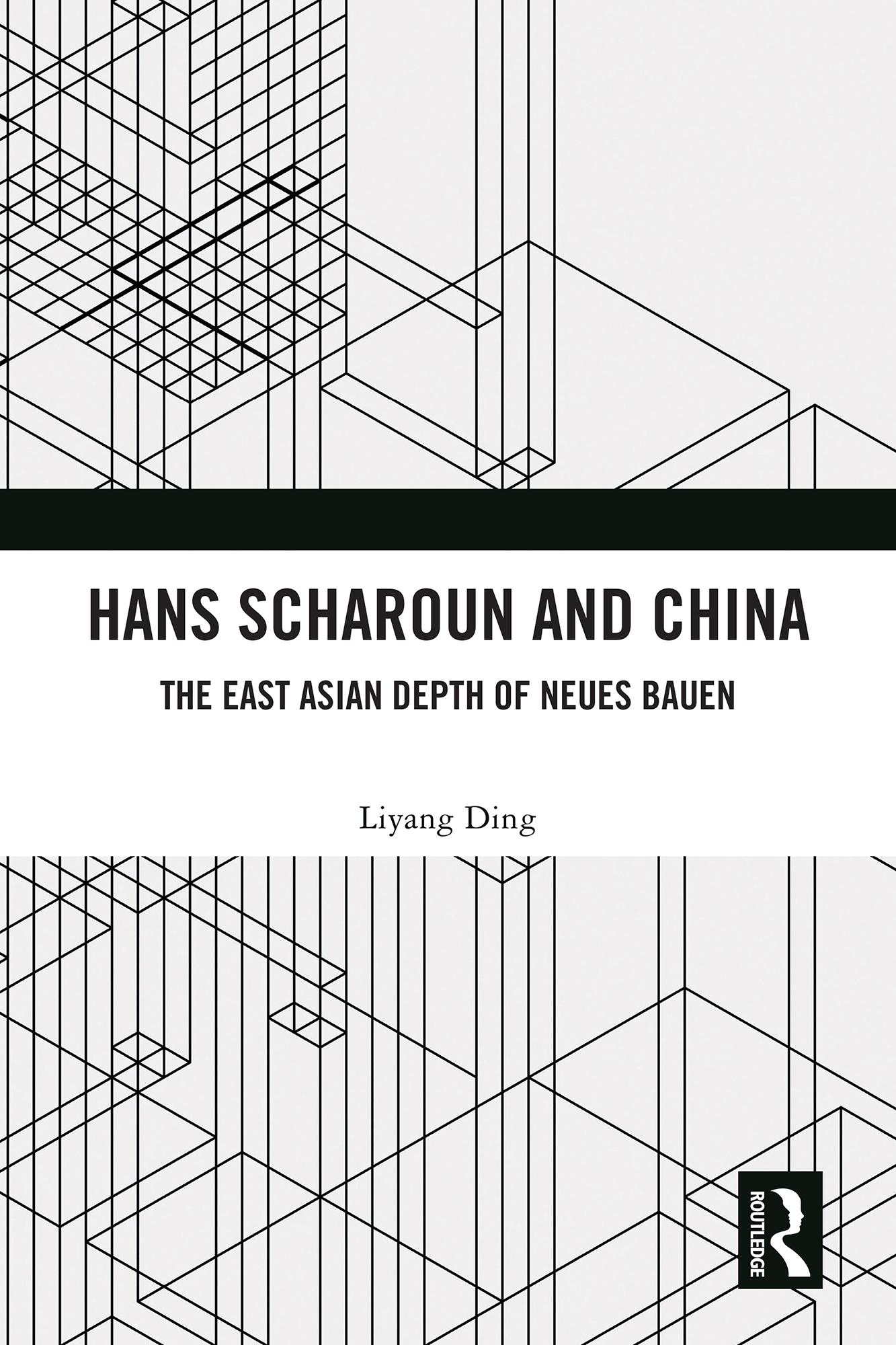
This book presents the first systematic overview and analysis of the deep connection between Scharoun and China, offering insights into East-West cultural exchange and enriching existing understandings of modernism.
The German architect Hans Scharoun has typically been pigeonholed as a leading figure in “expressionist” architecture. As this book shows, however, this understanding oversimplifies the multifaceted nature of Scharoun’s career and overlooks his central role within the tradition of Neues Bauen. The book begins with Scharoun’s early interactions with East Asian architects in the 1930s, his active involvement in the Chinese Werkbund (1941–42), and his extensive research on Chinese architecture and urban culture in the mid-1940s and 1950s. The book then examines Scharoun’s postwar architectural designs and urban planning projects, most notably the Kollektivplan, the Volksschule Darmstadt, and the Berliner Philharmonie, which incorporated original spatial and urbanistic concepts such as “Stadtlandschaft,” “Raum der Mitte,” and “aperspectival” space, inspired to varying degrees by Chinese architectural and urban planning traditions.
The book will appeal to scholars and students of modern architecture, urban planning, and architectural theory, especially those interested in modernism and East-West cultural exchange.
Payez facilement par carte, Klarna, Apple Pay ou Google Pay. Pas satisfait ? Vous avez toujours une garantie de remboursement de 14 jours. En savoir plus dans nos conditions. Si vous avez des questions, envoyez-nous un e-mail à hello@memmo.org.
Memmo facilite tes études, où que tu sois dans le monde. On rassemble tes manuels de cours et des outils d'étude intelligents au même endroit : résumés, quiz, podcasts et flashcards. Et il y a Ted, ton compagnon d'étude qui répond à toutes tes questions. Plus de 50 000 étudiants étudient déjà ici – conçu pour t'aider à apprendre plus vite et à moins stresser.