
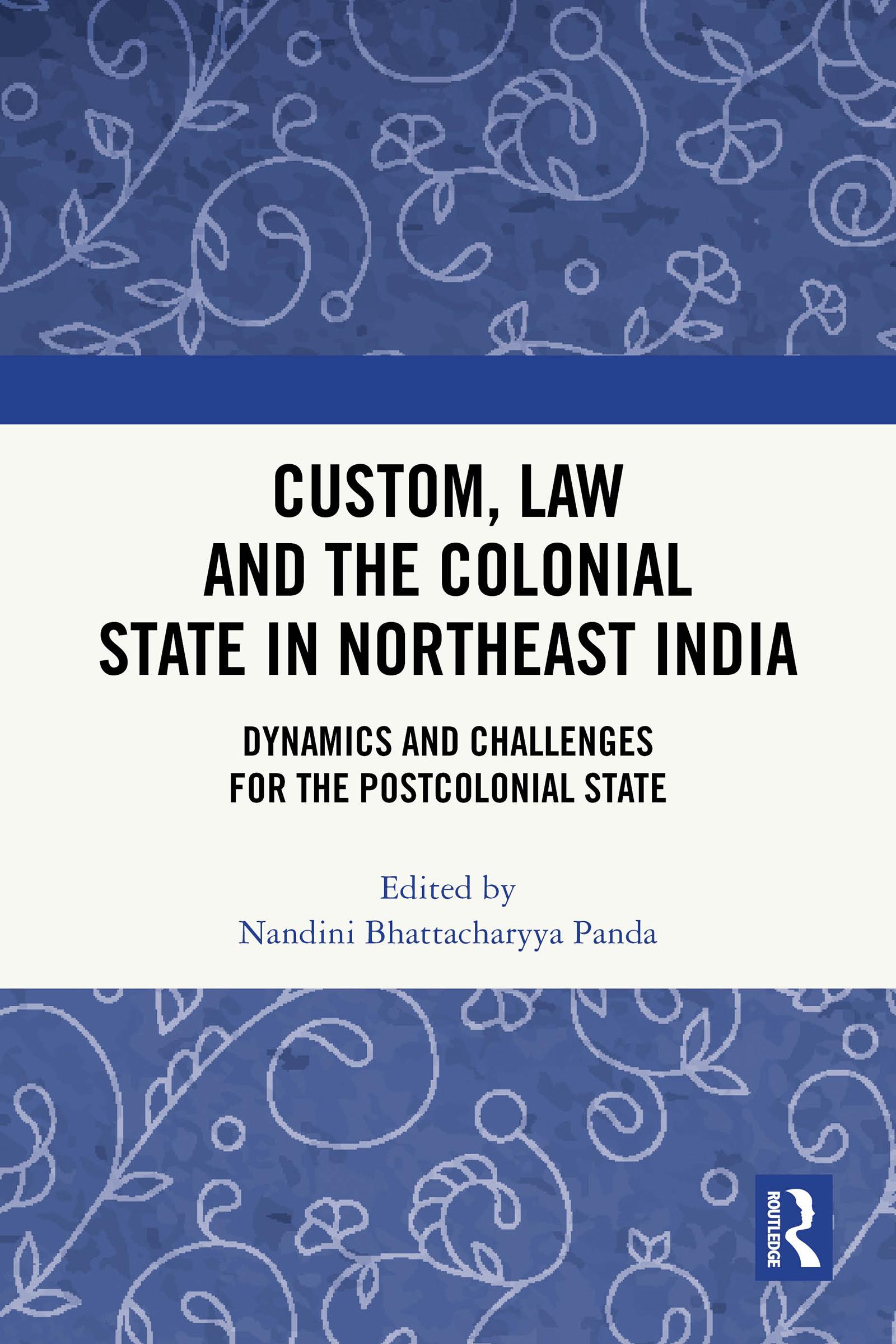
This volume presents a multidimensional analysis of the current operational law – both constitutional and customary – in Northeast India. It looks at how colonialism redesigned and redefined extant customary practices, leaving a permanent legacy on the legal governance and societal structure of the post-colonial Indian state.
The book interrogates “law” through a broad spectrum of issues including gender, partition, the legacy of colonial structures, and religion as a form of resistance against land grabbing and censorship. It delineates a distinct historical process of the evolution of law and custom and focuses on the intimate links between law and the dynamics of state, ethnicity, and governance.
As a unique contribution, the book offers new insights into how and why the continuity of colonial law within a democratic framework perpetuates deep-rooted problems in governance and the psyche of the people. It will be indispensable for students and researchers of history, law, anthropology, legal anthropology, sociology, Indian politics, and South Asian studies.
Payez facilement par carte, Klarna, Apple Pay ou Google Pay. Pas satisfait ? Vous avez toujours une garantie de remboursement de 14 jours. En savoir plus dans nos conditions. Si vous avez des questions, envoyez-nous un e-mail à hello@memmo.org.
Memmo facilite tes études, où que tu sois dans le monde. On rassemble tes manuels de cours et des outils d'étude intelligents au même endroit : résumés, quiz, podcasts et flashcards. Et il y a Ted, ton compagnon d'étude qui répond à toutes tes questions. Plus de 50 000 étudiants étudient déjà ici – conçu pour t'aider à apprendre plus vite et à moins stresser.