
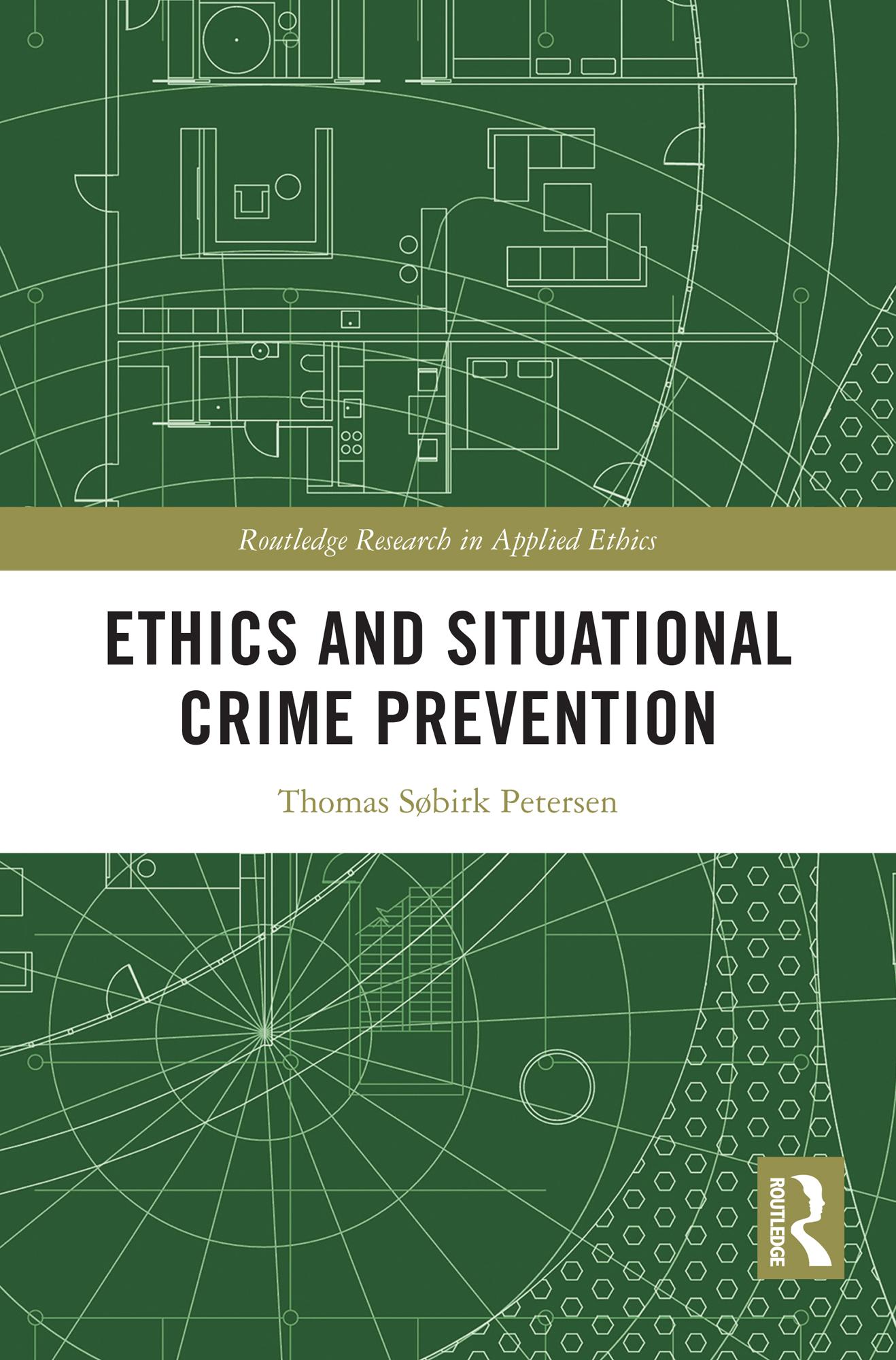
This book addresses the ethics of Situational Crime Prevention (SCP). It seeks not only to analyse specific SCP measures but to demonstrate how ethical analysis can support and improve the implementation of SCP strategies.
In ethically analysing a particular SCP measure, it is not enough to look at empirical data. Even if a measure is effective at preventing crime, it may turn out to be ethically unattractive because it harms more people than it benefits, or because it violates our right to free movement. The book proceeds from the assumption that decision-making about whether we should use SCPs can only be conducted by carefully identifying, clarifying, and critically evaluating the ethical arguments for and against use of the SCP measure in question. The author analyses several SCP strategies that have not been treated in detail in criminology or applied ethics literatures. These SCP strategies include gated communities, excluding people with a criminal record from housing or employment, the use of hostile design in public spaces, and the implementation of intelligent speed adaption in vehicles.
Ethics and Situational Crime Prevention is an essential resource for criminologists, moral philosophers, legal scholars, and social scientists with an interest in crime prevention.
Payez facilement par carte, Klarna, Apple Pay ou Google Pay. Pas satisfait ? Vous avez toujours une garantie de remboursement de 14 jours. En savoir plus dans nos conditions. Si vous avez des questions, envoyez-nous un e-mail à hello@memmo.org.
Memmo facilite tes études, où que tu sois dans le monde. On rassemble tes manuels de cours et des outils d'étude intelligents au même endroit : résumés, quiz, podcasts et flashcards. Et il y a Ted, ton compagnon d'étude qui répond à toutes tes questions. Plus de 50 000 étudiants étudient déjà ici – conçu pour t'aider à apprendre plus vite et à moins stresser.