
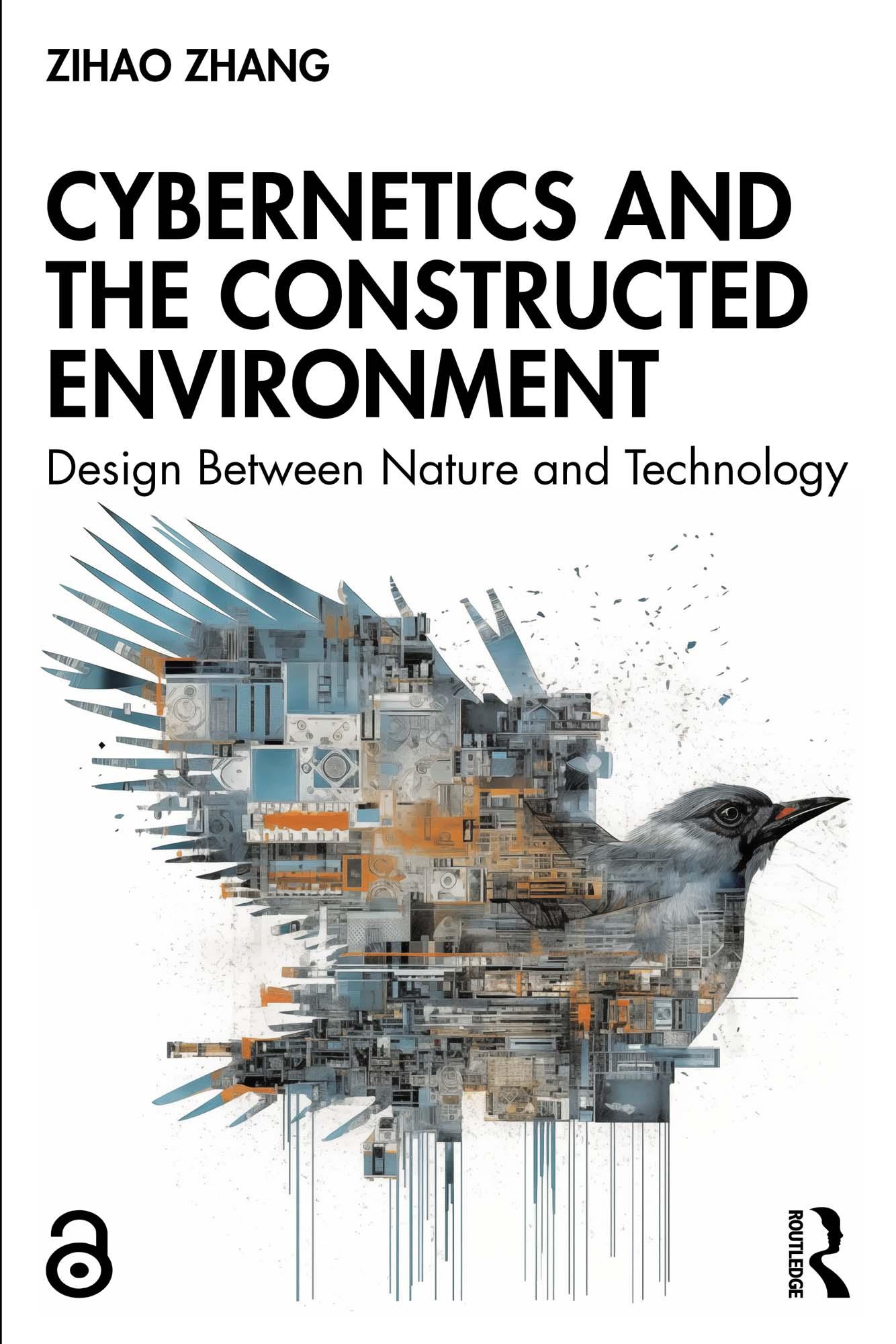
Grounded in contemporary landscape architecture theory and practice, Cybernetics and the Constructed Environment blends examples from art, design, and engineering with concepts from cybernetics and posthumanism, offering a transdisciplinary examination of the ramifications of cybernetics on the constructed environment. Cybernetics, or the study of communication and control in animals and machines, has grown increasingly relevant nearly 80 years after its inception. Cyber-physical systems, sensing networks, and spatial computing—algorithms and intelligent machines—create endless feedback loops with human and non-human actors, co-producing a cybernetic environment. Yet, when an ecosystem is meticulously managed by intelligent machines, can we still call it wild nature? Posthumanism ideas, such as new materialism, actor-network theory, and object-oriented ontology, have become increasingly popular among design disciplines, including landscape architecture, and may have provided transformative frameworks to understand this entangled reality. However, design still entails a sense of intentionality and an urge to control. How do we, then, address the tension between the designer’s intentionality and the co-produced reality of more-than-human agents in the cybernetic environment? Is posthumanism enough to develop a framework to think beyond our all-too-human ways of thinking? For researchers, scholars, practitioners, and students in environmental design and engineering disciplines, this book maps out a paradigm of environmentalism and ecological design rooted in non-communication and uncontrollability, and puts a speculative turn on cybernetics.
Chapters 8 and 9 of this book are freely available as a downloadable Open Access PDF at http://www.taylorfrancis.com under a Creative Commons Attribution-Non Commercial-No Derivatives (CC-BY-NC-ND) 4.0 license.
Payez facilement par carte, Klarna, Apple Pay ou Google Pay. Pas satisfait ? Vous avez toujours une garantie de remboursement de 14 jours. En savoir plus dans nos conditions. Si vous avez des questions, envoyez-nous un e-mail à hello@memmo.org.
Memmo facilite tes études, où que tu sois dans le monde. On rassemble tes manuels de cours et des outils d'étude intelligents au même endroit : résumés, quiz, podcasts et flashcards. Et il y a Ted, ton compagnon d'étude qui répond à toutes tes questions. Plus de 50 000 étudiants étudient déjà ici – conçu pour t'aider à apprendre plus vite et à moins stresser.