
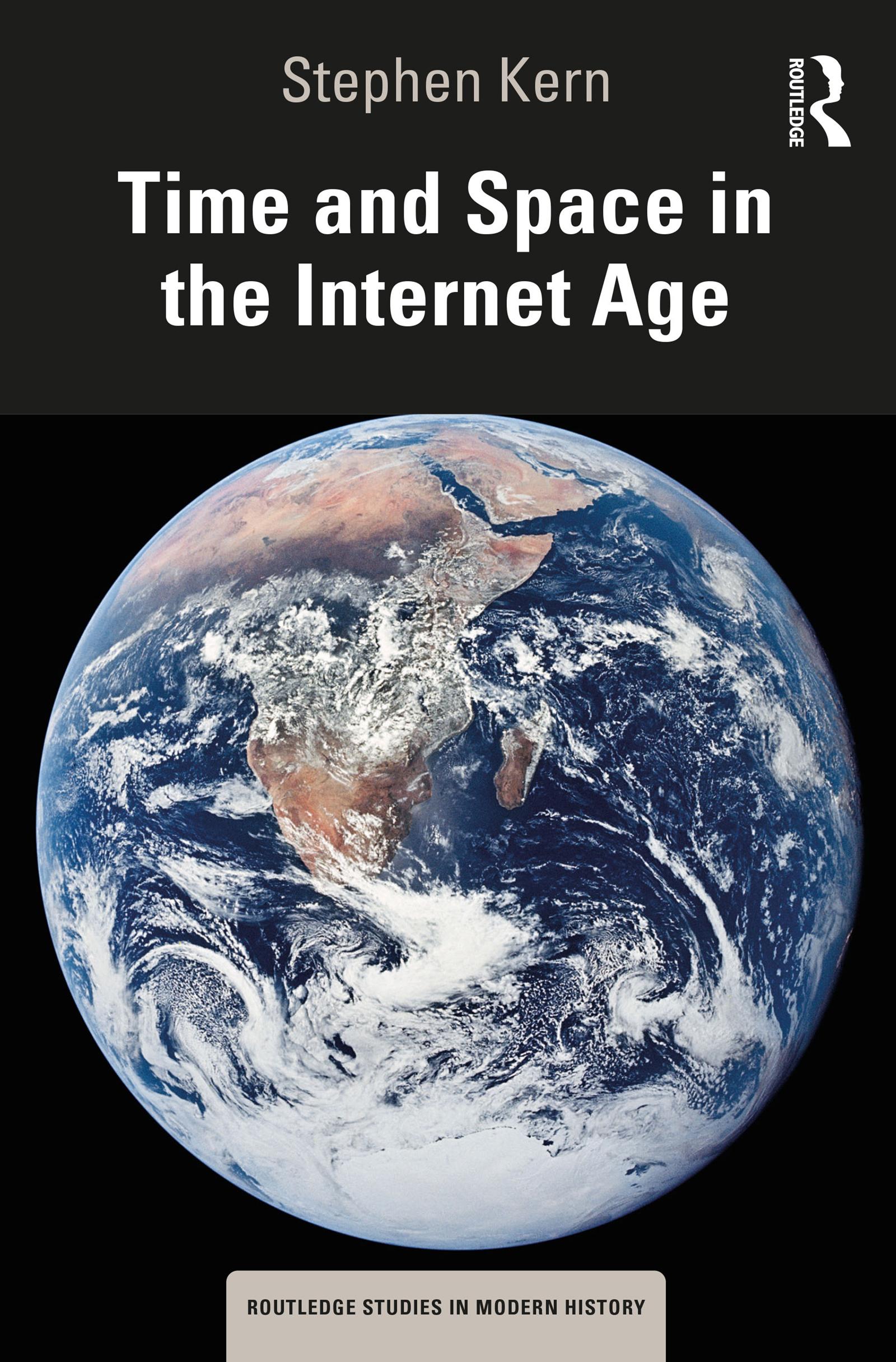
This book analyzes how new technologies transformed life and thought between two periods, 1880-1920 and 1980-2020, with a focus on temporal experiences of past, present, future and the spatial experiences of form, distance, and direction.
The signature contrast is between experiences of time and space transformed by the telephone in the earlier period and the Internet in the later period along with other sharp contrasts: the sinking of the Lusitania in 1915 and the attack on the World Trade Center on 9/11, World War I and the Gulf Wars, gravity bombs and smart bombs, the pandemics of 1918 and 2020, assembly lines and flexible production, Farmer’s Almanacs and computer-based weather predictions, cash transactions and one-click ordering, decolonization and globalization, internationalism and planetarity. The book also makes three interpretive arguments: the Epistemological Argument covers how greater knowledge introduced uncertainties; the Ethical Argument tracks how new technologies prompted ethical judgments about their value; and the Re-hierarchizing Argument tracks the erosion of spatial hierarchies most notably in religion, society, and politics with the increasing progress of secularization, social mobility, and democratization.
Time and Space in the Internet Age is a thought-provoking study for academics and general readers interested in the history of technology and science.
Payez facilement par carte, Klarna, Apple Pay ou Google Pay. Pas satisfait ? Vous avez toujours une garantie de remboursement de 14 jours. En savoir plus dans nos conditions. Si vous avez des questions, envoyez-nous un e-mail à hello@memmo.org.
Memmo facilite tes études, où que tu sois dans le monde. On rassemble tes manuels de cours et des outils d'étude intelligents au même endroit : résumés, quiz, podcasts et flashcards. Et il y a Ted, ton compagnon d'étude qui répond à toutes tes questions. Plus de 50 000 étudiants étudient déjà ici – conçu pour t'aider à apprendre plus vite et à moins stresser.