
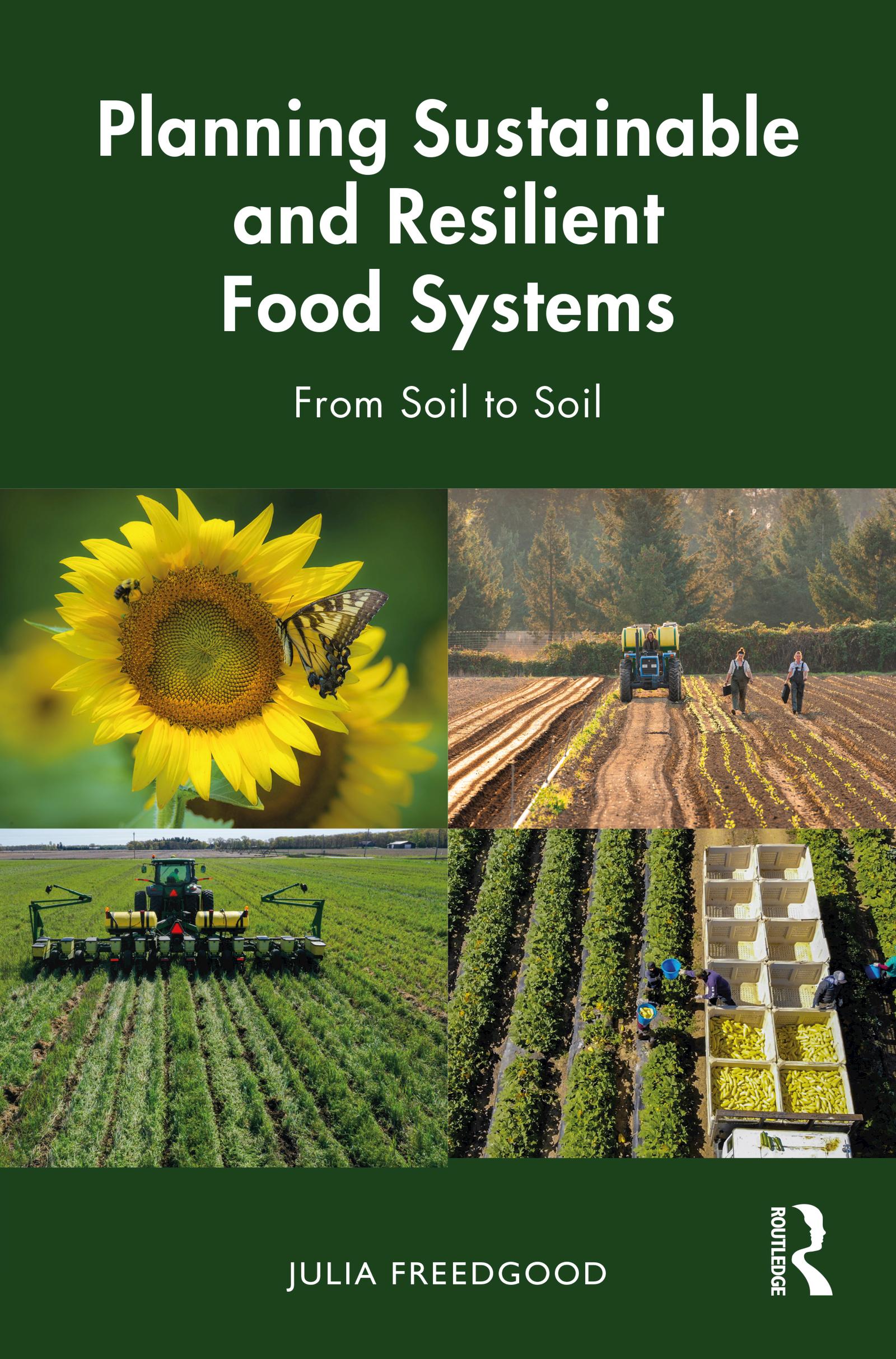
Covid-19 was a canary in a mine. It exposed the vulnerabilities of 21st-century food systems but did not create them. Since then, the world has faced a “polycrisis:” a cluster of weather-related crop failures, war-induced food and energy shortages, and import dilemmas with compounding effects. Going forward, we need to plan for more sustainable and resilient food systems that improve environmental outcomes and address economic disparities. But food systems planning is a relatively new discipline and guidance is scarce. This book fills that gap.
Where most food systems planning has focused on urban issues, this book takes a holistic view to include rural communities and production agriculture whose stewardship of the earth is so critical to public and environmental health, as well as to ensuring a varied and abundant food supply. Its goal is to inform planning practices and follow-up actions for a wide range of audiences—from professional planners, planning commissions, and boards to conservation districts and Cooperative Extension to the on-the-ground change-makers working to strengthen America’s food and farming systems. Embracing the fact that the U.S. is highly diverse in its people, places, and politics, the book lifts up principles and successful examples to help communities develop strategies based on their unique assets and the needs and preferences of their people.
Payez facilement par carte, Klarna, Apple Pay ou Google Pay. Pas satisfait ? Vous avez toujours une garantie de remboursement de 14 jours. En savoir plus dans nos conditions. Si vous avez des questions, envoyez-nous un e-mail à hello@memmo.org.
Memmo facilite tes études, où que tu sois dans le monde. On rassemble tes manuels de cours et des outils d'étude intelligents au même endroit : résumés, quiz, podcasts et flashcards. Et il y a Ted, ton compagnon d'étude qui répond à toutes tes questions. Plus de 50 000 étudiants étudient déjà ici – conçu pour t'aider à apprendre plus vite et à moins stresser.