
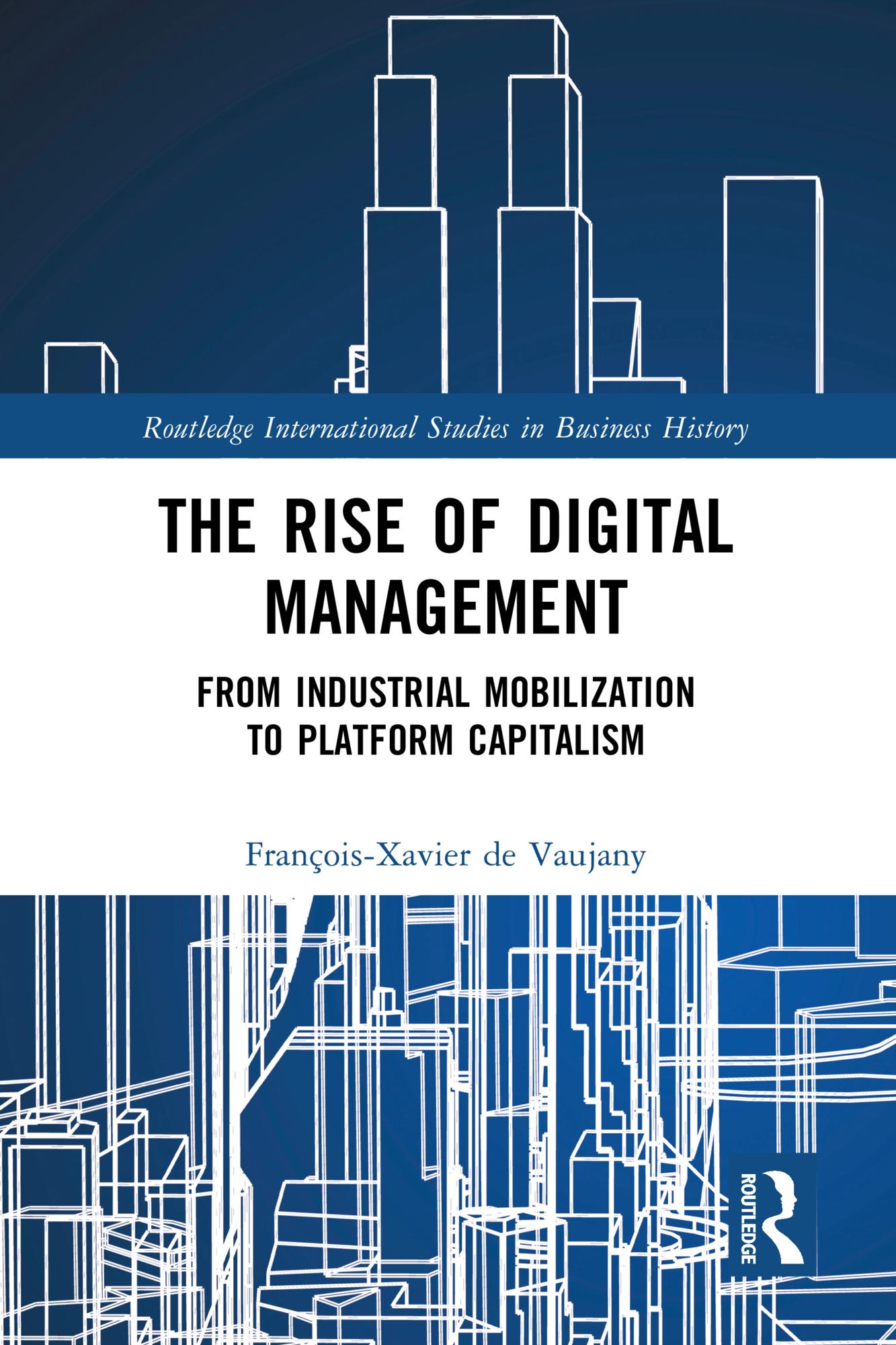
This book analyzes the history of management, placing it in perspective with both American history and the genealogy of digital technology. Focusing on the years of industrial mobilization in the United States (from 1937 to 1945) and their extension into the Cold War, it shows particularly how "scientific management" was reconfigured and re-legitimized in favor of a new profoundly American geopolitics. In a context where the future was at a standstill, this research also explains what became of the managerial processes at the heart of capitalism from the 40s onwards: the shift from a managerial capitalism of calculation to a narrative capitalism made up of "desiring machines". This digital management no longer simply contributes, along with others, to unveiling and revealing the future. Aligned with the American obsession with novelty, it is the very process of revelation and unveiling, with managers and consumers alike becoming the intersecting subjects of desires borne of managerial apocalypses.
To explore this period of American history, the author has combined a triple narrative anchored in three types of archives: an intimate history of this reconfiguration from the presence in New York of Saint-Exupéry, Burnham and Wiener; a description of the great historical moment of industrial mobilization; and a philosophical speculation about reconfiguration and its links to American history.
Payez facilement par carte, Klarna, Apple Pay ou Google Pay. Pas satisfait ? Vous avez toujours une garantie de remboursement de 14 jours. En savoir plus dans nos conditions. Si vous avez des questions, envoyez-nous un e-mail à hello@memmo.org.
Memmo facilite tes études, où que tu sois dans le monde. On rassemble tes manuels de cours et des outils d'étude intelligents au même endroit : résumés, quiz, podcasts et flashcards. Et il y a Ted, ton compagnon d'étude qui répond à toutes tes questions. Plus de 50 000 étudiants étudient déjà ici – conçu pour t'aider à apprendre plus vite et à moins stresser.