
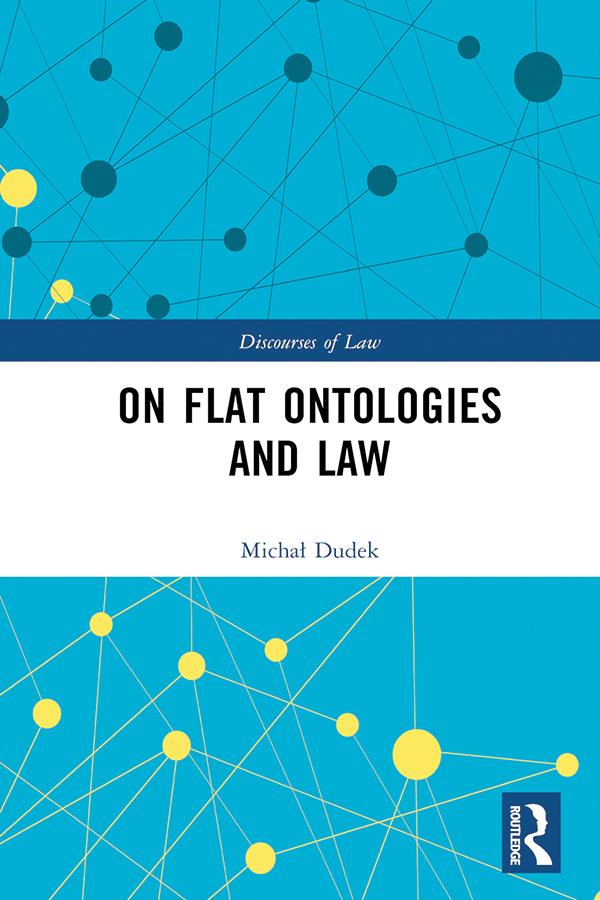
This book examines the importance of flat ontologies for law and sociolegal theory. Associated with the emergence of new materialism in the humanities and social sciences, the elaboration of flat ontologies challenges the binarism that has maintained the separation of culture from nature, and the human from the nonhuman. Although most work in legal theory and sociolegal studies continues to adopt a non-flat, anthropocentric and immaterial take on law, the critique of this perspective is becoming more and more influential. Engaging the increasing legal interest in flat ontologies, this book offers an account of the main theoretical perspectives, and their importance for law. Covering the work of the five major theorists in the area – Gabriel Tarde, Bruno Latour, Manuel DeLanda, Karen Barad and Graham Harman – the book aims to encourage this interest, as well as to explicate the important problems of and differences between these perspectives. Flat ontologies, the book demonstrates, can offer a valuable new perspective for understanding and thinking about law.
This book will appeal mainly to scholars and students in legal theory and sociolegal studies; as well as others with interests in the posthumanist turn in philosophy and social theory.
Payez facilement par carte, Klarna, Apple Pay ou Google Pay. Pas satisfait ? Vous avez toujours une garantie de remboursement de 14 jours. En savoir plus dans nos conditions. Si vous avez des questions, envoyez-nous un e-mail à hello@memmo.org.
Memmo facilite tes études, où que tu sois dans le monde. On rassemble tes manuels de cours et des outils d'étude intelligents au même endroit : résumés, quiz, podcasts et flashcards. Et il y a Ted, ton compagnon d'étude qui répond à toutes tes questions. Plus de 50 000 étudiants étudient déjà ici – conçu pour t'aider à apprendre plus vite et à moins stresser.