
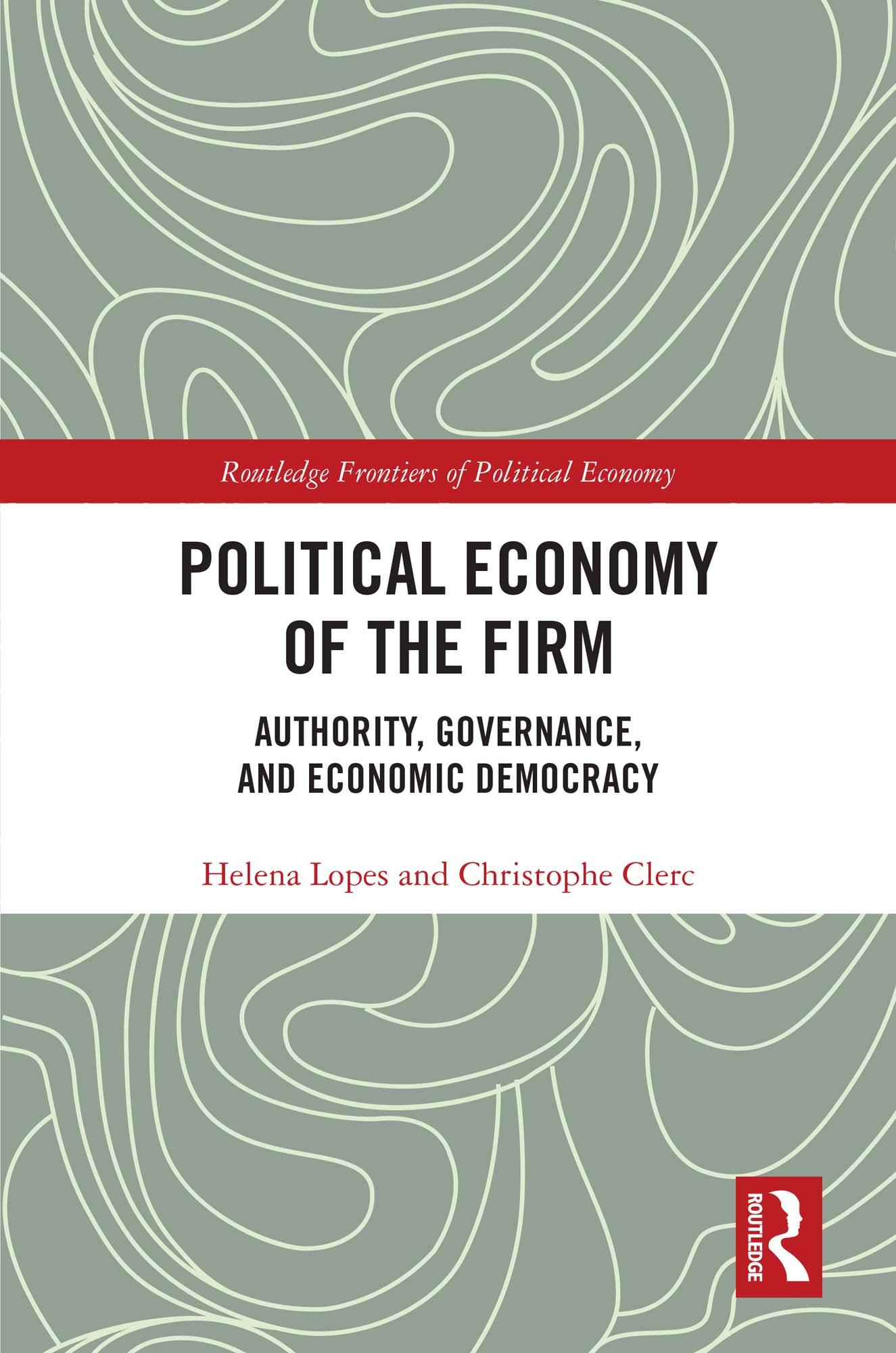
An alternative theory of the firm is needed that helps better understand the nature and actual functioning of firms as well as the challenges raised by digital platform firms. In defining firms as economic collective ventures organised by political means, this book offers a “political economy” vision of firms.
Specifically, the book provides an authority-based conception of the firm that supplies a theoretical grounding for democratic governance. It is argued that workers must be viewed as actors of the firm, not passive subjects of capital, given that authority is a non-coercive form of power. The book examines authority and subordination from the workers’ perspective and argues that when workers accept authority, it is because they see it as facilitating mutually beneficial cooperation between people with divergent interests. As managerial authority is based on its acceptance by workers, it calls for legitimacy. Neither ownership nor the function that authority performs makes it legitimate. The book shows that legitimacy entails the democratisation of corporate governance, within the framework of “pluralistic companies”, and thus joins the many voices that increasingly question shareholder primacy.
The book will be of great interest to researchers and students in economics and law as well as labour professionals, employers, unions, policymakers and anybody interested in economic democracy.
Payez facilement par carte, Klarna, Apple Pay ou Google Pay. Pas satisfait ? Vous avez toujours une garantie de remboursement de 14 jours. En savoir plus dans nos conditions. Si vous avez des questions, envoyez-nous un e-mail à hello@memmo.org.
Memmo facilite tes études, où que tu sois dans le monde. On rassemble tes manuels de cours et des outils d'étude intelligents au même endroit : résumés, quiz, podcasts et flashcards. Et il y a Ted, ton compagnon d'étude qui répond à toutes tes questions. Plus de 50 000 étudiants étudient déjà ici – conçu pour t'aider à apprendre plus vite et à moins stresser.