
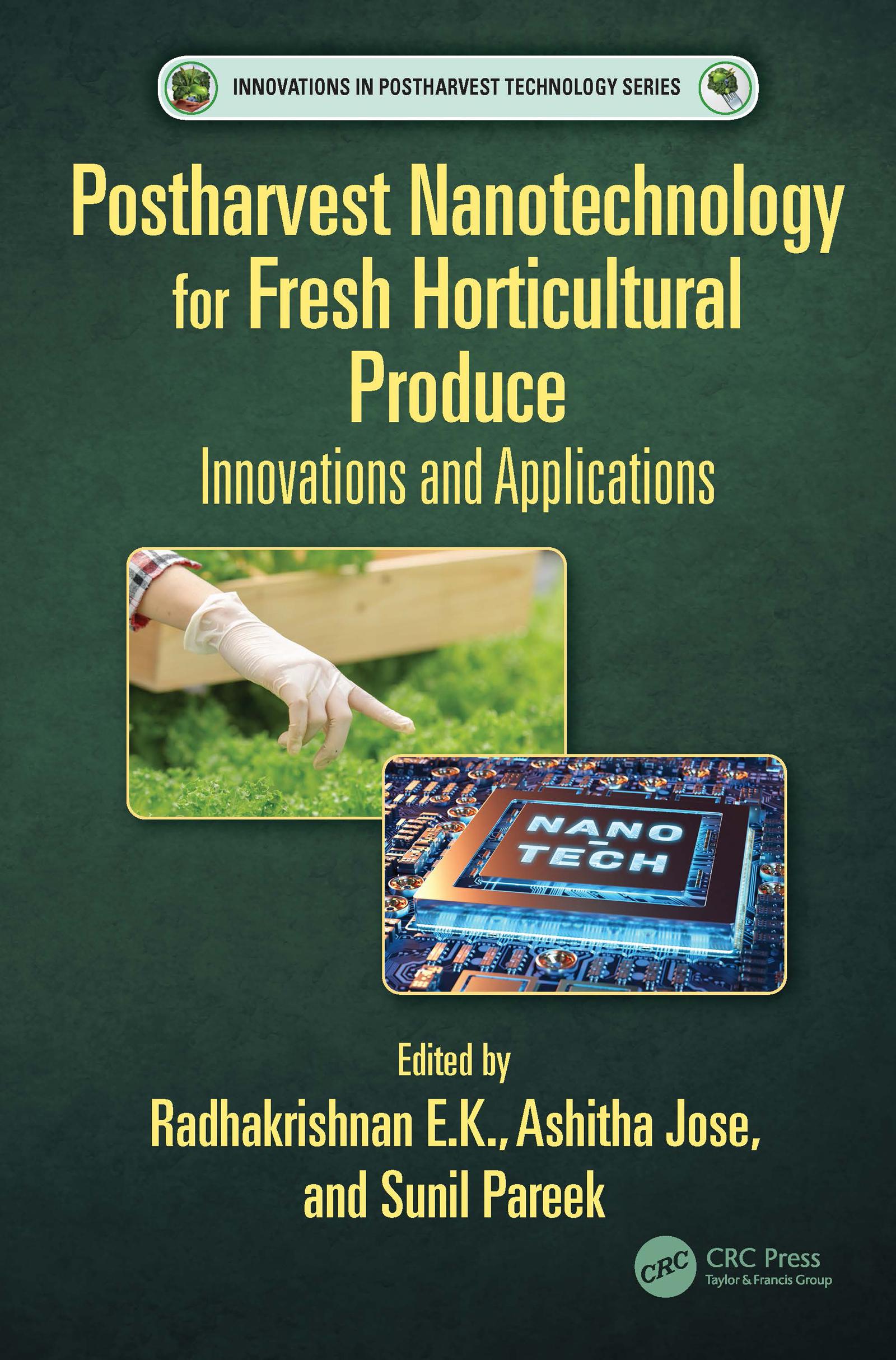
Food scarcity and insecurity is an alarming issue throughout the world. Postharvest loss due to both mechanical damage and microbial spoilage significantly influences the shelf life and hence the availability of agricultural produce. Once initiated, the microbial spoilage can make bulk quantity of a given agricultural product unacceptable for human consumption, and several methods have already been used to try to manage this. Considering the limited success of the available methods, there is increasing interest in exploring nanotechnological methods. These methods are being considered for both the development of various platforms for antimicrobial/barrier packaging applications that minimize the contact of agricultural produce with the external environment, and also for design sensors to ensure food safety and quality.
The impact of various nano-systems developed through material engineering on the shelf-life enhancement and storage of fresh horticultural produce will have revolutionary effects on post-harvest management in the coming years. Hence, Postharvest Nanotechnology for Fresh Horticultural Produce has been edited to advance understanding of material development, intelligent selection of nanomaterials to ensure the nontoxic nature, and future perspectives of nanotechnology on postharvest produce. This includes various types of nanoparticles exploited for the postharvest management, their mechanism of action, varied applications and material engineering, along with natural products including essential oils and plant bioactives, modelling of various tailor-made materials to meet the required properties of the packed food, advancements in the nanotechnological applications for the minimally processed food, and the toxicity concerns.
Key Features:
· Describes advances in nanotechnology for postharvest management
· Includes extensive details on the applications of material engineering for post-harvest applications using nanotechnology and future aspects
· Provides extensive data on the types of nanomaterials used and the fabrication methods employed for the design of tailor-made products for the post-harvest management
This book reviews the current scientific advancements and future prospects of the nanotechnological interventions in meeting the quality and quantity standards of the horticultural produce and minimally processed food and will be a valuable reference for beginners, researchers, subject experts, and industrialists.
Payez facilement par carte, Klarna, Apple Pay ou Google Pay. Pas satisfait ? Vous avez toujours une garantie de remboursement de 14 jours. En savoir plus dans nos conditions. Si vous avez des questions, envoyez-nous un e-mail à hello@memmo.org.
Memmo facilite tes études, où que tu sois dans le monde. On rassemble tes manuels de cours et des outils d'étude intelligents au même endroit : résumés, quiz, podcasts et flashcards. Et il y a Ted, ton compagnon d'étude qui répond à toutes tes questions. Plus de 50 000 étudiants étudient déjà ici – conçu pour t'aider à apprendre plus vite et à moins stresser.