
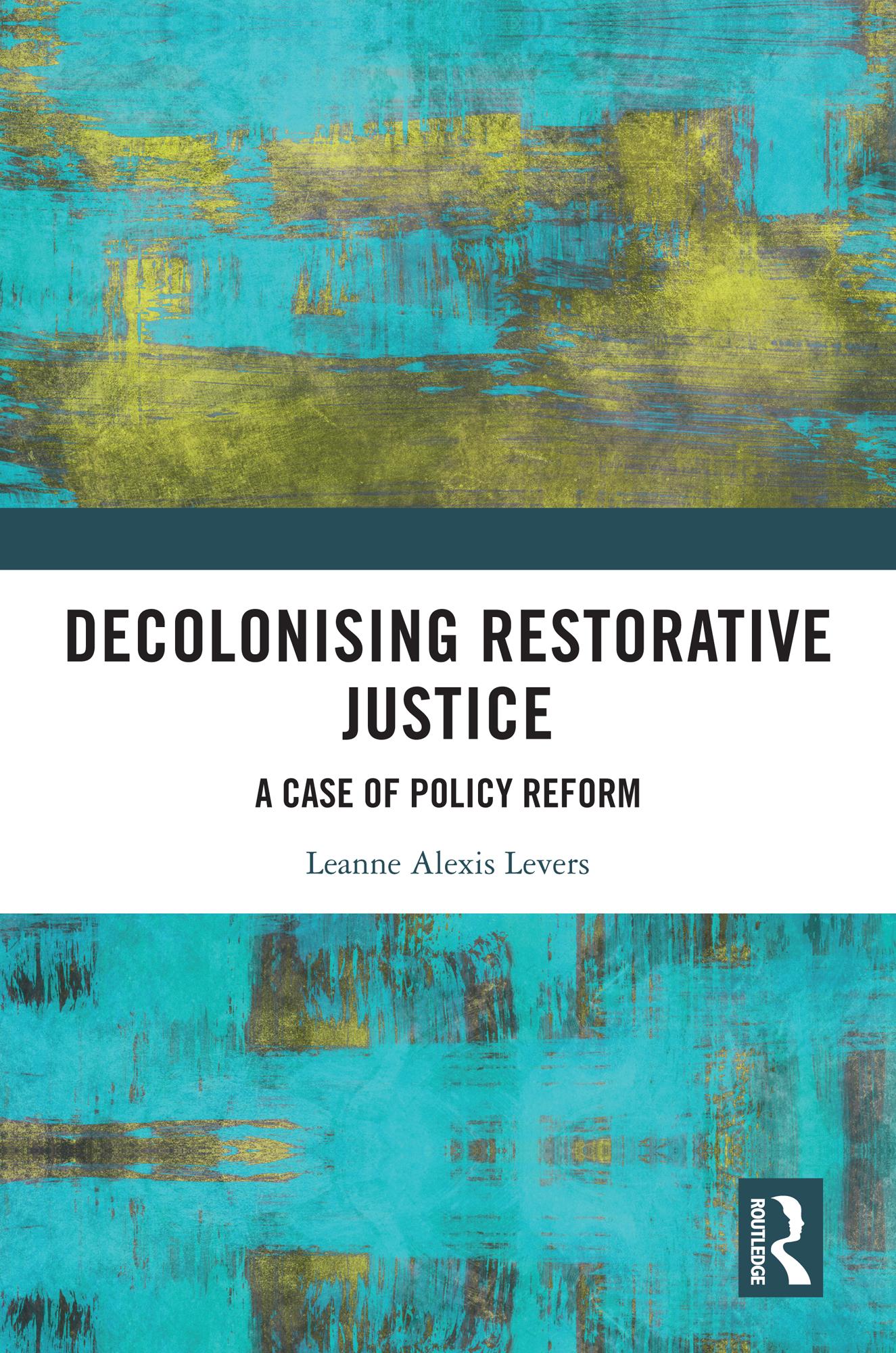
This book critically examines the colonial dimensions of restorative justice through the lens of justice policy reform in Jamaica.
Restorative justice is not new. Practices of restitution can be found throughout history, predominantly in non-Western traditions and religions. One of the key principles of restorative practices is contextualisation. That is, restorative practices are developed and embedded within the political, economic, and cultural context of the communities in which they are practised. Many of the countries that have gone on to develop restorative justice as part of their formal justice system have developed their policy on the model of their indigenous communities – for example, in Canada and in New Zealand. However, with the globalisation of restorative practices within the past decade, many countries have sought to ‘colonise’ restorative justice, by developing a standardised, best-practice approach. Instead of a practice that is developed and formed by its community, colonised restorative justice dictates that one size fits all. Examined through the lens of the development and implementation of restorative justice policies in Jamaica, this book argues that this Westernised approach diminishes the effectiveness of restorative justice in its capacity: to address the victim’s needs; to hold the offender accountable in a way that reintegrates them into society; and to empower the community by involving them in the provision of justice to victims. Restorative justice, then, must be decolonised –and local, indigenous practices acknowledged –if it is to achieve its aims.
This book will be of interest to a range of scholars with interests in decolonisation, as well as alternative dispute resolution, especially those in sociolegal studies, criminology, human rights, social policy, political science, and Caribbean studies.
Payez facilement par carte, Klarna, Apple Pay ou Google Pay. Pas satisfait ? Vous avez toujours une garantie de remboursement de 14 jours. En savoir plus dans nos conditions. Si vous avez des questions, envoyez-nous un e-mail à hello@memmo.org.
Memmo facilite tes études, où que tu sois dans le monde. On rassemble tes manuels de cours et des outils d'étude intelligents au même endroit : résumés, quiz, podcasts et flashcards. Et il y a Ted, ton compagnon d'étude qui répond à toutes tes questions. Plus de 50 000 étudiants étudient déjà ici – conçu pour t'aider à apprendre plus vite et à moins stresser.