
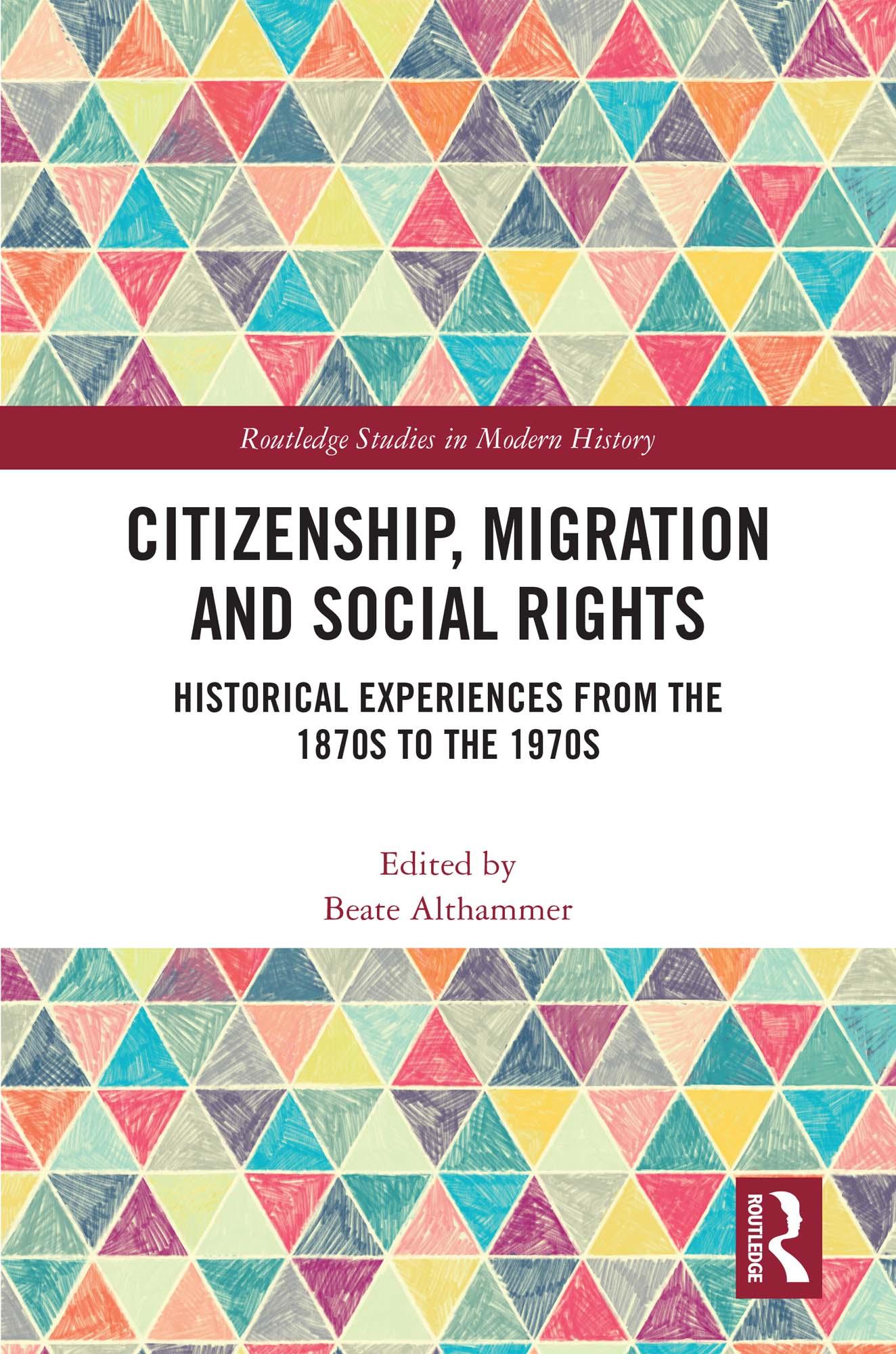
The tensions between European conceptions of the welfare state and transnational migration have caused heated political, public, and academic debates over the last decades. Historiography, however, has not yet explored in depth how European societies struggled with this dilemma-filled relationship in the formative phases of modern welfare states from the late nineteenth century to the post-war era.
The present volume contributes to filling this gap and thus to putting a highly topical issue into historical perspective. The focus is on Europe, but with a wide geographic scope that reaches also across the Atlantic. Following an introductory chapter, eleven case studies deal with four themes. The first part explores the agency of migrants in local-level administrative and judicial procedures that controlled practical access to formal rights. The second section investigates special regulations developed for seasonal labour migrants employed mainly in agriculture. The third part looks at the role of urban social policies in attracting, integrating, but also excluding both domestic and foreign migrants. The final section addresses the gradual globalisation of migrants’ social rights through international conventions.
The book will be of interest not only to historians of welfare, migration, and citizenship, but also to social scientists as well as to graduate students in these fields.
Payez facilement par carte, Klarna, Apple Pay ou Google Pay. Pas satisfait ? Vous avez toujours une garantie de remboursement de 14 jours. En savoir plus dans nos conditions. Si vous avez des questions, envoyez-nous un e-mail à hello@memmo.org.
Memmo facilite tes études, où que tu sois dans le monde. On rassemble tes manuels de cours et des outils d'étude intelligents au même endroit : résumés, quiz, podcasts et flashcards. Et il y a Ted, ton compagnon d'étude qui répond à toutes tes questions. Plus de 50 000 étudiants étudient déjà ici – conçu pour t'aider à apprendre plus vite et à moins stresser.