
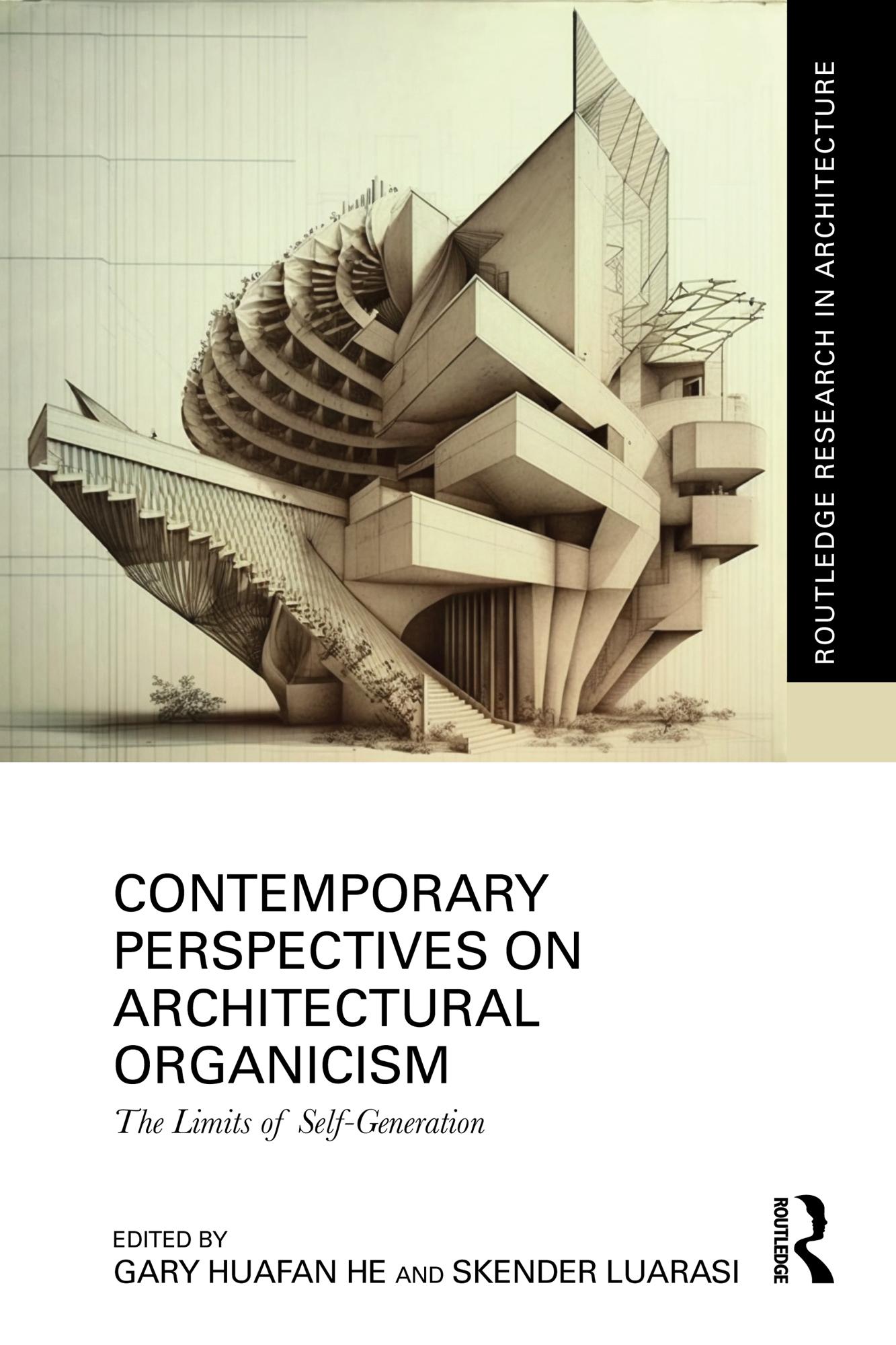
This project is born out of similar questions and discussions on the topic of organicism emergent from two critical strands regarding the discourse of organic self-generation: one dealing with the problem of stopping in the design processes in history, and the other with the organic legacy of style in the nineteenth century as a preeminent form of aesthetic ideology.
The epistemologies of self-generation outlined by enlightenment and critical philosophy provided the model for the discursive formations of modern urban planning and architecture. The form of the organism was thought to calibrate modernism’s infinite extension. The architectural organicism of today does not take on the language of the biological sciences, as they did in the nineteenth and twentieth centuries, but rather the image of complex systems, be they computational/informational, geo/ecological, or even ontological/aesthetic ‘networks’. What is retained from the modernity of yesterday is the ideology of endless self-generation. Revisiting such a topic feels relevant now, in a time when the idea of endless generation is rendered more suspect than ever, amid an ever increasing speed and complexity of artificial intelligence (AI) networks.
The essays collected in this book offer a variety of critiques of the modernist idea of endless growth in the fields of architecture, literature, philosophy, and the history of science. They range in scope from theoretical and speculative to analytic and critical and from studies of the history of modernity to reflections of our contemporary world. Far from advocating a return to the romantic forms of nineteenth-century naturphilosophie, this project focuses on probing organicism for new forms of critique and emergent subjectivities in a contemporary, 'post'-pandemic constellation of neo-naturalism in design, climate change, complex systems, and information networks.
This book will be of interest to a broad range of researchers and professionals in architecture and art history, historians of science, visual artists, and scholars in the humanities more generally.
Payez facilement par carte, Klarna, Apple Pay ou Google Pay. Pas satisfait ? Vous avez toujours une garantie de remboursement de 14 jours. En savoir plus dans nos conditions. Si vous avez des questions, envoyez-nous un e-mail à hello@memmo.org.
Memmo facilite tes études, où que tu sois dans le monde. On rassemble tes manuels de cours et des outils d'étude intelligents au même endroit : résumés, quiz, podcasts et flashcards. Et il y a Ted, ton compagnon d'étude qui répond à toutes tes questions. Plus de 50 000 étudiants étudient déjà ici – conçu pour t'aider à apprendre plus vite et à moins stresser.