
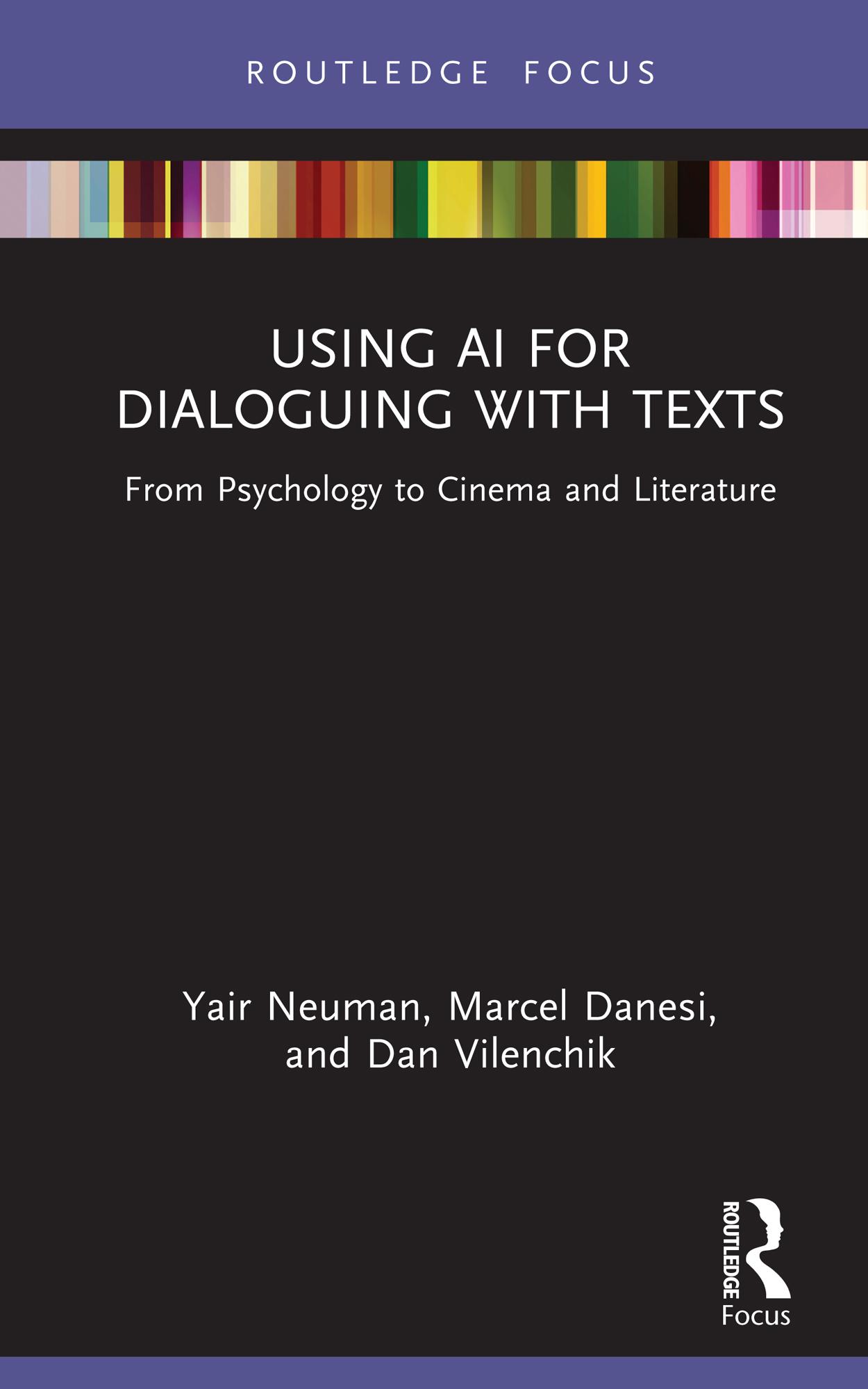
This concise volume offers an accessible introduction to state-of-the-art artificial intelligence (AI) language models, providing a platform for their use in textual interpretation across the humanities and social sciences.
The book outlines the affordances of new technologies for textual analysis, which has historically employed established approaches within the humanities. Neuman, Danesi, and Vilenchik argue that these different forms of analysis are indeed complementary, demonstrating the ways in which AI-based perspectives echo similar theoretical and methodological currents in traditional approaches while also offering new directions for research. The volume showcases examples from a wide range of texts, including novels, television shows, and films to illustrate the ways in which the latest AI technologies can be used for "dialoguing" with textual characters and examining textual meaning coherence.
Illuminating the potential of AI language models to both enhance and extend research on the interpretation of texts, this book will appeal to scholars interested in cognitive approaches to the humanities in such fields as literary studies, discourse analysis, media studies, film studies, psychology, and artificial intelligence.
Payez facilement par carte, Klarna, Apple Pay ou Google Pay. Pas satisfait ? Vous avez toujours une garantie de remboursement de 14 jours. En savoir plus dans nos conditions. Si vous avez des questions, envoyez-nous un e-mail à hello@memmo.org.
Memmo facilite tes études, où que tu sois dans le monde. On rassemble tes manuels de cours et des outils d'étude intelligents au même endroit : résumés, quiz, podcasts et flashcards. Et il y a Ted, ton compagnon d'étude qui répond à toutes tes questions. Plus de 50 000 étudiants étudient déjà ici – conçu pour t'aider à apprendre plus vite et à moins stresser.