
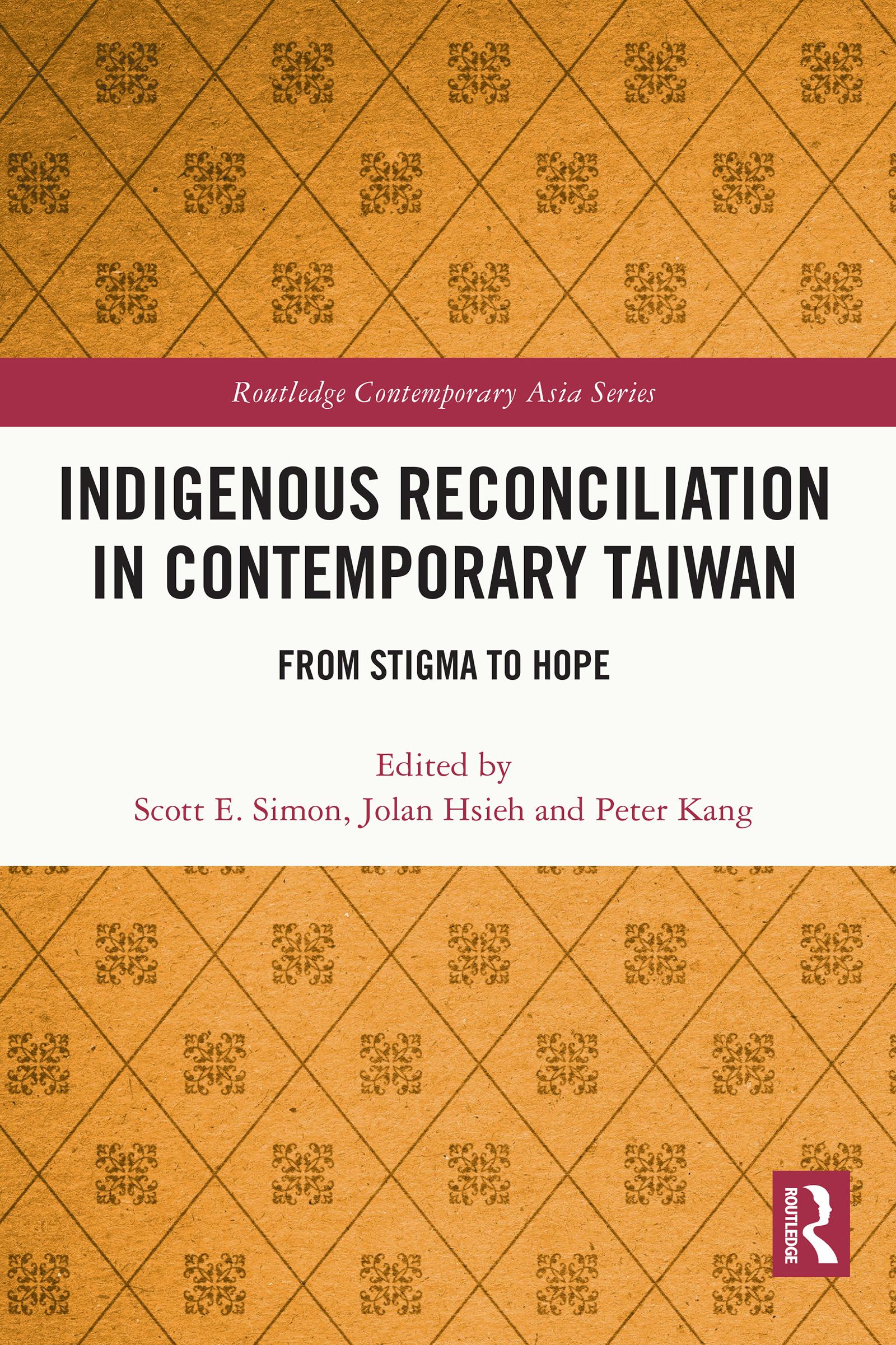
This book draws attention to the issues of Indigenous justice and reconciliation in Taiwan, exploring how Indigenous actors affirm their rights through explicitly political and legal strategies, but also through subtle forms of justice work in films, language instruction, museums, and handicraft production.
Taiwan’s Indigenous peoples have been colonized by successive external regimes, mobilized into war for Imperial Japan, stigmatized as primitive “mountain compatriots” in need of modernization, and instrumentalized as proof of Taiwan’s unique identity vis-à-vis China. Taiwan’s government now encapsulates them in democratic institutions of indigeneity. This volume emphasizes that there is new hope for real justice in an era in which states and Indigenous peoples seek meaningful forms of reconciliation at all levels and arenas of social life. The chapters, written by leading Indigenous, Taiwanese, and international scholars in their respective fields, examine concrete situations in which Indigenous peoples seek justice and decolonization from the perspectives of territory and sovereignty, social work and justice.
Illustrating that there is new hope for real justice in an era in which states and Indigenous peoples seek meaningful forms of reconciliation, this book is an invaluable resource for students and scholars of Taiwan Studies, Indigenous Studies, and Social Justice Studies.
Payez facilement par carte, Klarna, Apple Pay ou Google Pay. Pas satisfait ? Vous avez toujours une garantie de remboursement de 14 jours. En savoir plus dans nos conditions. Si vous avez des questions, envoyez-nous un e-mail à hello@memmo.org.
Memmo facilite tes études, où que tu sois dans le monde. On rassemble tes manuels de cours et des outils d'étude intelligents au même endroit : résumés, quiz, podcasts et flashcards. Et il y a Ted, ton compagnon d'étude qui répond à toutes tes questions. Plus de 50 000 étudiants étudient déjà ici – conçu pour t'aider à apprendre plus vite et à moins stresser.